











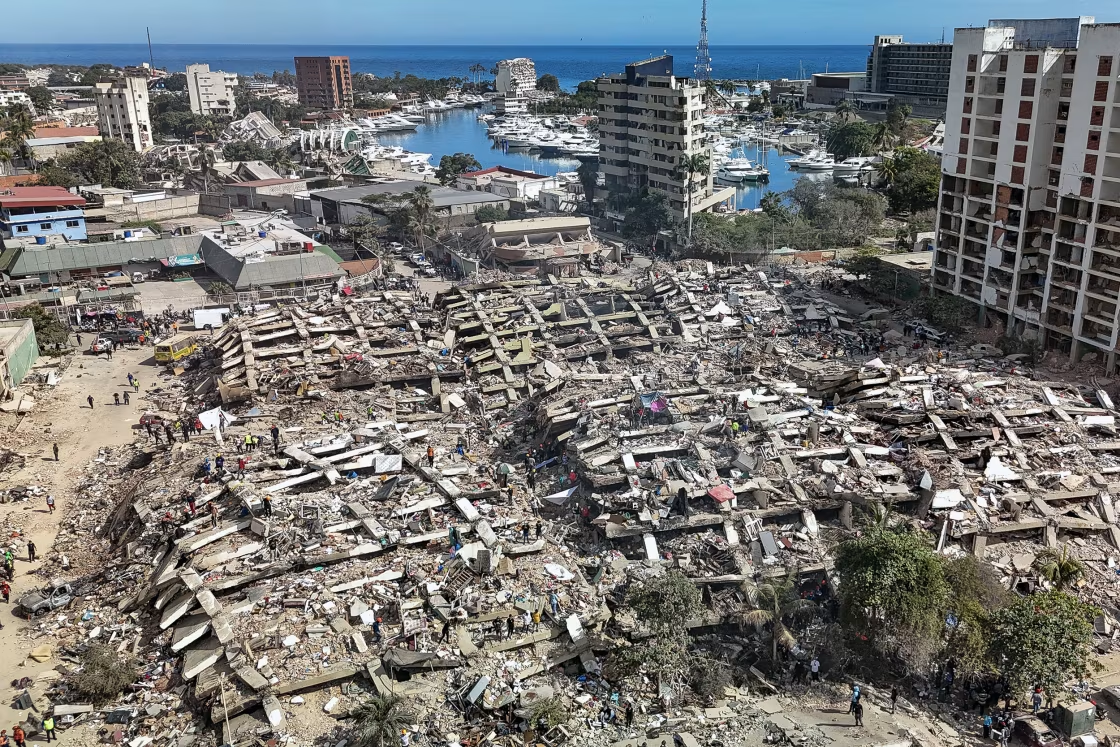
Rescue operations are intensifying in northern Venezuela as emergency teams continue searching for survivors four days after a series of powerful earthquakes devastated the coastal state of La Guaira. Officials say the death toll has surged to 1,450, with thousands still missing amid widespread destruction.
Local authorities, supported by international aid teams, are working around the clock to locate survivors trapped beneath collapsed buildings, even as hopes of finding more people alive steadily diminish.
Massive Rescue Effort Enters Critical Phase
Search-and-rescue operations are now focused on heavily damaged urban areas where entire structures have collapsed. Teams from multiple countries, including the United States, France, Mexico, Brazil, and El Salvador, have joined local responders in the effort.
More than 2,200 international rescue personnel have been deployed, according to United Nations figures, with additional teams arriving as the scale of the disaster becomes clearer.
Despite the passage of time, rescuers continue to pull survivors from debris, offering brief moments of relief for families still searching for loved ones.
Government Faces Scrutiny Over Response
Venezuelan officials have confirmed that over 770 buildings have either collapsed or suffered severe structural damage. However, the government is facing growing criticism from residents who say official response efforts have been slow and disorganized compared to civilian-led rescue initiatives.
Many families have been relying on informal networks and social media databases to track missing relatives, as thousands remain unaccounted for.
Security forces have also increased their presence in affected areas, restricting access and requiring permits for entry as rescue operations continue.
Communities Struggle Amid Widespread Destruction
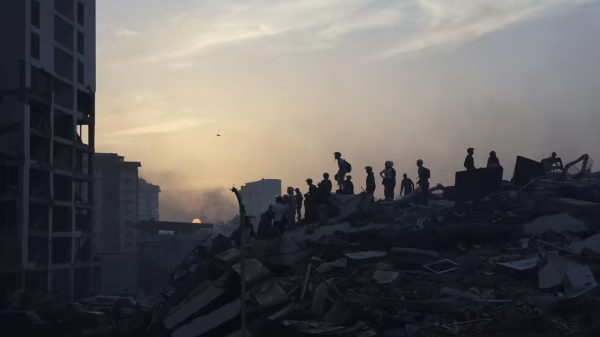
Entire neighborhoods in La Guaira have been reduced to rubble, with survivors and volunteers digging through debris under harsh conditions. Dust-filled air, extreme heat, and the smell of decay have made rescue operations increasingly difficult.
In some areas, civilians have joined rescue teams using limited protective equipment, including helmets and makeshift tools, to search collapsed structures for signs of life.
Eyewitnesses described scenes of confusion and frustration, with some residents expressing anger over delays in coordinated government assistance.
International Teams Provide Critical Support
Foreign rescue teams have played a key role in recent breakthroughs, including the successful extraction of a man and his young son from collapsed ruins. Survivors have been rushed to medical care as crowds gathered to witness the emotional rescues.
Officials say international cooperation has helped stabilize parts of the response effort, particularly in areas where infrastructure damage has limited local access.
Aftershocks and Infrastructure Damage Complicate Efforts
Experts believe the severity of the destruction was worsened by multiple shallow earthquakes occurring in quick succession, followed by continuing aftershocks. One additional tremor measuring 4.8 was recorded days after the initial quakes, further destabilizing already weakened structures.
Critical infrastructure has also been affected, including damage to Simón Bolívar International Airport, where limited operations are still underway as repair efforts continue.

Humanitarian Crisis Deepens
The United Nations estimates that more than six million people may be affected by the disaster, including millions in the capital region. Emergency aid organizations warn that access to clean water, medical care, and shelter remains urgently needed.
As rescue efforts continue, families remain gathered at temporary shelters and identification sites, hoping for news of missing relatives.
Hope Fades but Search Continues
Although experts say the window for finding survivors is rapidly closing, rescue teams insist they will continue operations as long as there is a chance of saving lives.
Amid the devastation, isolated moments of survival and solidarity continue to emerge, offering brief hope in an otherwise overwhelming humanitarian crisis.