

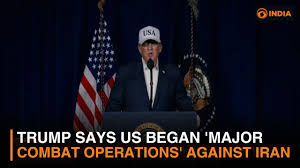















The United States has initiated what President Donald Trump described as “major combat operations” in Iran, marking a significant escalation in Middle East tensions. The coordinated strikes, reportedly in conjunction with Israel, target Iranian military and nuclear facilities amid ongoing concerns over Tehran’s nuclear ambitions.
In a video address, President Trump framed the operation—dubbed Operation Epic Fury—as a decisive effort to neutralize potential nuclear threats and urged the Iranian people to pursue political change once the strikes conclude. “The hour of your freedom is at hand,” he said.
Iranian Response and Retaliation
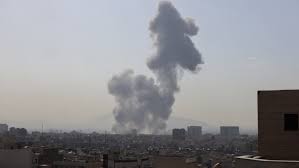
Iran’s Supreme National Security Council vowed a “crushing response” to the attacks, signaling a readiness to strike U.S. military facilities across the region. State media reported explosions in central Tehran, accompanied by plumes of smoke visible in the capital, while air defense systems were activated.
Iranian state television confirmed missile attacks on four major U.S. installations, including:
- Al Udeid Air Base in Qatar
- Al Salem Air Base in Kuwait
- Al Dhafra Air Base in the United Arab Emirates
- U.S. Fifth Fleet Base in Bahrain
The Iranian Ministry of Interior also called for calm, warning citizens to avoid unnecessary travel and maintain public order. Schools and universities have been closed, and government offices are operating at reduced capacity.
Israel on High Alert
Israel declared a state of emergency as its military reported intercepting missiles launched from Iran. Prime Minister Benjamin Netanyahu emphasized that Iran must not be allowed to develop nuclear weapons, urging Israelis to remain united. Gas stations in the West Bank saw long lines as residents prepared for potential disruptions.
U.S. Political Reactions
Domestically, the strikes have drawn mixed responses. Senators Lindsey Graham and John Fetterman praised the operations as necessary for regional security, while some lawmakers expressed concerns over the lack of Congressional authorization. Republican Representative Thomas Massie called the actions “unauthorized acts of war,” highlighting potential constitutional challenges.
Nuclear Negotiations and Regional Implications
The attacks come amid U.S.-Iran negotiations over a potential new nuclear deal. Critics warn that the military escalation may complicate diplomacy, while supporters argue that pressure on Tehran is necessary to prevent nuclear proliferation.
Despite the regime’s unpopularity, analysts note that there is no organized opposition inside Iran capable of coordinating a transition of power. Reza Pahlavi, son of the former Shah, has expressed readiness to lead a democratic transition, but his influence on the ground remains uncertain.
Operation Epic Fury: Historical Context
This is not the first time the U.S. and Israel have targeted Iranian assets. Last June, joint operations struck Iranian nuclear sites and military installations during what was called Operation Midnight Hammer, leading to missile exchanges and heightened regional tensions. Trump previously stated that these sites were “completely and fully obliterated.”
Current Situation
Communications in Tehran are limited, with internet connectivity reportedly at 4%, complicating independent verification of events. The sound of explosions continues throughout the city, underscoring the intensity of the ongoing conflict. U.S. and allied forces remain on high alert across the region, preparing for potential retaliatory actions.
The situation remains fluid, with further updates expected as both sides continue their military operations and diplomatic maneuvers.