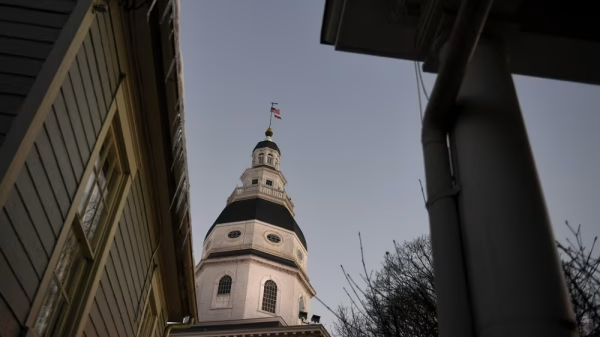



















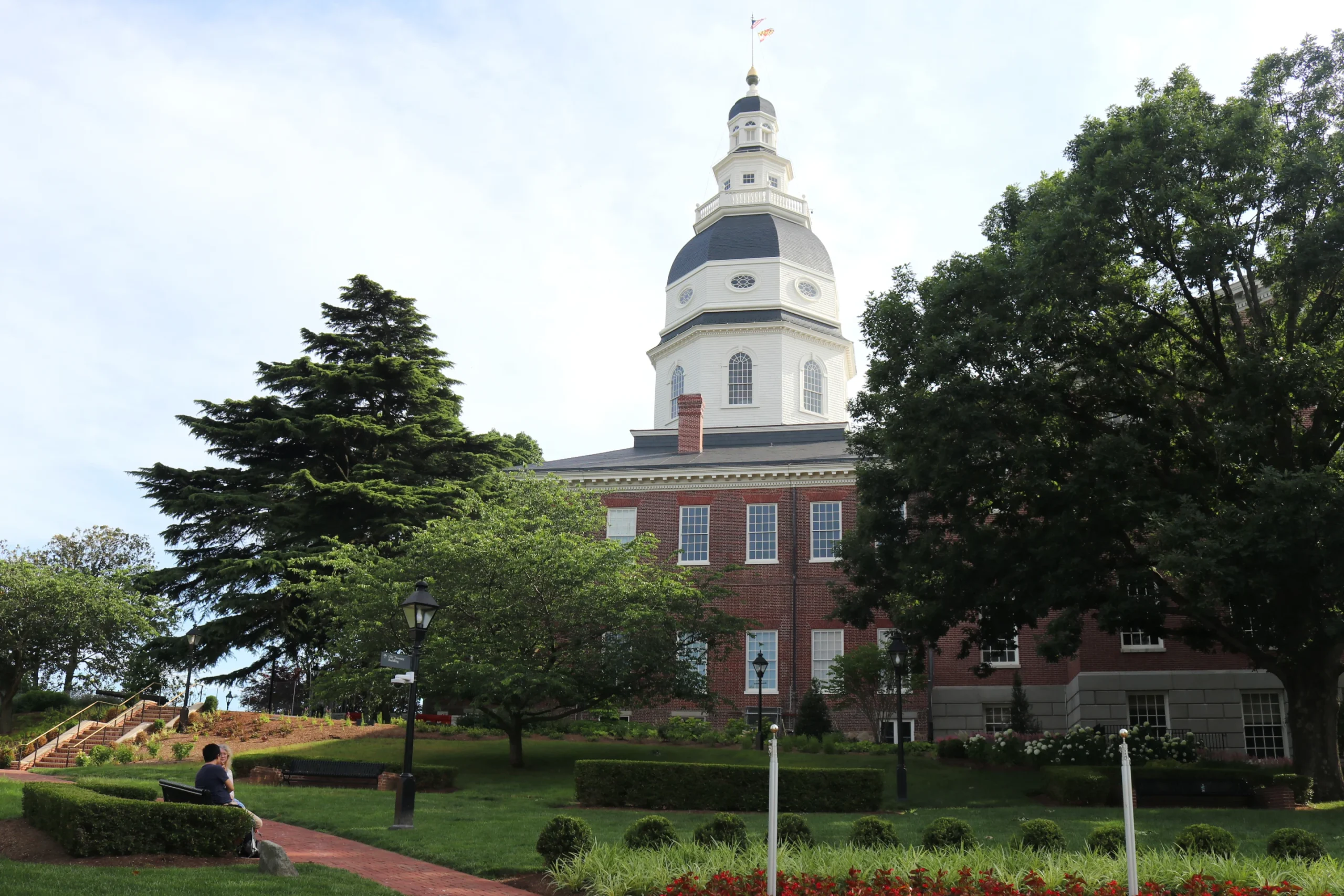
Maryland lawmakers are beginning a special legislative session focused on a proposed constitutional amendment that could reshape the state’s congressional map and potentially help Democrats gain another seat in the U.S. House of Representatives.
The proposal, which will be debated by the Democratic-controlled General Assembly, would need approval from voters before any new congressional boundaries could be considered for the 2028 election cycle.
Proposed Amendment Targets Congressional Mapping Rules
The amendment would give state lawmakers broader authority when drawing congressional districts by clarifying that certain existing requirements — including district compactness and consideration of geographic boundaries — apply only to state legislative districts and not congressional maps.
Supporters say the change is necessary to provide flexibility in future redistricting decisions, particularly as states across the country continue reshaping congressional boundaries.
If approved by three-fifths of both chambers of the General Assembly, the measure would appear on the statewide ballot during the November 2026 election.
National Redistricting Fight Reaches Maryland
Maryland’s move comes amid a broader national dispute over congressional redistricting, with both political parties pursuing strategies to influence House representation ahead of future elections.
The state is already heavily Democratic, with Democrats currently holding seven of Maryland’s eight congressional seats. A successful redrawing effort could potentially make the state’s only Republican-held district more competitive.
Republicans have accused Democrats of using the process to gain political advantage, describing the proposal as an effort to create partisan districts.
Previous Map Attempt Faced Legal Challenge
The debate follows Maryland’s earlier redistricting effort in 2021, when lawmakers created a congressional map that aimed to make Republican Rep. Andy Harris’ Eastern Shore district more favorable to a Democratic candidate.
A state court later rejected that map in 2022, ruling that the boundaries represented an unconstitutional form of partisan gerrymandering.
The latest proposal is designed in part to address concerns raised in that legal challenge by changing how constitutional standards apply to congressional districts.
Republicans Warn of Legal and Political Consequences
Republican lawmakers have strongly criticized the special session, arguing that the proposed amendment would weaken protections for communities outside Maryland’s urban centers.
House Minority Leader Jason Buckel raised concerns about restrictions on public testimony during the session, arguing that the process limits meaningful debate.
Rep. Andy Harris also criticized the proposal, saying it could divide communities with shared interests and reduce representation for rural voters. He predicted that any new congressional map created under the amendment would likely face legal challenges.
Democrats Defend Proposal as Response to National Trends
Democratic leaders argue that Maryland must respond to redistricting actions taken by Republican-led states across the country.

State Senate President Bill Ferguson said his position changed after a recent Supreme Court decision that he believes could make it easier for some states to redraw districts in ways that affect Democratic representation.
Governor Wes Moore has also supported allowing voters to decide whether the state should move forward with the proposed constitutional change.
Moore said the final decision would belong to Maryland voters rather than political leaders, emphasizing that the amendment would only proceed if it receives public approval.
Voters Will Have Final Say
The proposed amendment represents another chapter in the ongoing national debate over the role of political parties in drawing electoral boundaries.
If lawmakers approve the measure and voters support it in November, Maryland could revisit its congressional districts before the 2028 elections, potentially changing the balance of representation in the state’s congressional delegation.