






















Asian stock markets mostly moved higher on Wednesday as renewed enthusiasm for artificial intelligence and semiconductor companies helped investors look past continued uncertainty surrounding the war involving the United States and Iran.
Japan led the region’s gains, while Australia, Hong Kong and mainland China also advanced. South Korea’s market was little changed after earlier gains faded.
Japan Leads Asian Market Gains
Japan’s Nikkei 225 climbed 1.3% in morning trading to 66,318.81. Australia’s S&P/ASX 200 added 0.9% to 8,791.30.
South Korea’s Kospi was nearly flat, rising less than 0.1% to 6,875.84. Hong Kong’s Hang Seng Index gained 0.1% to 24,551.47, while the Shanghai Composite increased 0.3% to 3,843.26.
Technology and chip-related stocks were among the strongest performers. SoftBank Group, which has an investment in OpenAI, jumped about 6% in Tokyo. Japanese semiconductor companies including Renesas Electronics and Rohm also recorded gains.
The technology-driven gains came despite continued concerns over energy prices, inflation and the geopolitical situation in the Middle East.
Wall Street Ends Lower
The positive tone in Asia followed a weaker session on Wall Street.
The S&P 500 declined 0.2% to 7,670.84, while the Dow Jones Industrial Average dropped 131.59 points, or 0.3%, to 51,349.92. The Nasdaq Composite slipped 0.1% to 26,797.54.
Higher U.S. Treasury yields put pressure on stocks during the session. The 10-year Treasury yield reached 5.28% before ending at 5.25%, its highest level in more than two decades. Rising bond yields can make stocks relatively less attractive while also increasing borrowing costs across the economy.
Nvidia fell 0.7%, giving up an earlier gain, while Broadcom advanced 1.6%.
Iran War Keeps Oil Prices Elevated
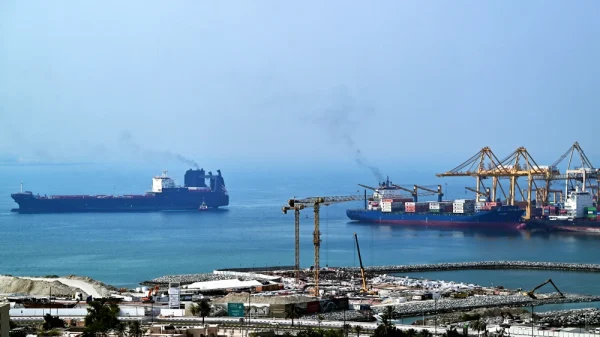
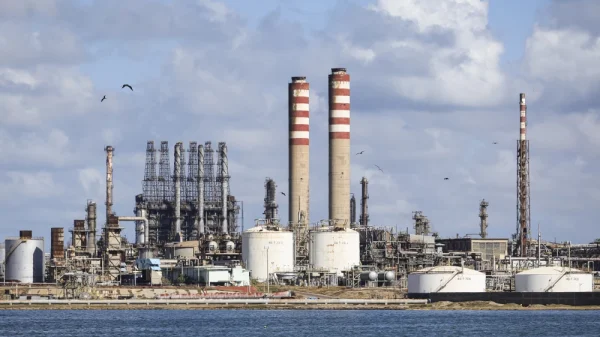
Oil markets remain highly sensitive to developments in the Iran conflict and uncertainty surrounding the Strait of Hormuz, a critical route for global energy shipments.
U.S. benchmark crude was trading around $89.59 a barrel, while Brent crude stood near $103.48. Brent remains substantially higher than its pre-conflict level of roughly $72 a barrel.
The elevated oil prices have added to concerns about inflation and the possibility of interest rates remaining high for longer.
Efforts Continue to Reopen Strait of Hormuz
Mediators have continued diplomatic efforts involving the United States and Iran, with negotiations focused in part on ending the fighting and restoring access through the Strait of Hormuz.
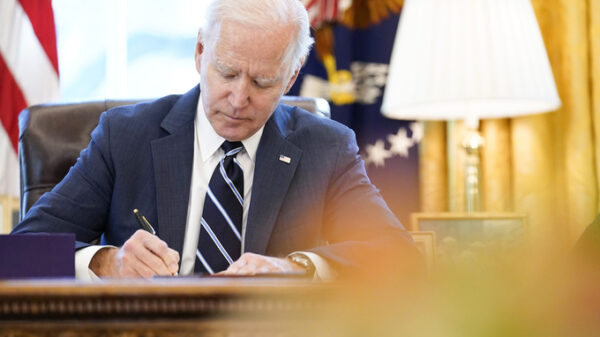
President Donald Trump rejected an Iranian proposal over the weekend aimed at reopening the strategic waterway. Reports indicate that diplomatic efforts remain active, but significant disagreements continue between the two sides.

The uncertainty has contributed to sharp movements in oil and financial markets as investors assess the potential impact on global energy supplies.
Investors Await Key U.S. Economic Data
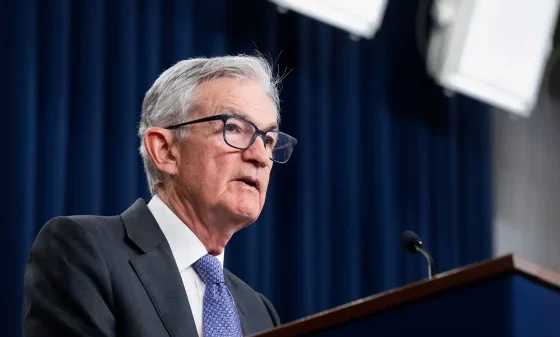
Markets are also preparing for several major U.S. economic reports that could provide fresh clues about inflation and the Federal Reserve’s interest-rate decisions.
U.S. inflation has remained above the Federal Reserve’s 2% target, while higher energy prices could add further pressure. Investors are therefore watching upcoming inflation and employment data closely for indications of the central bank’s next steps.
Despite concerns over bonds, oil and geopolitical tensions, some analysts have pointed to continued strength in the underlying U.S. economy as a factor supporting financial markets.
In currency trading, the U.S. dollar fell to about 156.75 Japanese yen from 157.27 yen, while the euro was around $1.1335.
For investors, the combination of strong technology-sector demand, elevated oil prices, rising bond yields and uncertainty over the Iran conflict is likely to remain a major influence on global markets in the near term.