

















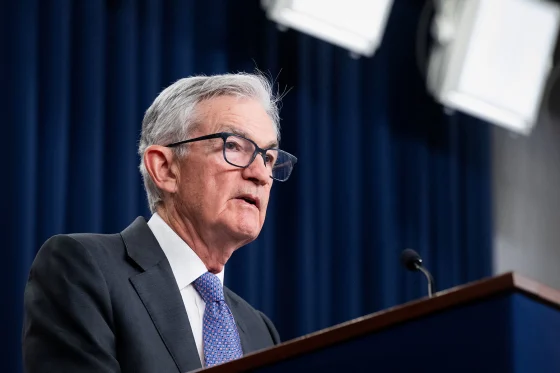
The Federal Reserve is widely expected to leave interest rates unchanged at its first policy meeting of 2026, but the decision is unfolding against an unusually volatile political backdrop that has placed the central bank and its independence under intense scrutiny.
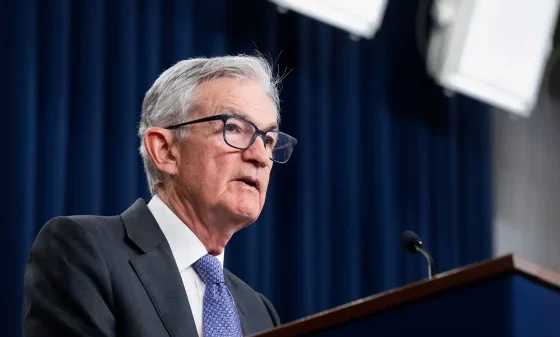
Policymakers are scheduled to conclude their meeting Wednesday after reviewing the latest data on inflation and the labor market. Under normal circumstances, a pause in rates would attract limited attention. This time, however, the spotlight is firmly on Federal Reserve Chair Jerome Powell and his escalating conflict with the White House.
Rates on Hold, Uncertainty Ahead
Economists across Wall Street largely agree that the Fed will stand pat after a series of three quarter-point rate cuts last year. With inflation still above the central bank’s 2% target and no clear signs of a sharp economic downturn, officials have signaled they want time to assess the impact of previous moves.
Recent labor market data presents a mixed picture. Job growth slowed markedly late last year, with modest payroll gains following a sharp contraction in October. At the same time, the unemployment rate edged lower, suggesting layoffs remain limited and broader labor conditions are not deteriorating rapidly.
Inflation has cooled from its recent highs but remains elevated. After peaking near 3% in early autumn, price growth eased to 2.7% by November and held steady in December. Some economists caution that recent inflation readings may be clouded by technical disruptions linked to last year’s federal government shutdown, reinforcing the Fed’s cautious stance.
Given these crosscurrents, analysts say a pause is the most likely outcome. Investors will be closely parsing Powell’s remarks for clues about whether rate cuts later in the year remain on the table.
Fed Independence Under Pressure
Beyond monetary policy, the meeting is overshadowed by a criminal investigation involving the Fed and its chair. Earlier this month, Powell disclosed that the central bank had received grand jury subpoenas as part of a probe launched by Jeanine Pirro, the U.S. attorney for the District of Columbia and a close ally of President Donald Trump.
Powell has pushed back forcefully, accusing the administration of using the investigation to pressure the Fed into delivering deeper and faster interest rate cuts. The probe centers on a long-running and costly renovation of the Fed’s Washington headquarters, which Trump and his allies have cited as evidence of mismanagement.
The Fed maintains that the project was properly approved and overseen, noting that the renovation plan received backing from the board before Powell assumed the role of chair. Powell has requested a review by the Fed’s inspector general to address the allegations.
Supreme Court Stakes
At the same time, the Supreme Court is weighing a case with far-reaching implications for the Fed’s independence. Justices are considering whether the president overstepped his authority by attempting to remove Fed Governor Lisa Cook last summer.
The administration has cited unproven accusations of mortgage fraud as justification for Cook’s dismissal, claims she has firmly denied. During recent oral arguments, justices from across the ideological spectrum appeared skeptical of the administration’s rationale and receptive to Cook’s argument that she should be allowed to challenge the decision in court.
In a rare public show of unity, Powell attended the hearing in person, underscoring the stakes for the central bank’s autonomy.
A Leadership Transition Looms
Adding another layer of uncertainty, Powell’s term as Fed chair is set to expire in May. President Trump has said he is already narrowing down a shortlist of potential successors, raising questions about the future direction of U.S. monetary policy.
While Wednesday’s rate decision itself may be predictable, the broader context is anything but. With legal battles unfolding, political pressure mounting, and leadership changes on the horizon, the Federal Reserve finds itself navigating not just economic “fog,” but an increasingly fraught institutional crossroads.