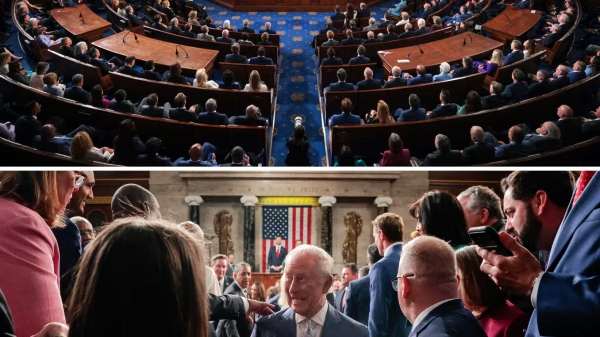





















Washington, D.C. — King Charles III used a rare address to the U.S. Congress on Tuesday to reaffirm the “special relationship” between the United Kingdom and the United States, calling it a historic alliance built on reconciliation, shared values, and enduring cooperation—even as global tensions rise over the ongoing Iran conflict.
The speech marked the 250th anniversary of American independence and highlighted the transformation of former colonial divisions into one of the world’s most influential diplomatic partnerships.
A Historic Address to Congress
Speaking before a joint session of Congress, King Charles described the U.S.-UK relationship as a “story of reconciliation, renewal and remarkable partnership.”
He received multiple standing ovations during the 28-minute address, in which he emphasized the evolution of the two nations from “bitter divisions 250 years ago” to what he called a “consequential alliance in human history.”
The king also paid tribute to his late mother, Queen Elizabeth II, noting her own historic address to Congress in 1991.
Subtle Reference to Global Conflicts
While the king did not directly mention the Iran war, he acknowledged the broader climate of global instability, referencing ongoing conflicts in Europe and the Middle East that continue to challenge the international order.
His remarks come at a time when diplomatic tensions have surfaced between Washington and London over differing responses to the Iran conflict, with U.S. President Donald Trump publicly criticizing UK Prime Minister Keir Starmer for not supporting American military action.
Despite political friction, the transatlantic alliance remains strong, with continued cooperation in defense, intelligence, and trade.
Emphasis on Shared Democratic Values
A central theme of King Charles’s speech was the shared constitutional heritage between the two nations.
He highlighted the Magna Carta as a foundational document influencing democratic governance in both countries, noting its citation in numerous U.S. Supreme Court decisions and its role in establishing limits on executive power.
Lawmakers from both parties responded positively, with bipartisan applause following the reference.
Calls for Unity and Resilience
The king also addressed broader themes of political violence and societal resilience, stating that acts of violence “will never succeed” in undermining democratic institutions.
His comments followed recent concerns over security incidents in Washington, which he referenced indirectly at the beginning of his speech while expressing sympathy for victims.
The remarks received a strong reaction from members of Congress, including lawmakers who have previously been affected by political violence.
Diplomatic Engagements and State Visit
Earlier in the day, King Charles met with senior U.S. congressional leaders, including House Speaker Mike Johnson and other top officials, as part of his state visit to Washington.

He is also scheduled to attend a state dinner hosted by President Donald Trump and First Lady Melania Trump at the White House, underscoring the ceremonial importance of the visit.
The trip marks King Charles’s first official visit to the United States as monarch and his 20th overall visit to the country.
Light Moments in a Historic Speech
Despite the formal tone, the address included several humorous remarks. The king joked about a British parliamentary tradition involving a symbolic “hostage” during overseas visits and referenced his ancestral connection to King George III.
His comments about historical ties between George Washington and King George III drew laughter from lawmakers, adding a lighter moment to the diplomatic occasion.
Strengthening a Longstanding Alliance
King Charles concluded his speech by emphasizing the continued importance of U.S.-UK cooperation in addressing global challenges.
He described the alliance as one that not only benefits both nations but also contributes to global stability during uncertain times.
As geopolitical tensions continue to rise, particularly in the Middle East, the speech underscored the role of diplomatic unity in maintaining international order.