














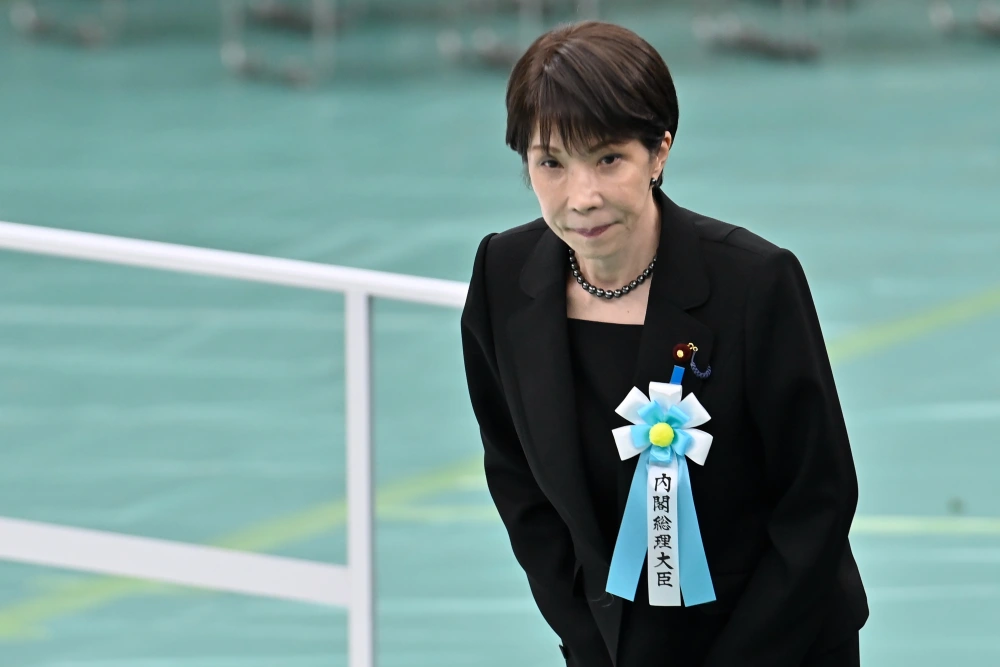
TOKYO — Japanese Prime Minister Sanae Takaichi avoided a visit to the controversial Yasukuni Shrine on Saturday as Japan marked the 81st anniversary of its surrender in World War II, a decision that appeared aimed at limiting tensions with China and South Korea.
However, Takaichi did not use her address at Japan’s National Memorial Service for the War Dead to express remorse or apologize for Japan’s wartime aggression and atrocities in Asia.
Instead, she honored those who died in Japan and overseas during the war and credited their sacrifice as part of the foundation of the country’s postwar peace and prosperity.
Takaichi said Japan would continue contributing to global peace and would not allow the devastation of war to be repeated.
Yasukuni Shrine Remains a Diplomatic Flashpoint
The prime minister’s decision to stay away from Yasukuni was closely watched because the shrine is considered highly controversial in Japan’s relations with its Asian neighbors.
Yasukuni honors Japan’s war dead but also commemorates 14 convicted Class A war criminals. Visits by senior Japanese politicians have repeatedly triggered criticism from China and South Korea, which regard them as a symbol of insufficient acknowledgment of Japan’s wartime actions.
Despite Takaichi’s absence, Defense Minister Shinjiro Koizumi visited the shrine Saturday. Three senior officials from the ruling Liberal Democratic Party also attended and made offerings on behalf of the prime minister.
China Condemns Shrine Visits
China’s Foreign Ministry strongly criticized the visits, accusing Japanese politicians of attempting to distort historical facts and undermine the international judgment of Japan’s wartime conduct.
Beijing called on Japan to seriously reflect on its history and distance itself from militarism.
Relations between the two Asian powers have already been strained by disagreements over security and Taiwan. Takaichi previously said a Chinese attack on Taiwan could create a situation threatening Japan’s survival and potentially justify a military response, remarks that angered Beijing.
South Korea Calls for Deeper Cooperation
South Korea also remains highly sensitive to Japan’s handling of its wartime history.
President Lee Jae Myung said Saturday that cooperation between Seoul and Tokyo was increasingly important for addressing shared challenges.
He also stressed the need for future relations to acknowledge people who continue to suffer from historical wounds, signaling that unresolved wartime issues remain important to South Korea.
Emperor Naruhito Expresses Remorse
Emperor Naruhito took a different tone during the national memorial ceremony.
He spoke about the importance of reflecting on Japan’s past and remembering the suffering caused by war. He expressed hope that the devastation of war would never be repeated and that memories of wartime suffering would continue to be passed to future generations.

Japanese emperors have not visited Yasukuni since the shrine added convicted war criminals to those commemorated there in 1978.
Takaichi’s Conservative Position
Takaichi has previously taken a more nationalist position on Japan’s wartime history. She has resisted calls for additional apologies and has argued that people of her generation should not be held responsible for actions committed before their birth.
She has also faced criticism over her past opposition to descriptions of wartime sexual slavery involving Korean and other women.
Her political approach has been influenced by former Prime Minister Shinzo Abe, a prominent conservative figure who advocated changing what he viewed as an overly negative interpretation of Japan’s wartime history.
Balancing Domestic Politics and Regional Relations
Takaichi’s decision to stay away from Yasukuni appears to reflect the delicate balance between her conservative domestic supporters and the need to manage relations with neighboring countries.
Although her absence may reduce immediate diplomatic friction, her refusal to acknowledge Japan’s wartime aggression or express an apology leaves historical disputes unresolved.
The anniversary therefore highlighted two contrasting approaches: the government’s emphasis on remembering the war dead and Japan’s postwar peace, and continuing demands from neighboring countries for a more explicit acknowledgment of wartime suffering.