










A major waste reform program aims to reduce climate pollution from Jakarta’s largest landfill, but thousands of informal workers fear losing the income that has sustained their families for generations.
Before sunrise each day, thousands of waste pickers climb the towering piles of garbage at Bantargebang landfill on the outskirts of Jakarta, searching through discarded materials for items they can sell.
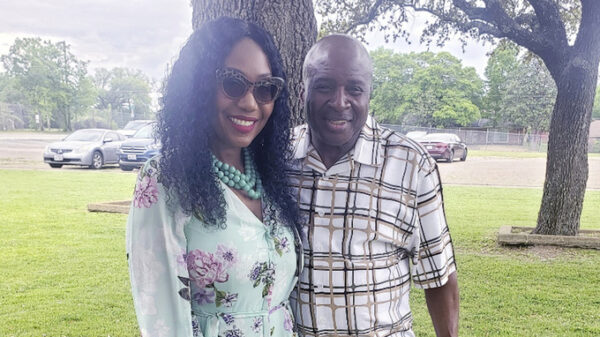
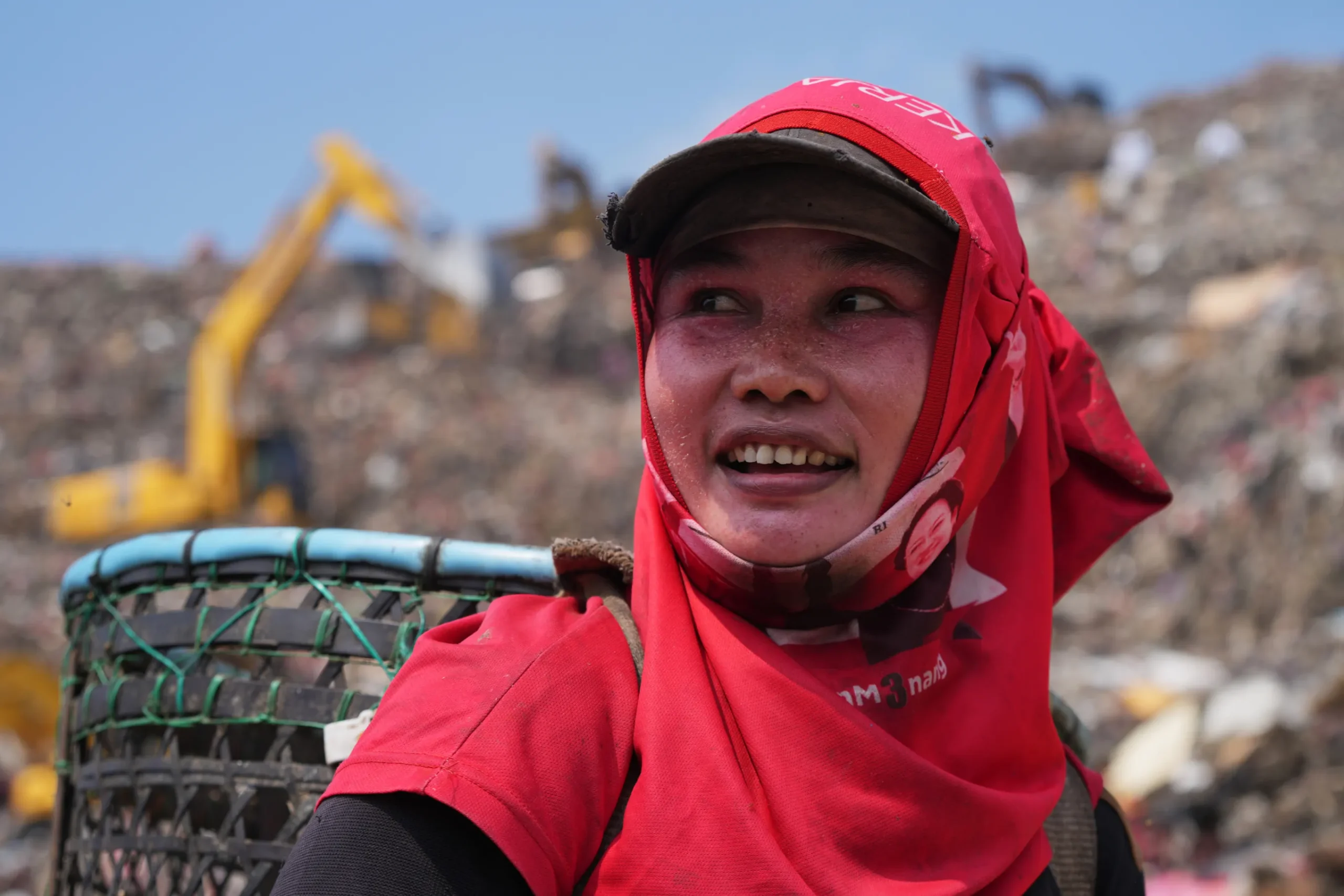
For 35-year-old Nur Wencih, the landfill has been both a workplace and a lifeline. The widowed mother has spent two decades collecting recyclable materials, earning enough money to support herself while helping provide for her two teenage daughters.
On a good day, Wencih can earn around 200,000 rupiah by collecting plastic bottles, cardboard, discarded toys, and other reusable items. Occasionally, she finds valuable objects such as jewelry — rare discoveries that provide a brief moment of financial relief.
However, Indonesia’s plan to overhaul its waste management system could dramatically change life at Bantargebang and hundreds of other disposal sites across the country.
Government Targets Methane Reduction
Starting August 1, Indonesia plans to close open-dumping operations at hundreds of waste sites as part of a nationwide effort to reduce pollution and lower methane emissions.
The government has announced that 343 of the country’s 550 disposal facilities will transition toward controlled or sanitary landfill systems. Under the new approach, landfills will gradually accept only waste that cannot be recycled or composted, including items such as diapers, contaminated paper products, and certain non-recyclable materials.
Officials say the reforms are necessary to address the environmental damage caused by unmanaged waste. Methane, a powerful greenhouse gas released as organic waste breaks down, is considered one of the key contributors to global warming.
Jakarta Environment Agency chief Dudi Gardesi Asikin said the policy is designed to improve public health, reduce pollution, and create a more sustainable waste system.
Bantargebang at the Center of Climate Concerns
Bantargebang has become a symbol of Indonesia’s waste challenge. Covering approximately 110 hectares, the landfill has grown into a massive artificial mountain reaching about 60 meters high.
Around 7,500 tons of waste from Jakarta arrive at the site every day, pushing the facility closer to its limits.
Researchers have identified Bantargebang as one of the world’s largest landfill methane emitters. Officials say the site was originally designed as a sanitary landfill with methane collection systems, but after management changes in 2016, operations gradually shifted toward open dumping.
Only a small number of methane extraction wells remain active today, increasing concerns about emissions and safety.
A major landfill collapse following heavy rain earlier in the year killed seven people, highlighting the dangers created by the site’s enormous scale.
Waste Pickers Fear Economic Uncertainty
While environmental groups support stronger waste controls, many waste pickers worry the reforms could eliminate their main source of income.

Indonesia is home to an estimated 600,000 waste pickers who collect recyclable materials from dumps and sell them through recycling networks. At Bantargebang alone, thousands of workers depend on the landfill economy.
Wencih said her biggest concern is how she will continue supporting her family if access to discarded materials becomes restricted.
Officials say the reforms are not intended to remove waste pickers but to transition them into safer, more formal jobs in recycling and composting.
Asikin said current conditions force workers to compete with heavy machinery in dangerous environments and that improved systems could provide better protection and stability.
Changing Indonesia’s Waste Culture
The government’s plan also requires major changes in how households handle garbage. Residents are being encouraged to separate organic waste, recyclable materials, and remaining trash before disposal.
For many Indonesians, waste separation is unfamiliar.
“All we know is to throw the trash in the bin, not to sort it,” said Jakarta resident Rukasih Wanti, who expressed concerns that the new system could create additional responsibilities for households.
Environmental advocates say public education and investment in recycling infrastructure will be essential for the transition to succeed.
Experts estimate that a large portion of Jakarta’s waste could be diverted from landfills through composting and recycling. Community programs, including waste banks and local composting initiatives, are already helping residents adopt new habits.
A Difficult Balance Between Climate Goals and Livelihoods
Indonesia’s landfill reforms represent a major attempt to address a growing environmental challenge while protecting communities that depend on waste collection for survival.
The government faces the difficult task of reducing methane emissions, improving public health, and preventing landfill disasters without leaving thousands of informal workers behind.
For people like Wencih, the future remains uncertain. The mountain of garbage that has provided a living for decades may soon become a very different place — cleaner and safer, but potentially less accessible to those who rely on it.