















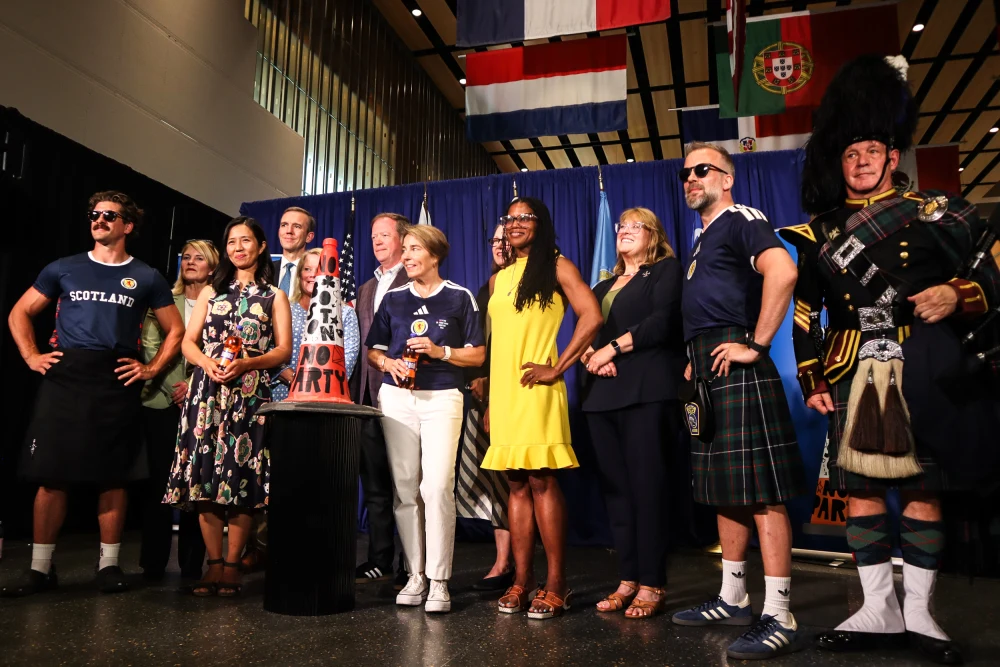
A simple orange traffic cone received a welcome usually reserved for international dignitaries Tuesday as Boston officials celebrated a unique symbol of friendship between the city and Scotland’s passionate World Cup supporters.
The “Boston Cone” arrived at Boston Logan International Airport after traveling from Glasgow on a first-class flight. It was greeted by a traditional bagpipe performance, Scottish fans, diplomats, Massachusetts Governor Maura Healey, and Boston Mayor Michelle Wu.
The unusual ceremony honored the role the traffic cone played during Scotland’s World Cup visit, when fans transformed a familiar street object into a symbol of humor, celebration, and cultural connection.
Governor Welcomes an Unusual Guest
Governor Healey admitted that the event marked a first during her time in office.
“I have to admit, this is probably — yes, it is — my first official welcoming ceremony for a traffic cone,” Healey said while signing the commemorative cone.
She praised the object as a representation of the special relationship formed between Boston and Scottish supporters during the tournament.
Healey also joked about the impact of Scotland’s famous fan group, the Tartan Army, after local bars struggled to keep up with demand during the World Cup celebrations.
“Special thanks to the Scots for drinking all the beer,” she said, promising that Massachusetts would be better prepared if the fans returned.
From Street Joke to World Cup Icon
The traffic cone became closely associated with Scotland’s supporters after fans placed cones on top of statues and landmarks throughout Boston during their World Cup visit.
The playful tradition saw orange cones appear on famous city locations, including statues near Faneuil Hall, TD Garden, Quincy Market, and the Public Garden.
The celebrations helped create a festive Scottish atmosphere across Boston, with streets filled with bagpipes, songs, and chants as supporters embraced the city.
Mayor Wu joked that Boston had temporarily become “New Scotland” during the tournament, noting that some cones remained visible on local landmarks.
Cone Tour to Support Charity
The specially designed Boston Cone features artwork celebrating both Boston and Scotland, along with the slogan “No Boston, No Party.”
Before returning to Scotland, the cone will travel across Massachusetts for a week-long tour to raise funds for mental health organizations.
Organizers hope the campaign will continue the positive message created by the friendship between Scottish visitors and local residents.

A Scottish Tradition With Decades of History
The cone’s popularity comes from a long-running tradition in Glasgow, where placing orange traffic cones on public statues began as a humorous prank in the 1980s.
The most famous example is the statue of the Duke of Wellington in central Glasgow, which has repeatedly been decorated with a cone despite official efforts to remove it. Over time, the act became a symbol of Scottish humor and cultural identity.
Danny Campbell, one of the cone’s Scottish escorts, said the object represents more than a joke.
He explained that the cone reflects the importance of friendship, laughter, and human connection in everyday life.
“This is not just a silly cone,” Campbell said. “It means love, and that is the whole point.”
The Boston Cone’s journey highlights how a small symbol from a football tournament grew into an international reminder of community, humor, and goodwill between two places thousands of miles apart.