












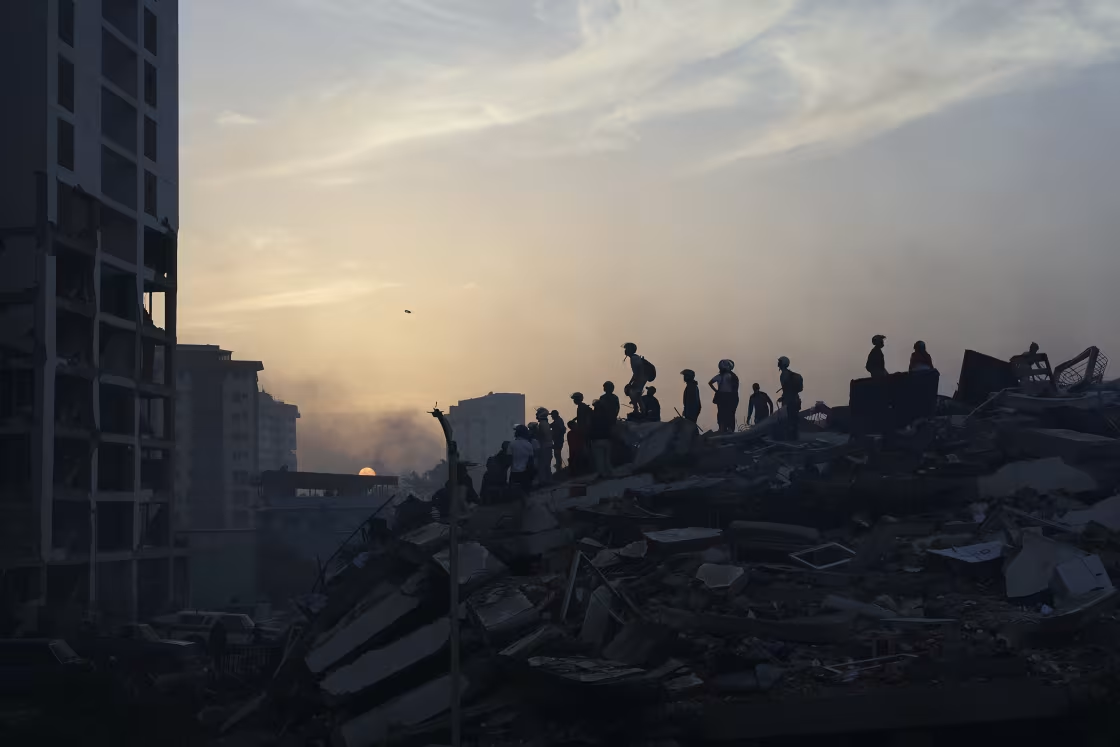
Rescue operations are intensifying in northern Venezuela as teams from multiple countries continue searching for survivors four days after powerful earthquakes devastated the coastal state of La Guaira, leaving at least 1,450 people dead and thousands missing.
Authorities say the death toll has continued to rise as emergency crews work through vast fields of rubble, while families desperately search for loved ones believed to be trapped beneath collapsed buildings.
Massive Destruction Across Coastal Region
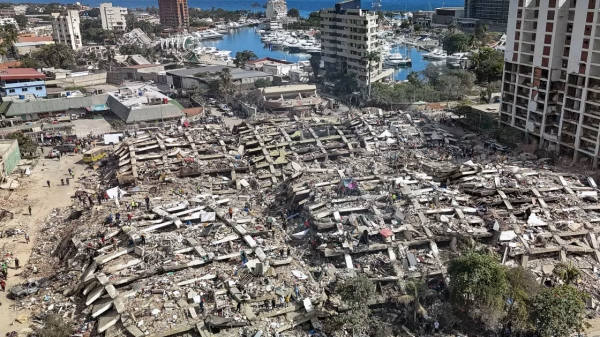
The earthquakes triggered widespread structural collapse, with the government reporting more than 770 buildings either fully or partially destroyed across affected areas.
Entire neighborhoods in La Guaira and surrounding communities have been reduced to debris fields, complicating rescue efforts and limiting access for emergency responders.
The La Guaira region has been among the hardest hit, with damaged infrastructure, blocked roads, and overwhelmed medical facilities slowing recovery operations.
Rescue Teams Work Against Time
More than 2,200 international rescue workers have joined local emergency teams, according to the United Nations, arriving from countries including the United States, France, Brazil, Mexico, and El Salvador.
Specialized search units are combing unstable structures for survivors, although experts warn that the critical “golden window” for finding people alive—typically within 48 to 72 hours—has largely passed.
Despite this, rescuers continue to pull survivors from the wreckage, offering rare moments of hope amid widespread devastation.
In one recent operation, teams from the United States and France reportedly rescued a man and his son from beneath collapsed structures, highlighting ongoing possibilities of survival.
Government Response Faces Scrutiny
The Venezuelan government has deployed more than 14,000 military and police personnel to the region, but officials are facing criticism over coordination and access to affected areas.
Reports from disaster zones suggest that civilian volunteers have played a significant role in search-and-rescue efforts, sometimes outpacing official response teams in reaching trapped victims.
Tensions have also emerged at some collapse sites, where frustrated residents have challenged authorities over perceived delays and lack of equipment.
Widespread Humanitarian Impact
Officials estimate that millions of people may have been affected by the disaster, including approximately 2 million residents in the capital region of Caracas.
Hospitals and temporary morgues are struggling to manage the volume of casualties, while identification efforts continue amid difficult conditions.
In several areas, bodies have been transported from rubble sites as forensic teams work to identify victims and notify families.

Communication Breakdowns and Family Searches
Across affected cities, families continue to search for missing relatives, often gathering at hospitals or makeshift information boards listing survivors and casualties.
Many residents have been relying on social media to communicate updates and locate loved ones, while rescue volunteers report receiving real-time information from people trapped under debris.
International Support Continues to Arrive
Additional assistance is expected in the coming days as foreign governments and humanitarian agencies expand their response operations. Efforts are also underway to restore key infrastructure, including partial repairs to damaged sections of Simón Bolívar International Airport, which has been affected by the quake.
Aftershocks Continue to Threaten Stability
Seismologists report that smaller aftershocks have continued to shake the region, raising concerns about further collapses in already weakened structures and complicating ongoing rescue missions.
Outlook Remains Uncertain
As rescue operations move into a critical phase, officials warn that the number of confirmed dead could continue to rise. While international assistance has boosted search efforts, the scale of destruction and limited access to affected areas remain major challenges.
For now, families across Venezuela continue to wait for answers as crews dig through unstable rubble in a race against time.