
























A hazardous chemical incident in Southern California has escalated into a full-scale emergency after officials warned that a storage tank is “literally on the edge” of exploding, prompting the evacuation of tens of thousands of residents and a state of emergency declaration.
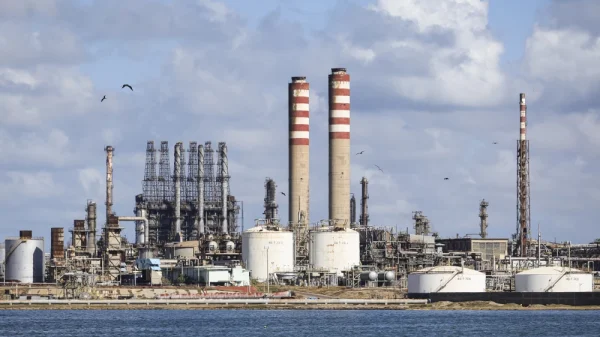
The crisis is unfolding in Garden Grove, where a chemical storage facility is struggling to stabilize a pressurized tank containing methyl methacrylate — a highly flammable industrial substance used in plastics and resin production.
Officials Warn of “Worst-Case Scenario”
The Orange County Fire Authority said firefighters are working around the clock to prevent a catastrophic explosion that could involve multiple tanks at the site.
Incident commander Chief Craig Covey warned that temperatures inside the tank are rising into a dangerous range, creating conditions that could trigger a “thermal runaway” — a chain reaction that rapidly increases pressure and could lead to a fireball explosion.
Authorities say the situation could escalate further if nearby storage tanks are also affected, raising fears of a multi-tank detonation.
Massive Evacuation Across Orange County
Approximately 40,000 residents have been ordered to evacuate from Garden Grove and surrounding cities, including Anaheim, Cypress, Stanton, Buena Park, and Westminster.
Emergency shelters have been set up across the region as families leave their homes with little information about when they can safely return.
California Governor Gavin Newsom has declared a state of emergency, unlocking additional state resources to support evacuation, sheltering, and emergency response operations.
Firefighters Working to Cool Overheating Tank
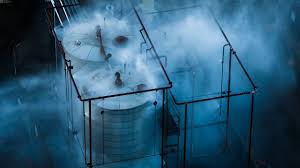
Fire crews are attempting to stabilize the tank by spraying water and using cooling systems in an effort to reduce internal pressure and prevent ignition.
Officials explained that earlier temperature readings were misleading because they were taken from outside the steel tank walls rather than measuring internal chemical heat levels. Updated readings show steadily increasing internal temperatures, raising alarm among emergency responders.
The chemical involved becomes highly volatile at relatively low temperatures, making even small increases in heat a serious risk factor.
Environmental Concerns Add Pressure
Even if an explosion is avoided, authorities warn that a rupture could release toxic chemicals into nearby storm drains, potentially reaching waterways and the Pacific Ocean.
Emergency teams are developing containment strategies to “dike, dam, and divert” any possible chemical leak to reduce environmental damage.
Experts say a full-scale explosion would represent one of the most dangerous industrial chemical incidents in California’s recent history.
Residents Face Uncertainty Amid Ongoing Crisis
Evacuated residents are staying in temporary shelters across Orange County, with many expressing frustration over the uncertainty and disruption caused by the ongoing emergency.

Officials have not yet provided a timeline for when residents may be allowed to return, as conditions at the facility remain unstable.
Authorities continue to monitor the tank minute-by-minute as they attemp
t to prevent what could become a major industrial disaster.