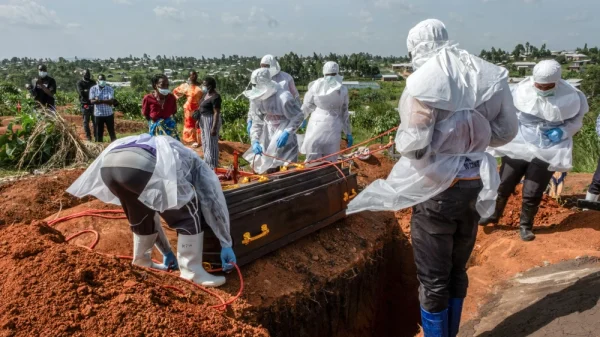























The World Health Organization has declared a public health emergency of international concern following a new outbreak of Ebola virus disease in parts of the Democratic Republic of Congo and Uganda, after hundreds of suspected cases and dozens of deaths were reported across the region.
The announcement was made by WHO Director-General Tedros Adhanom Ghebreyesus, who confirmed that while the outbreak requires urgent global attention, it does not meet the threshold of a pandemic emergency similar to COVID-19.
Rare Ebola Strain Identified in Outbreak
Health officials said the outbreak is being driven by the Bundibugyo strain of Ebola, a relatively rare variant of the virus for which no approved vaccines or treatments are currently available.
The virus was first detected in the Bundibugyo region of Uganda in 2007, and has appeared only a few times since then, making the current resurgence a particular concern for health authorities.
Cases Spreading Across Border Region
According to early surveillance data, more than 300 suspected infections and nearly 90 deaths have been reported across affected areas, with the majority of cases recorded in eastern Democratic Republic of Congo, particularly in Ituri province near the borders of Uganda and South Sudan.
Uganda has confirmed a small number of cases, including infections linked to travel from Congo. Health officials reported that at least one patient died in Kampala, while additional suspected cases are being investigated.
WHO Urges Against Border Closures
Despite the emergency declaration, the WHO has advised countries not to close international borders, emphasizing that such measures are not necessary at this stage and could disrupt essential response efforts.
Instead, the agency is focusing on coordinated surveillance, contact tracing, and containment strategies across affected regions.
Africa CDC Confirms Rising Case Numbers
The Africa Centres for Disease Control and Prevention has also been monitoring the outbreak, reporting a rapid increase in suspected cases and fatalities in recent days.
Officials are working closely with national health ministries to track transmission chains and improve emergency response capacity in high-risk areas.
History of Bundibugyo Ebola Outbreaks
The Bundibugyo strain has only been recorded in a limited number of outbreaks since its discovery. The first major outbreak occurred in Uganda between 2007 and 2008, followed by another in the Democratic Republic of Congo in 2012.
Although previous outbreaks were contained, health experts warn that limited medical countermeasures and cross-border movement in the current situation could complicate containment efforts.
Global Monitoring Intensifies
International health agencies are now increasing monitoring efforts across central and eastern Africa as concerns grow over further spread.
While officials stress that the situation is not classified as a global pandemic threat, they continue to emphasize the need for rapid coordination, early detection, and public health preparedness to prevent wider transmission.