






















A rapidly spreading Ebola outbreak in Central and East Africa has killed more than 40 people in the Democratic Republic of the Congo and Uganda, according to health authorities, raising alarm among global health organizations as infections continue to rise.
Officials report that more than 260 confirmed cases have been identified across both countries, while over 1,100 additional suspected infections are still under investigation, suggesting the true scale of the outbreak could be significantly higher.
The outbreak is centered primarily in the eastern regions of the Democratic Republic of the Congo and neighboring Uganda, where health systems are under strain and containment efforts are ongoing.
Deadly Strain Spreading Rapidly
Health experts say the current outbreak involves the Bundibugyo strain of Ebola, a severe and often fatal form of the virus that has no widely approved vaccine or specific antiviral treatment.
According to the World Health Organization, the virus has caused 43 confirmed deaths so far, including 42 in the Democratic Republic of the Congo and one in Uganda. Officials also warn that suspected fatalities may be far higher, with hundreds of additional deaths under review.
The Africa Centres for Disease Control and Prevention has similarly reported hundreds of confirmed infections and ongoing investigations into possible additional cases.
How the Virus Is Spreading
Health officials believe the outbreak likely originated from fruit bats, a known natural reservoir of the Ebola virus. Human transmission is believed to have occurred through direct contact with infected wildlife and later spread between people through bodily fluids.
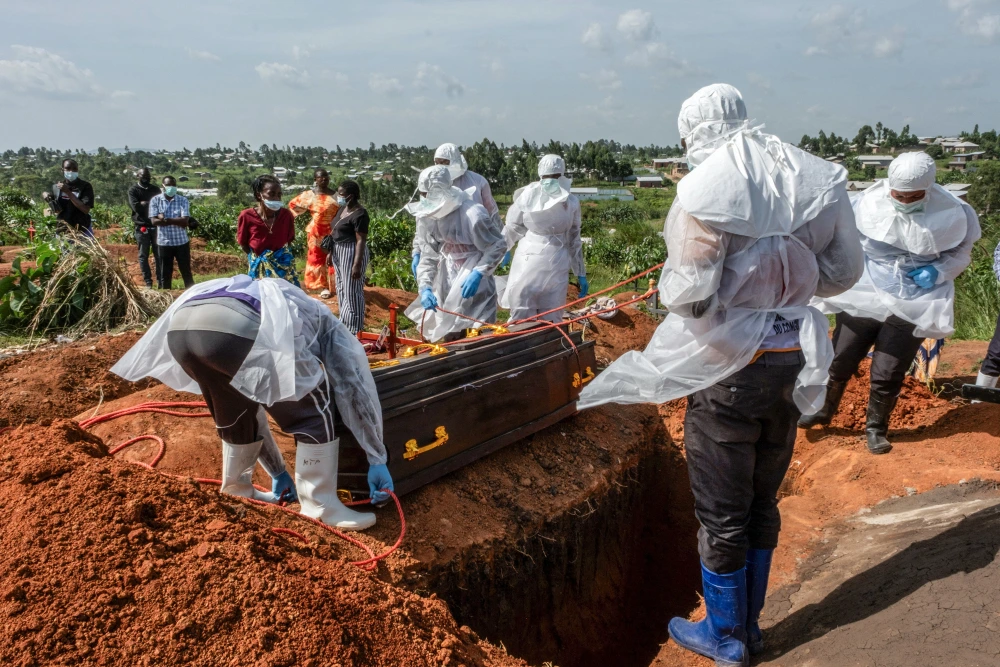
Medical experts say unsafe burial practices and limited infection control measures in healthcare facilities are contributing to the continued spread of the disease.
Aid Agencies Struggle to Contain Crisis
Humanitarian organizations working in the region say they are struggling to keep pace with the outbreak.
Doctors Without Borders reported that response teams are facing significant challenges in identifying and isolating infected individuals quickly enough to stop transmission chains.
Health workers say delays in testing and difficulties in contact tracing have made containment efforts more complex, especially in remote areas where healthcare infrastructure is limited.
WHO Warns of Escalating Risk
The World Health Organization has deployed emergency teams to affected regions and is urging stronger containment measures, including improved testing, safe burial procedures, and better coordination between local and international health agencies.
WHO Director-General Tedros Adhanom Ghebreyesus visited the outbreak’s epicenter in the Congolese city of Bunia, where he emphasized both the severity of the situation and the possibility of recovery for patients who receive timely care.
He also cautioned against imposing travel bans, warning that such restrictions can discourage transparency and delay outbreak reporting.
Past Outbreaks Raise Concern
The Democratic Republic of the Congo has faced repeated Ebola outbreaks in recent decades, making this the country’s 17th recorded occurrence of the disease.

Despite the recurrence, health officials note that past outbreaks have eventually been brought under control through coordinated response efforts, giving some hope that the current crisis can also be contained.
However, experts warn that the speed of transmission and the scale of suspected cases make this outbreak particularly challenging.
Outlook Remains Uncertain
With confirmed cases continuing to rise and surveillance systems under pressure, health authorities are racing to identify infected individuals and prevent further spread.
Officials stress that early detection, rapid isolation, and public awareness will be critical in controlling the outbreak and preventing further loss of life.