














President Donald Trump’s second-term foreign policy is taking a sharply more interventionist turn, marked by open warnings to foreign leaders and an unprecedented military operation that resulted in the capture of Venezuelan President Nicolás Maduro.
The operation, carried out by U.S. forces in Caracas over the weekend, represents a dramatic departure from Trump’s long-standing campaign rhetoric opposing regime change and prolonged overseas entanglements. Following the mission, Trump said the United States would temporarily oversee Venezuela’s governance and help revive its oil industry, signaling a readiness to directly shape outcomes abroad.
Warnings to regional leaders
Speaking to reporters at his Mar-a-Lago residence, Trump issued blunt remarks aimed at several Latin American governments. He accused Colombian President Gustavo Petro of facilitating drug trafficking into the United States and warned Mexico’s president, Claudia Sheinbaum, that Washington may take stronger action against cartels operating within her country.
Trump also suggested that Cuba could be next on the administration’s agenda, calling the island nation “a failing country.” Secretary of State Marco Rubio reinforced the message, cautioning regional governments against challenging U.S. resolve under Trump’s leadership.
“We will engage diplomatically,” Rubio said, “but gamesmanship will not be tolerated.”
A shift from past promises
The use of U.S. military force to remove Venezuela’s leader contrasts sharply with Trump’s earlier political identity. As a candidate and during his first term, he criticized past administrations for wars in Iraq, Afghanistan, and Libya, frequently condemning “nation building” and regime change as costly failures.
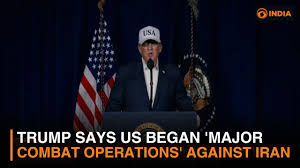
In his inaugural address last year, Trump said he hoped to be remembered as a “peacemaker” who avoided unnecessary wars. Yet since returning to office, he has authorized military strikes in multiple countries, including Yemen, Syria, Iraq, Somalia, Iran, and now Venezuela.
Former Defense Department official Seth Jones said the responsibility for the outcome now rests squarely with the current administration.
“This operation and whatever follows belong entirely to this team,” Jones said. “If it goes badly, there’s no one else to blame.”
Legal and political concerns
The Venezuela operation, like several recent U.S. military actions, was not authorized by Congress. Critics from both parties have questioned its legal basis and warned of the risks of an open-ended American commitment in the country.
Some Republicans praised the move as a decisive blow against narcotics trafficking, while others voiced unease. Outgoing Rep. Marjorie Taylor Greene said many supporters of Trump’s “Make America Great Again” movement opposed prolonged foreign interventions and felt betrayed by the new direction.
Democrats have raised alarms about potential violations of international law and the possibility that the U.S. could become responsible for stabilizing a deeply divided nation.
Oil and strategic interests
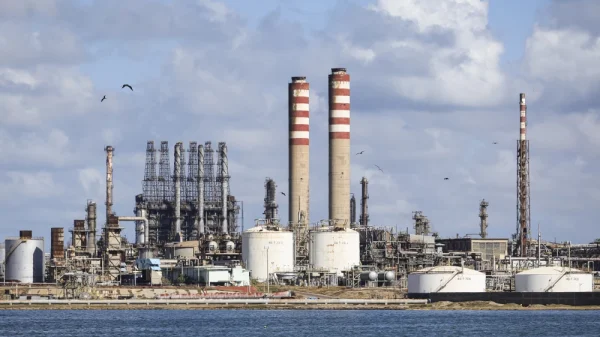
Trump repeatedly highlighted Venezuela’s oil reserves in his public remarks, framing them as a strategic gain from the operation. U.S. officials later confirmed that the administration plans to work with American energy companies to expand Venezuela’s oil production and exports.
The president did not rule out further military action if he deems it necessary, underscoring what analysts see as a newly articulated doctrine: the threat or use of force to compel political change abroad.
Risks ahead
Public opinion may complicate the strategy. Polling suggests voters remain more concerned about domestic economic issues than foreign policy, and Trump’s approval ratings have dipped amid persistent cost-of-living pressures.

Analysts warn that the success of the Venezuela intervention will depend largely on whether a new government gains legitimacy among Venezuelans — a challenge the U.S. struggled with during past regime-change efforts.
The situation recalls a warning once given to President George W. Bush ahead of the Iraq invasion: once a country is destabilized, responsibility for its future often falls on the intervening power. As Trump presses forward, critics and supporters alike are watching closely to see whether his hardline approach brings stability — or deeper complications — to U.S. foreign policy.