


















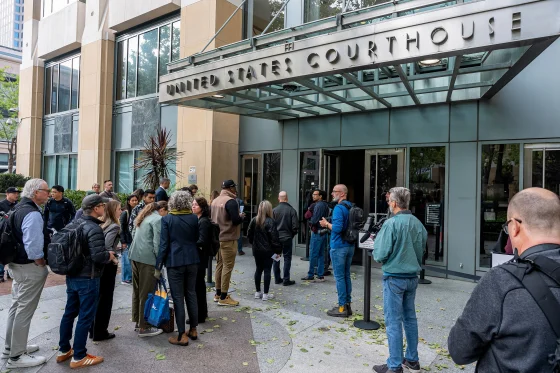
A major legal confrontation in the artificial intelligence industry has begun, with Tesla and SpaceX CEO Elon Musk sharply criticizing OpenAI chief executive Sam Altman during the first day of testimony in a closely watched federal trial in Oakland, California.
The lawsuit, centered on the future structure of OpenAI, could determine whether the organization is allowed to continue its transition from a nonprofit foundation to a for-profit model.
Musk Takes Stand in Opening Day Testimony
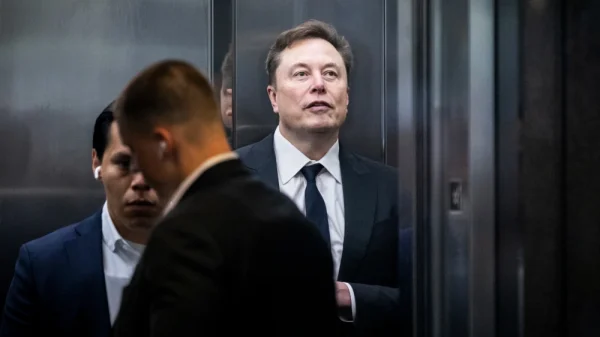
Appearing in court on Tuesday, Musk accused Altman and OpenAI leadership of abandoning the company’s founding mission. Musk, who co-founded OpenAI in 2015 before departing its board in 2018, claimed he played a central role in its early development.
“I came up with the idea, name, recruited the key people, provided the funding,” Musk testified, arguing that the organization was originally intended to remain a nonprofit focused on public benefit rather than commercial gain.
He further stated that OpenAI was designed to ensure that “no person shall benefit from this charity,” emphasizing that the organization’s original structure was meant to prevent private enrichment.
Core of the Legal Dispute
The lawsuit filed by Musk seeks to block OpenAI’s restructuring into a for-profit entity and alleges that the company has deviated from its original nonprofit commitments. Musk has also claimed that the shift undermines transparency and violates commitments made to donors and regulators.
His legal filing accuses OpenAI of becoming what he described as a “closed-source, profit-maximizer,” arguing that the transformation could have broader consequences for the tech and nonprofit sectors.
Musk also warned in court that allowing such a transition could set a dangerous precedent for charitable organizations in the United States.
OpenAI Defends Its Transformation
OpenAI’s legal team strongly rejected Musk’s allegations, arguing that his departure from the organization was driven by disagreements over control rather than mission.
Attorneys for the company said Musk failed to deliver on a previously promised financial contribution and later attempted to gain greater influence over the organization’s direction, including proposals to align it more closely with his electric vehicle company, Tesla.
They also argued that OpenAI’s global rise, particularly following the launch of ChatGPT, was achieved independently of Musk’s involvement.
OpenAI lawyer Bill Savitt described the lawsuit as an attempt by Musk to “bully” the organization after failing to secure control.
Background: From Collaboration to Rivalry
Musk and Sam Altman were once collaborators during OpenAI’s early development, but their relationship deteriorated over disagreements regarding governance and commercialization.
Musk left the OpenAI board in 2018. Since then, he has become one of the company’s most prominent critics, particularly as OpenAI has grown into a leading force in generative AI technology.
The company’s chatbot, ChatGPT, launched in 2022 and helped accelerate widespread adoption of artificial intelligence tools across industries.

OpenAI’s Corporate Restructuring Under Scrutiny
At the center of the trial is OpenAI’s recent restructuring, which introduced a for-profit model while maintaining nonprofit oversight. The company has argued that the change is necessary to secure large-scale investment and continue developing advanced AI systems.
OpenAI has also raised significant funding in recent years, positioning itself as one of the most influential companies in the global AI sector.
Musk, however, claims the restructuring violates the organization’s founding principles and represents a departure from its original charitable mission.
Broader Implications for the AI Industry
The outcome of the case could have far-reaching consequences for the governance of artificial intelligence companies, particularly those originally founded as nonprofits.
The trial is expected to last several weeks and may include testimony from high-profile tech leaders and researchers, potentially shaping how future AI organizations balance profit motives with public-interest goals.
What Comes Next
Musk’s testimony is expected to continue in the coming days as both sides present evidence supporting their claims. The court’s final decision could influence not only OpenAI’s corporate structure but also broader debates over ethics, control, and commercialization in artificial intelligence.