




















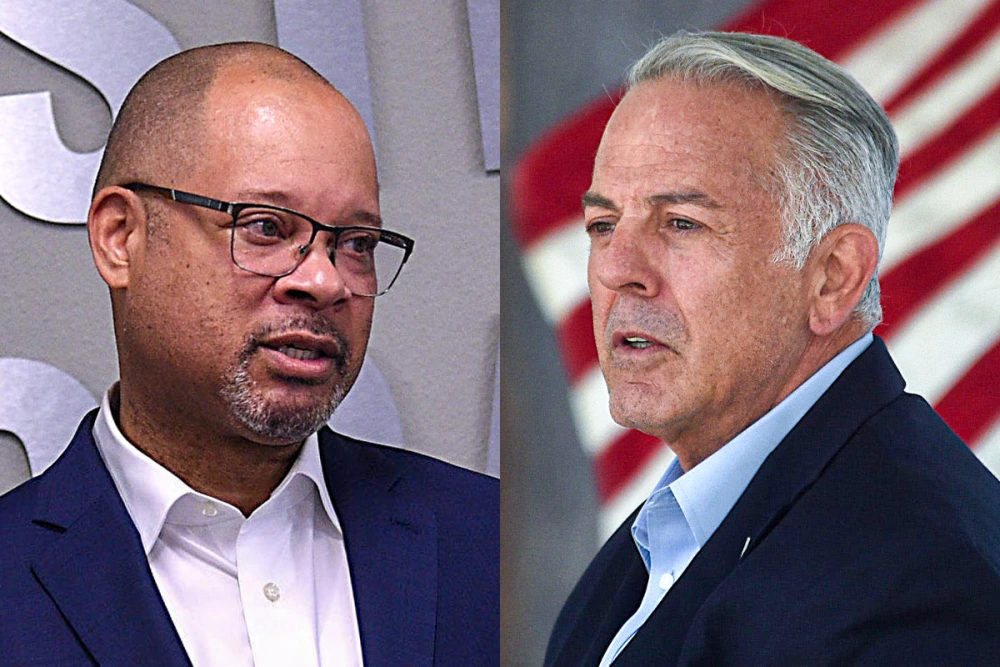
CARSON CITY, Nevada — Nevada’s 2026 governor’s race is officially set, with Republican incumbent Joe Lombardo and Democratic challenger Aaron Ford advancing from their respective primaries, according to election projections.
The matchup sets the stage for one of the most closely watched gubernatorial battles in the United States this election cycle, in a politically competitive state that has repeatedly swung between parties in recent years.
Primary Victories Confirm Expected Matchup
Lombardo secured the Republican nomination with ease, defeating a field of lesser-known challengers as he seeks a second term in office. Ford, Nevada’s attorney general and former state Senate majority leader, won the Democratic primary with a commanding share of the vote.
The outcome had been widely anticipated, but it formalizes a general election contest that both parties have been preparing for over months of campaigning and political positioning.
Nevada Remains a True Battleground State
Nevada continues to rank among the nation’s most competitive political environments. Lombardo previously won the governor’s office in 2022 by a narrow margin of fewer than 2 percentage points, underscoring the state’s divided electorate.
Recent elections have shown a pattern of split-ticket voting, with Democrats and Republicans alternating victories in statewide contests. Analysts say this trend reinforces Nevada’s status as a key battleground heading into 2026.
Campaign Messaging Centers on Economy and Cost of Living
Economic concerns are expected to dominate the race, with both candidates focusing heavily on jobs, inflation, housing affordability, and energy prices.
Democrats are attempting to tie Lombardo to national Republican policies and former President Donald Trump, arguing that those policies have contributed to rising costs in Nevada.
Lombardo, meanwhile, is emphasizing job growth, business investment, and housing initiatives implemented during his administration, framing his leadership as pragmatic and results-driven.
Key Policy Flashpoints in the Race
Among the most debated issues is Nevada’s reliance on Medicaid funding and the impact of federal tax and spending policies on the state’s tourism-heavy economy. Democrats argue that Republican-backed federal legislation could strain healthcare access and tourism revenues.
Housing affordability is also emerging as a defining issue. The Lombardo administration points to state-backed investment in housing development, while Democrats criticize vetoed proposals and ongoing cost pressures faced by residents.
Voter Demographics Could Shape Outcome
Latino voters, who represent roughly one-fifth of Nevada’s electorate, are expected to play a decisive role. Political analysts note shifting voter preferences in recent elections, including gains made by Republicans in 2024.
Campaign strategists from both parties are focusing on economic messaging tailored to working-class and suburban voters, who often determine statewide outcomes in Nevada.
Fundraising and Spending Advantage for Incumbent
Early financial reports show Lombardo entering the general election with a significant fundraising and advertising advantage. His campaign and allied groups have already spent millions on early advertising efforts, far outpacing Democratic spending at this stage of the race.
Democrats, however, argue that voter dissatisfaction with economic conditions presents an opportunity to overcome financial disadvantages.

What Happens Next
As the general election approaches, both campaigns are expected to intensify outreach efforts across Las Vegas, Reno, and rural Nevada communities. Debates, advertising campaigns, and voter mobilization efforts will play a central role in shaping the final outcome.
With Nevada’s history of razor-thin margins, the race between Lombardo and Ford is expected to remain one of the most competitive gubernatorial contests in the country.