























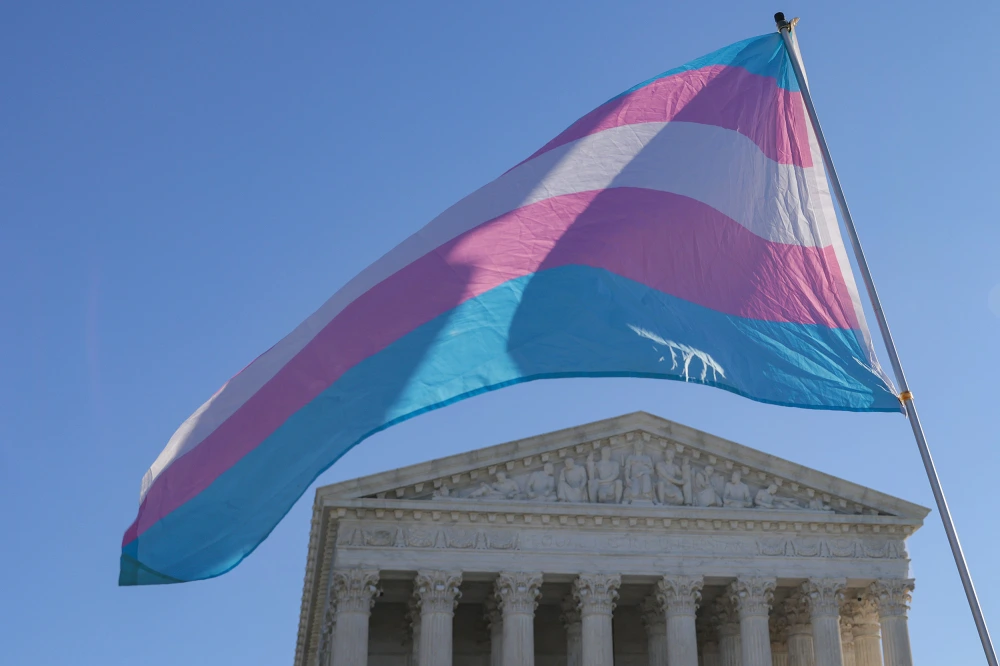
The U.S. Supreme Court on Monday blocked California from enforcing policies that limit when public schools can inform parents about a student’s transgender status and require educators to use a child’s preferred pronouns.
In a 6–3 decision divided along ideological lines, the court allowed a lower court ruling favoring a group of religious parents to take effect while litigation continues. The decision represents a significant development in the ongoing national debate over parental rights, religious freedom and LGBTQ student protections in schools.
High Court Sides With Parents on Religious Grounds
The unsigned opinion concluded that parents challenging the policy are likely to succeed on their claim that the rules violate the First Amendment’s Free Exercise Clause. The justices said the parents demonstrated sincere religious beliefs regarding sex and gender and argued they have a constitutional right to guide their children’s upbringing in accordance with those beliefs.
The court also found that the parents raised valid claims under the 14th Amendment, citing longstanding precedent affirming that parents hold primary responsibility for decisions related to their children’s education and well-being.
“The right protected by these precedents includes the right not to be shut out of participation in decisions regarding their children’s mental health,” the court stated.
However, the justices declined to extend similar relief to teachers who objected to the policy, narrowing the scope of the ruling to parental claims.
The decision temporarily lifts a stay imposed by the 9th U.S. Circuit Court of Appeals, which had paused a federal district court ruling against the state’s policy.
Liberal Justices Dissent
The court’s three liberal justices — Sonia Sotomayor, Elena Kagan and Ketanji Brown Jackson — dissented.
Justice Kagan criticized the majority for embracing a parental rights argument rooted in the 14th Amendment’s substantive due process doctrine. She noted that the same constitutional theory was rejected by the court in its 2022 decision overturning abortion rights.
Kagan also referenced a 2025 ruling in which the court upheld state bans on gender transition treatments for minors but declined to consider a parental rights challenge brought by parents seeking gender-affirming care for their children. The contrasting approaches, she wrote, create doctrinal inconsistency.
California Officials Express Disappointment
California Attorney General Rob Bonta said his office was disappointed with the ruling but reaffirmed the state’s commitment to maintaining safe and inclusive school environments.
State officials argue that the guidance at issue — including policies issued by the California Department of Education in 2016 and further clarification in 2024 — does not mandate secrecy. Instead, they say schools are permitted to balance parental interests with a student’s right to privacy, particularly when disclosure could pose risks to the child.
The 2024 guidance specifies that blanket “forced disclosure” policies requiring schools to notify parents in every instance of a student’s gender identity change violate state anti-discrimination laws and privacy protections.
Conservative Legal Group Praises Ruling
The parents and teachers challenging the policy are represented by the Thomas More Society, a conservative legal organization.
Attorneys for the group hailed the decision as a landmark victory for parental rights, arguing that states cannot exclude parents from significant decisions about their children’s identity and education.

Broader National Implications
The ruling adds to a growing list of Supreme Court decisions addressing the intersection of parental authority, religious liberty and LGBTQ rights in public education.
Legal analysts say the case could have far-reaching implications for similar policies in other states, particularly as legislatures and school boards nationwide grapple with how to address gender identity issues in classrooms.
For now, California is barred from enforcing the challenged restrictions while lower court proceedings continue — ensuring that the debate over student privacy and parental notification will remain at the forefront of national legal and political discourse.