
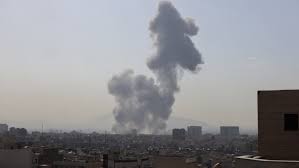
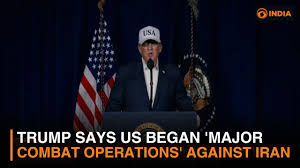















Tehran — Ayatollah Ali Khamenei, the cleric who ruled Iran as supreme leader for more than three decades and shaped the Islamic Republic’s domestic and foreign policy, was killed Saturday in sweeping U.S. and Israeli airstrikes. He was 86.
President Donald Trump announced Khamenei’s death on social media, and Iranian state outlets later confirmed it. The killing marks a dramatic turning point for a nation long defined by Khamenei’s firm grip on power.
A Polarizing Figure in Iranian History
To supporters, Khamenei was a steadfast defender of Iran’s sovereignty who resisted pressure from Washington and Jerusalem. To critics, he was an authoritarian ruler who centralized power, empowered security forces and oversaw violent crackdowns on dissent.
In recent weeks, Iranian authorities launched one of the harshest protest suppressions in the country’s modern history. Human rights groups estimate that thousands were killed as security forces sought to quash anti-government demonstrations. Khamenei’s opponents viewed the crackdown as a final effort to maintain control amid mounting unrest.
His death leaves Iran at a volatile crossroads, with anti-government protesters and powerful security factions — particularly the Islamic Revolutionary Guard Corps — positioned in a tense struggle for influence.
From Humble Beginnings to Supreme Power
Born on April 19, 1939, in the holy city of Mashhad, Khamenei was the son of a modest Islamic scholar. He often described his childhood as austere, recalling meals of bread and raisins during difficult times.
As a young cleric, he studied in the Shiite seminaries of Najaf, Iraq, before continuing his education in Qom, Iran’s religious center. There, he became closely associated with Ayatollah Ruhollah Khomeini, the revolutionary leader who would overthrow Shah Mohammad Reza Pahlavi in 1979.
Khamenei was arrested multiple times during the 1960s and 1970s for his opposition to the monarchy. Following the revolution, he rose quickly through the ranks of the new Islamic Republic.
Presidency and Rise to Supreme Leader
Khamenei served as Iran’s president from 1981 to 1989, during the brutal Iran-Iraq War that claimed tens of thousands of lives. In 1981, he survived an assassination attempt when a bomb exploded during a speech, leaving his right arm permanently paralyzed.
After Khomeini’s death in 1989, Khamenei was selected as supreme leader — a decision that surprised some observers at the time. With backing from influential clerics, including Akbar Hashemi Rafsanjani, he consolidated authority and gradually strengthened the Islamic Revolutionary Guard Corps (IRGC), transforming it into the country’s dominant military and economic force.
Confrontations at Home and Abroad
Throughout his tenure, Khamenei faced repeated waves of protest — in 1999, 2009, 2019, 2022 and most recently in early 2026. Each time, the state responded with arrests and, at times, lethal force.
Internationally, he championed a confrontational stance toward the United States and Israel, supporting allied groups across Lebanon, Gaza, Iraq and Yemen. Yet he also demonstrated pragmatism, approving Iran’s participation in the 2015 nuclear agreement known as the Joint Comprehensive Plan of Action.
When Trump withdrew the United States from the accord in 2018, Khamenei hardened his rhetoric, arguing that Washington could not be trusted in diplomatic agreements.
A Nation at a Crossroads
Khamenei’s death comes as Iran endures one of the most turbulent periods since the 1979 revolution. The Islamic Revolutionary Guard Corps — long his most loyal power base — now faces questions about succession and stability amid continued military pressure from abroad.
Whether Iran transitions through constitutional mechanisms or descends into deeper internal conflict remains uncertain. What is clear is that the cleric who dominated Iranian politics for a generation is gone, leaving behind a nation confronting profound political and historical change.