



















Federal immigration operations under President Donald Trump are facing intensifying legal and public scrutiny after a series of confrontations left protesters across multiple cities with broken bones, head injuries and chemical burns.
An extensive review by NBC News found that officers from the Department of Homeland Security (DHS) repeatedly deployed so-called “less lethal” weapons — including rubber bullets, pepper spray, tear gas and flash-bang grenades — in ways that appear inconsistent with agency policy and broader policing standards.
Courts in at least four states have questioned whether force was used indiscriminately, particularly in situations involving peaceful demonstrators.
A Pattern of Escalation
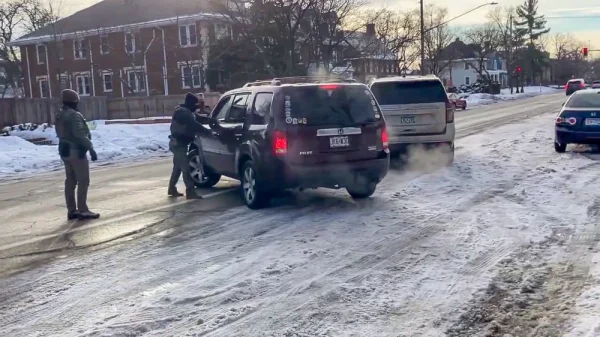
Since late spring, federal immigration raids in cities including Los Angeles, Portland, Chicago and Minneapolis have triggered public protests. Witness accounts, court filings and video footage reviewed by reporters show a recurring pattern: heavily armed federal officers conducting open-air enforcement operations are met by vocal crowds, and confrontations quickly escalate into the use of chemical agents and projectile munitions.
While DHS has acknowledged injuries to officers and described a “coordinated campaign of violence” against its personnel, civil rights attorneys and former officials argue that responses have frequently exceeded what policies permit.
Rubén Castillo, a former federal prosecutor who now leads the Illinois Accountability Commission, said he has never seen federal agents act with such aggressiveness. Judges reviewing body-camera footage in Chicago and Los Angeles described some tactics as excessive and constitutionally troubling.
The Weapons at Issue
“Less lethal” weapons are designed to incapacitate rather than kill, but medical experts note they can cause serious harm when misused. Injuries reported during recent protests include fractured jaws, concussions, vision impairment and deep bruising.
Guidelines issued in 2022 by the Police Executive Research Forum advise against using such weapons on peaceful demonstrators and caution that flash-bang devices — originally designed for hostage situations — should not be deployed in crowd control settings.
DHS policies require officers to attempt de-escalation when possible and to use force only when “objectively reasonable.” Customs and Border Protection policy specifies that chemical agents should not be directed at the head, neck or groin and should not be used against children or drivers unless an officer’s life is in danger.
However, multiple federal judges have ruled that officers appeared to cross those lines.
Los Angeles: Raids and Resistance
Large-scale immigration operations began in Southern California in late May, as the administration sought to increase daily detention numbers. Border Patrol commander Gregory Bovino was recorded encouraging officers to respond forcefully to interference.
Protesters in Santa Ana and Camarillo reported being struck by rubber bullets and tear gas canisters without warning. Several individuals said they were hit in the head or groin at close range. Two young men in Los Angeles suffered partial vision loss after being struck by projectiles.
A federal judge later found that officers had deployed crowd-control weapons “indiscriminately,” ordering limits on chemical agents unless officer safety was clearly at risk. The administration has challenged portions of that ruling.
Chicago: Federal Courts Intervene
Operations intensified in Chicago in September under a campaign labeled “Operation Midway Blitz.” Protests outside immigration facilities in Broadview and surrounding neighborhoods were met with tear gas, flash-bangs and pepper balls.
U.S. District Judge Sara Ellis concluded after reviewing video evidence that some DHS actions “shock the conscience,” restricting the use of chemical agents against nonviolent protesters.

Despite court orders, further clashes followed in suburban neighborhoods, including incidents in which tear gas drifted into residential areas and near schools. DHS has defended its actions as necessary responses to agitators who posed threats to officers.
Minneapolis: Deadly Encounters Spark Outrage
The confrontation reached a breaking point in Minneapolis, where roughly 3,000 federal officers were deployed in January. During that surge, two U.S. citizens — Renee Good and Alex Pretti — were fatally shot in separate incidents involving federal agents.
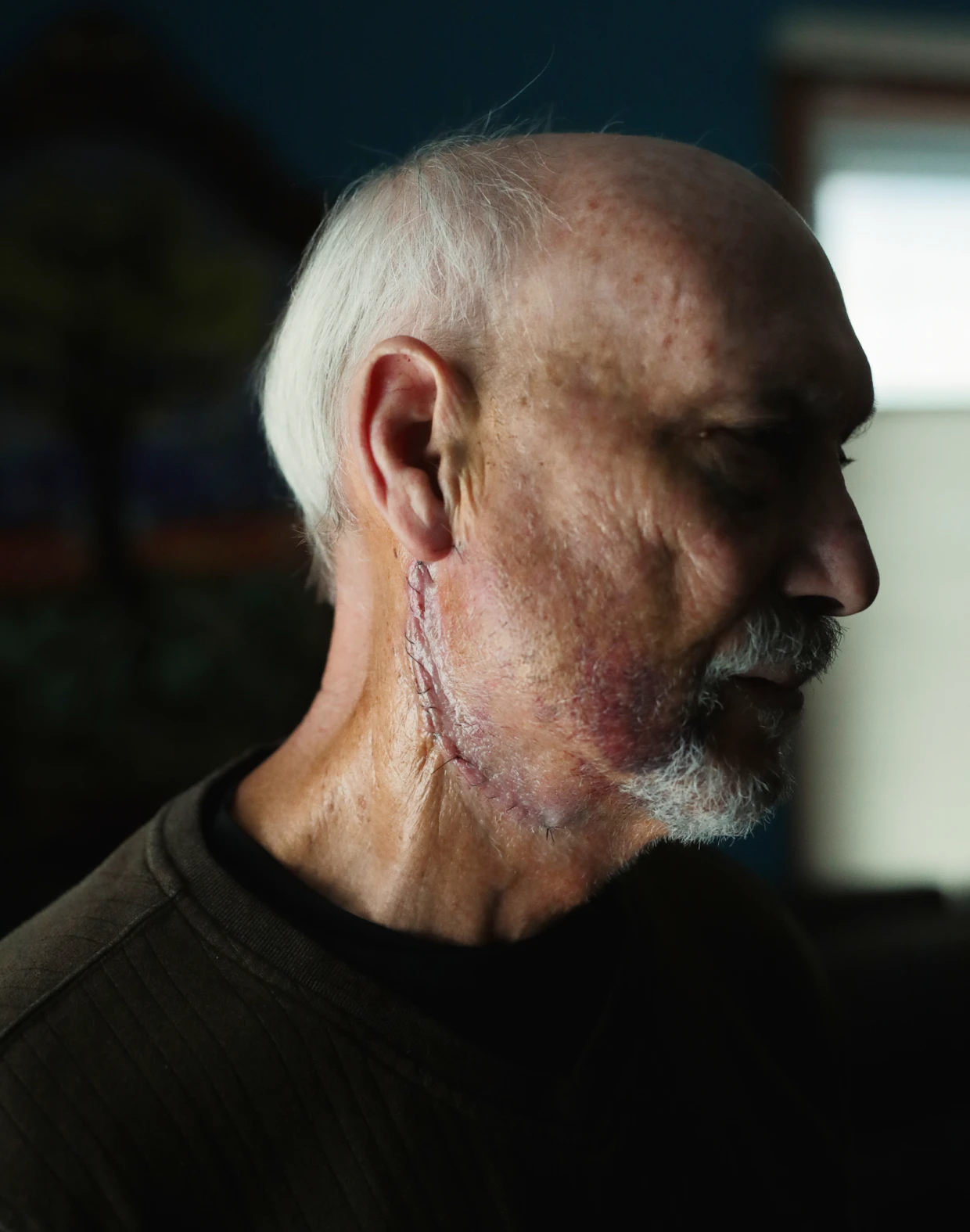
The deaths ignited days of protests. Demonstrators reported being pepper-sprayed at close range and struck with flash-bang grenades. In one case, a 73-year-old protester required reconstructive surgery after an explosive device detonated near his face.
Following mounting criticism, DHS scaled back its Minneapolis presence, reassigned field leadership and announced expanded use of body cameras. President Trump later suggested a “softer touch” might be warranted, though he maintained that enforcement must remain tough.
DHS Response and Legal Barriers
DHS maintains that officers are highly trained and that each use of force is documented and reviewed. The agency declined to provide data on the number of force reports filed over the past year or whether any officers have faced discipline.
Legal experts note that federal law makes it difficult to sue individual officers, though multiple civil rights lawsuits are pending in California, Illinois and Minnesota.
In Portland, U.S. District Judge Michael Simon temporarily restricted DHS use of force after officers fired tear gas at a crowd that included children. In his ruling, Simon wrote that the country appears to be at “a crossroads” over how law enforcement balances public safety with constitutional rights.
A National Debate Over Force
Supporters of the administration argue that officers are facing unprecedented hostility and must defend themselves. Critics counter that the visible and repeated use of chemical weapons against protesters — many of whom were chanting or filming — has eroded public trust and raised serious First Amendment concerns.
As litigation advances and investigations continue, the central question remains unresolved: whether the federal government’s aggressive immigration enforcement strategy has blurred the line between crowd control and excessive force.