





















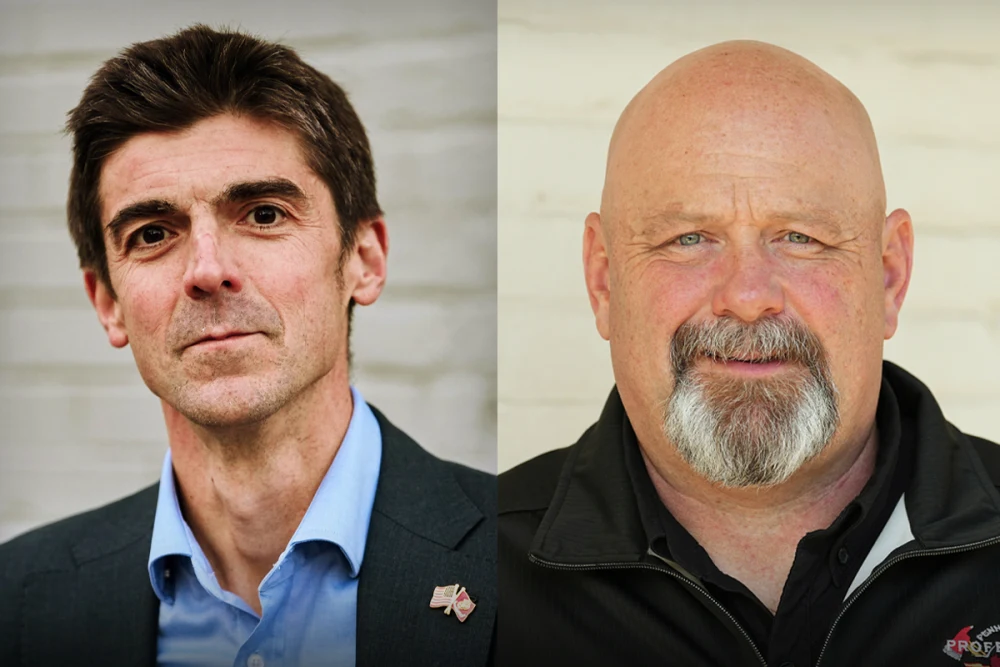
A closely watched Democratic primary in Pennsylvania’s 7th Congressional District is offering early clues about how the national party is reshaping its message ahead of the 2026 midterm elections, as competing visions of leadership, identity, and voter appeal play out in one of the country’s most competitive House districts.
The district, which stretches across the Lehigh Valley, has shifted between parties in recent election cycles and remains one of the most closely divided political battlegrounds in the country. In Tuesday’s primary, Democratic voters are choosing between candidates who represent sharply different approaches to winning over swing voters in a politically volatile region.
Competing Democratic Messages: Working-Class Appeal vs. Institutional Experience
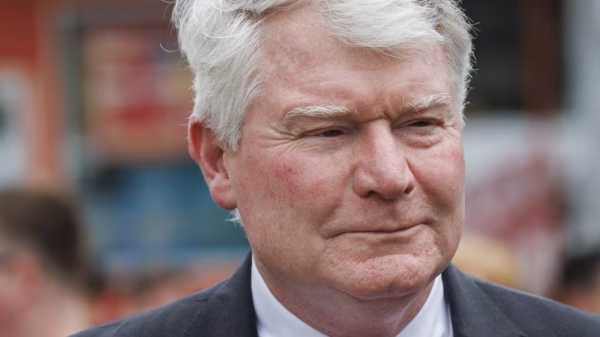
At the center of the race is a contrast between two leading contenders: Bob Brooks, a labor union leader and firefighter, and Ryan Crosswell, a former federal prosecutor and Marine veteran.
Brooks has positioned himself as a working-class populist, arguing that Washington politics is disconnected from everyday Americans. Speaking to supporters, he emphasized his lifelong ties to labor and local community life, framing his campaign as part of a broader effort to bring “ordinary people” into political leadership.
His message has gained support from influential figures across the Democratic spectrum, including progressive Sen. Bernie Sanders and Pennsylvania Gov. Josh Shapiro, reflecting a rare ideological overlap in backing a single candidate.
Across the race, Brooks has been described by supporters as a “blue-collar voice” who can better connect with voters concerned about wages, housing costs, and economic security.
In contrast, Crosswell has focused his campaign on accountability, governance, and opposition to former President Donald Trump’s influence on American institutions. A former Justice Department prosecutor, he has highlighted his resignation from a public integrity role over a high-profile corruption case decision, describing it as a stand against political interference.
Crosswell argues that corruption and institutional decline are central issues for voters and presents himself as a candidate willing to challenge Trump-aligned politics directly.
A District That Reflects National Political Balance
Pennsylvania’s 7th District has become a key indicator of national political trends. Recent elections show just how closely divided the region has become: Donald Trump narrowly won the district in 2024, while Joe Biden carried it in 2020. Statewide Democratic strength, particularly under Gov. Josh Shapiro, has also shaped voter behavior in recent cycles.
The district is now open for a competitive general election after Republican Rep. Ryan Mackenzie defeated Democrat Susan Wild by a narrow margin in 2024.
Democrats view the seat as critical to regaining House control, making the primary outcome especially significant for national strategy.
National Democratic Leaders Rally Behind “Everyman” Candidate
Party leaders and affiliated organizations have largely aligned behind Brooks, signaling what many see as a strategic push toward candidates with strong working-class identities.
Supporters argue that Brooks represents a shift away from traditional political profiles dominated by lawyers and policy professionals. Advocacy groups and Democratic strategists say voters increasingly respond to candidates who reflect local communities rather than Washington insiders.
The alignment includes support from progressive organizations, major party committees, and labor groups, suggesting a coordinated effort to elevate his candidacy.
However, Crosswell has maintained a fundraising advantage, reflecting strong support among donors who prefer candidates with legal and national security backgrounds. His campaign has emphasized institutional reform and opposition to Trump-aligned governance.

Broader Debate Over Democratic Identity
The Pennsylvania race has become a focal point in an ongoing debate within the Democratic Party: whether the path to winning swing districts lies in promoting working-class, locally rooted candidates or in relying on experienced professionals with national security or legal credentials.
Some strategists argue that voters are increasingly drawn to candidates who appear culturally relatable and economically grounded. Others maintain that swing districts still reward candidates who can demonstrate expertise, credibility, and a strong anti-Trump stance.
The diversity of candidates in the race—including a former county executive and an engineering professional with ties to national Democratic figures—underscores the lack of consensus on a single winning formula.
Internal Tensions and Competitive Spending Shape the Race
The primary has also drawn significant outside attention and spending from aligned political groups. Progressive and establishment-aligned organizations have both invested resources, while outside political committees have added further momentum to the contest.
Despite endorsements and fundraising advantages, polling and internal assessments suggest a tightly contested race heading into the final stretch.
The contest has also become increasingly combative, with scrutiny over past statements, financial disclosures, and political positioning shaping voter perceptions.
A Test Case for Democrats Ahead of 2026
Political analysts view the Pennsylvania 7th District primary as a potential blueprint for how Democrats may approach other battleground districts in the 2026 cycle.
Similar candidates with working-class or outsider credentials are emerging in other states, reflecting a broader national trend toward populist messaging within the party’s electoral strategy.
As Democrats work to expand their appeal beyond core anti-Trump voters, the outcome in Pennsylvania may help determine whether the party leans further into populist identity politics or continues emphasizing institutional experience and national political credentials.
The winner of the primary will face Republican incumbent Ryan Mackenzie in the general election this fall in one of the most closely watched House races in the country.