




















As tensions in the Strait of Hormuz continue to disrupt global energy flows, attention is increasingly shifting to another critical maritime artery — the Strait of Malacca — where policymakers warn that a similar crisis could have far-reaching consequences for global trade and security.
The strategic waterway, located between Indonesia, Malaysia, and Singapore, is one of the busiest shipping routes in the world and plays a vital role in transporting energy supplies and goods between the Middle East and major Asian economies.
A vital artery for global trade
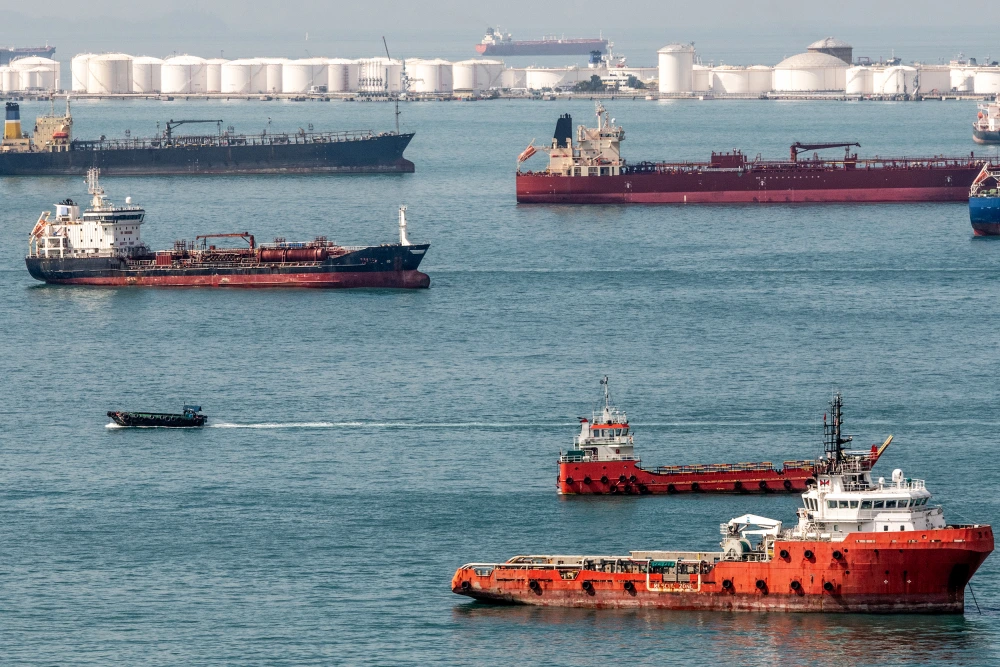
The Strait of Malacca handles more than a quarter of global maritime trade, including a significant share of crude oil shipments originating from the Persian Gulf and destined for major markets such as China, Japan, and South Korea.
Its narrow geography makes it one of the most strategically important chokepoints in international shipping. At its tightest point, the strait is significantly narrower than other key global passages, increasing its vulnerability in the event of geopolitical tensions or military conflict.
Rising concerns over geopolitical spillover
The ongoing disruption in the Strait of Hormuz has intensified discussions about the security of global sea lanes, particularly in Asia. Officials in Singapore have warned that instability in one chokepoint could serve as a preview of future risks in other critical maritime corridors.
Singapore’s Foreign Minister Vivian Balakrishnan has previously cautioned that escalating tensions in strategic waterways could represent a “dry run” for larger conflicts in the Indo-Pacific region, especially in the event of a confrontation between the United States and China.
The Strait of Malacca is seen as particularly sensitive due to its importance to both Chinese imports and the energy security of U.S. allies in Asia.
Strategic importance for global powers
The waterway serves as a major supply route for China, linking the Indian Ocean with the South China Sea and the broader Pacific region. At the same time, it is essential for energy shipments to countries such as Japan, South Korea, and the Philippines.
The United States has maintained a long-standing naval presence in the wider Indo-Pacific through its U.S. Navy 7th Fleet, which has historically supported freedom of navigation operations and regional stability.
Meanwhile, China has significantly expanded its naval capabilities over the past decades, becoming a dominant maritime force and seeking to reduce its dependence on vulnerable shipping routes — a challenge often referred to as the “Malacca dilemma.”
What a disruption could mean for shipping
Experts say a blockade or restriction in the Strait of Malacca would not completely cut off global trade but would force shipping companies to reroute vessels through longer and more expensive alternative passages, such as the Lombok Strait or routes around Indonesia.
Such detours would increase transit times, raise fuel costs, and potentially disrupt supply chains across Asia, particularly for energy imports.
However, analysts note that unlike the Strait of Hormuz, the Strait of Malacca has alternative routes, meaning any closure would likely cause significant disruption rather than a total halt in global shipping.
Regional cooperation and maritime governance
Unlike Hormuz, the Strait of Malacca is governed by cooperative arrangements between surrounding nations, including Singapore, Malaysia, Indonesia, and Thailand. These agreements include joint maritime patrols, surveillance coordination, and intelligence sharing aimed at ensuring safe passage for international shipping.
Officials in the region have emphasized that the strait is governed under international maritime law, including the U.N. Convention on the Law of the Sea (UNCLOS), which guarantees transit passage rights for commercial vessels.

Singaporean leaders have reiterated that no unilateral action to restrict or monetize passage — such as proposed toll systems — would be accepted in the region.
Lessons from Hormuz crisis
The ongoing instability in the Strait of Hormuz has prompted renewed debate over global maritime security frameworks. Experts argue that the crisis highlights how vulnerable global trade is to geopolitical conflict in narrow shipping lanes.
Some analysts believe the situation underscores the importance of strengthening international cooperation to protect key waterways from becoming instruments of political leverage.
As one maritime security expert noted, the shifting dynamics of naval power mean that maintaining freedom of navigation increasingly depends on diplomacy and coordinated governance rather than military dominance alone.