





















Ukraine’s hard-earned expertise in countering drone attacks is now drawing international attention, as nations in the Middle East face growing threats from Iran’s drone operations.
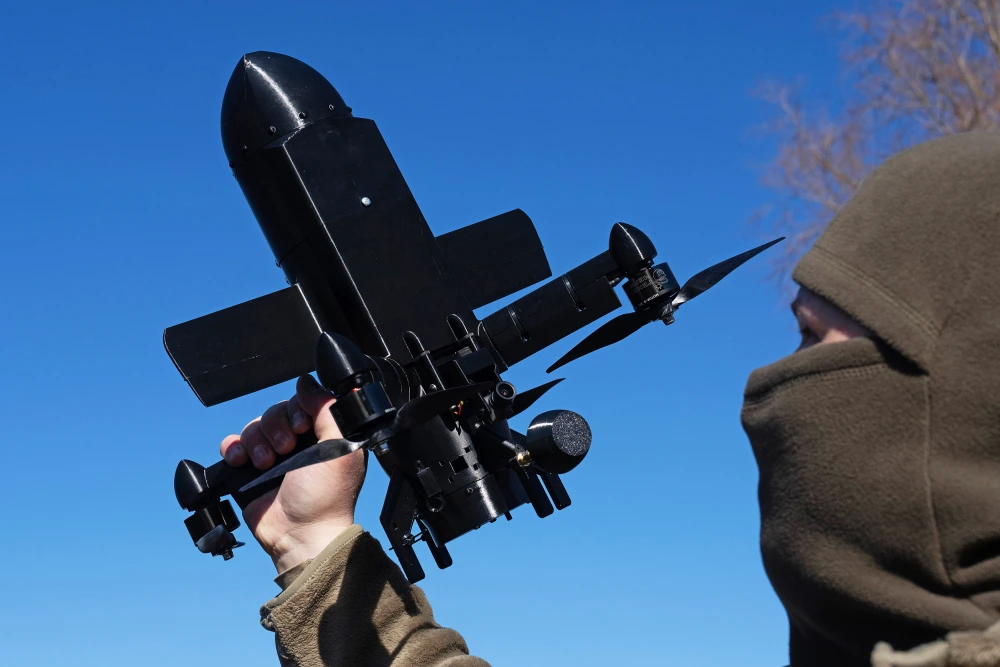
Years of nightly Russian drone attacks have turned Ukraine into a global leader in practical anti-drone solutions. Ukrainian companies like General Cherry produce interceptor drones that neutralize threats at a fraction of the cost of traditional missile systems, a capability now sought by countries struggling to protect critical infrastructure, military bases, and civilian areas from Iranian strikes.
From Battlefield Experience to Global Demand
Marko Kushnir, spokesperson for General Cherry, explained that Ukraine’s wartime innovation relies on a rapid feedback loop between frontline troops and manufacturers. “We get feedback in the morning and have new solutions operational by the evening,” he said. The company produces nearly 100,000 drones monthly, including models designed specifically to counter Iranian Shahed drones, which have also been used extensively by Russia.
President Volodymyr Zelenskyy confirmed that Kyiv has received multiple requests from the U.S., Middle Eastern nations, and European allies for training, electronic warfare systems, and drone interceptors. “Ukraine’s experience in countering attack drones is irreplaceable and the most advanced in the world,” Zelenskyy wrote on social media. He emphasized that Ukraine’s assistance is strictly defensive, aimed at protecting lives, not entering new conflicts.
Technology Exchange and Strategic Considerations
Ukrainian teams have already been dispatched to the Middle East to provide guidance and training. Officials noted that any partnership could involve exchanging expertise and technology, with Ukraine seeking both funding and access to air defense missiles to bolster its own defenses against Russian attacks.
Yuriy Ihnat of Ukraine’s Air Force said that Ukraine shoots down 80–90% of daily Russian drone attacks, with peak assaults involving up to 700 drones. “This is why other countries are turning to us for support,” Ihnat said.
While Ukrainian drone technology is battle-tested, experts caution that it may not be immediately transferable to the Middle East. Yaroslav Honchar of the nonprofit Aerorozvidka noted that environmental and operational conditions differ, meaning adaptations are necessary.
Geopolitical Challenges
Ukraine’s efforts have drawn scrutiny from Iran and its allies. Iranian officials warned that assisting Israel or other nations with drone defense could make Ukraine a target. Moscow has also closely monitored the situation, with reports suggesting that Russia is sharing intelligence with Iran, potentially complicating operational plans.
Despite these risks, Ukraine views the initiative as a strategic demonstration of its capabilities and a moral commitment to support nations facing drone threats. “We have been in the position of asking for help ourselves,” Honchar said. “Now we are able to offer expertise, reminding the world that principles of morality are still worth defending.”
Ukraine’s anti-drone industry continues to expand, serving as both a defensive necessity at home and a potential source of international influence and revenue, with implications for global security in an era of modern aerial threats.