



















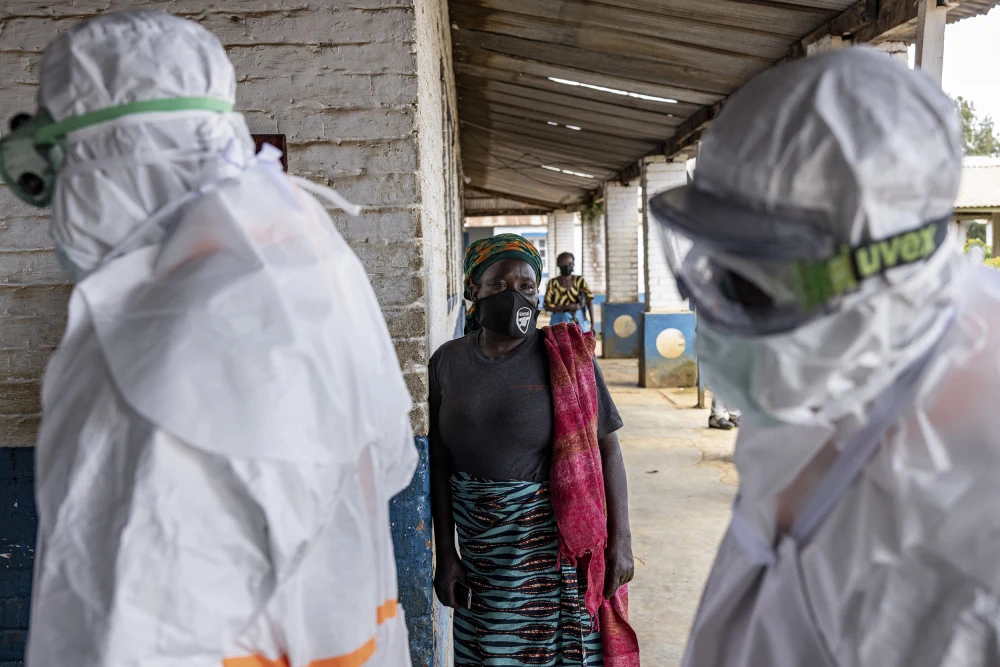
KAMPALA / GOMA — Three Red Cross volunteers have died after contracting Ebola during a humanitarian mission in the Democratic Republic of Congo, as confirmed cases of the virus continue to rise in neighboring Uganda, according to humanitarian and health officials.
The International Federation of Red Cross and Red Crescent Societies (IFRC) said the volunteers were likely infected during a field mission in March, before the Ebola outbreak had been officially identified in the region. The organization described them as “among the first known victims” linked to the current outbreak.
The deceased volunteers have been identified as Alikana Udumusi Augustin, Sezabo Katanabo, and Ajiko Chandiru Viviane. They died between May 5 and May 16 after participating in humanitarian work in the Mongbwalu area of eastern Congo’s Ituri province.
According to the IFRC, the infection is believed to have occurred during body management activities conducted as part of emergency response work unrelated to Ebola at the time. The volunteers were part of Congo’s national Red Cross network serving communities in one of the outbreak’s epicenters.
Outbreak spreads beyond Congo
Health authorities say the Ebola outbreak, first detected in Congo, has now crossed into Uganda, raising regional concern. The World Health Organization (WHO) has classified the situation as a public health emergency of international concern due to rising case numbers and ongoing transmission.
As of recent reports, Congo has recorded hundreds of suspected cases and dozens of confirmed infections, while Uganda has reported at least five confirmed cases, including healthcare workers and individuals exposed through contact tracing.
One case involves a Ugandan driver who transported a confirmed patient, while another involves a health worker infected while treating an Ebola patient. A Congolese national who entered Uganda with symptoms has also tested positive.
WHO calls outbreak “deeply concerning”
WHO Director-General Tedros Adhanom Ghebreyesus described the situation as “deeply worrisome,” warning that insecurity in affected regions is complicating containment efforts. Health workers face challenges in surveillance, contact tracing, and safe burial procedures due to local resistance and instability.
International agencies, including the WHO, the U.S. Centers for Disease Control and Prevention (CDC), and Doctors Without Borders, are assisting response efforts, while emergency funding has been mobilized to strengthen containment operations.
No approved treatment for current strain
Health experts say the outbreak is being driven by the Bundibugyo strain of Ebola, a rare and severe form of the virus that causes hemorrhagic fever and currently has no approved vaccine or specific treatment.
To prevent further spread, authorities in multiple countries have introduced travel screening measures, quarantine protocols, and entry restrictions for travelers from affected regions.
As investigations continue, health officials warn that case numbers may rise further as surveillance expands in remote and conflict-affected areas.