


















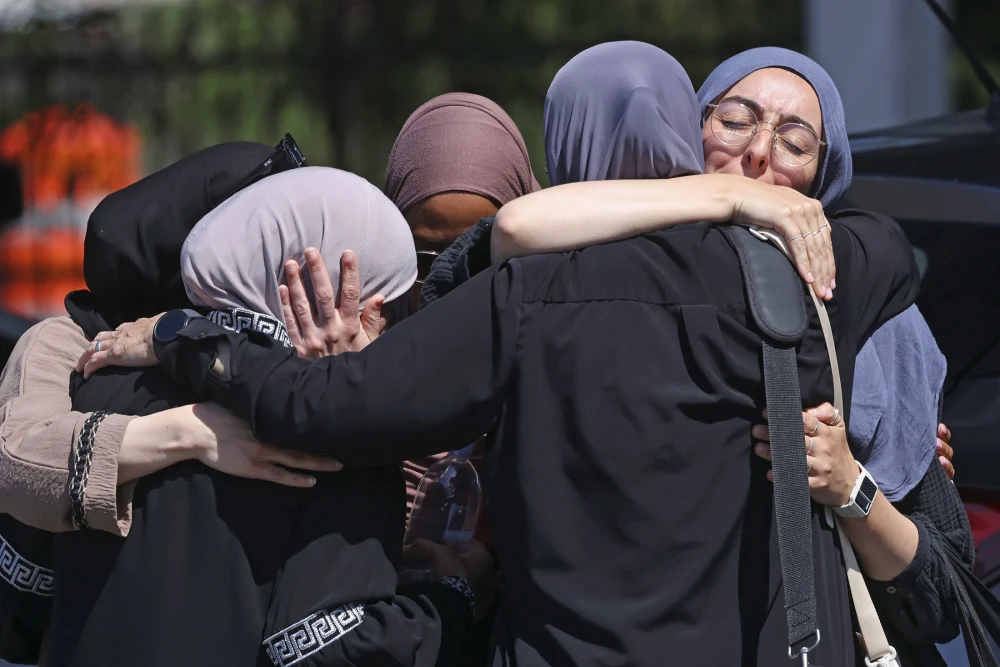
SAN DIEGO — A deadly attack at the Islamic Center of San Diego has left three people dead and renewed urgent concerns about rising hate-driven violence targeting religious communities across the United States.
Authorities said two armed attackers attempted to storm the city’s largest mosque earlier this week. They were ultimately stopped by community members and security personnel who confronted the assailants, preventing what officials believe could have been a much larger massacre involving around 140 children and teachers inside the facility.
Among those killed were a security guard, a longtime community store manager, and a local resident who rushed toward the gunfire in an attempt to protect others. Officials have described their actions as heroic, saying their intervention likely saved many lives.
Attack Highlights Growing Fear at Religious Sites
The incident has deeply shaken San Diego’s Muslim community and intensified concerns about safety at houses of worship, including mosques, synagogues, and churches. Community members say the attack reflects a broader rise in extremist rhetoric and online radicalization.
Investigators believe the suspects were influenced by neo-Nazi ideology and had expressed hatred toward multiple religious and minority groups. Authorities say the attackers were radicalized online and shared extremist goals, including support for a white supremacist worldview.
Longstanding Security Concerns in San Diego
San Diego has previously experienced religiously motivated violence, including a 2019 synagogue shooting in Poway that killed one person and injured several others. That attack, along with recent vandalism and hate-related incidents across the region, has heightened security concerns.
Local data shows a troubling rise in religiously motivated hate crimes, even as other categories of hate crime have declined. Community leaders say this trend has forced many religious institutions to increase security measures such as armed guards, surveillance systems, and restricted access points.
Community Leaders Warn of Escalating Hate
Faith leaders and advocacy organizations are warning that extremist narratives are spreading more rapidly through online platforms and public discourse, contributing to increased polarization and violence.
Islamic advocacy groups report a significant rise in anti-Muslim complaints nationwide in recent years, while Jewish organizations also continue to report elevated levels of antisemitic incidents, highlighting what experts describe as a broader pattern of overlapping hate-based threats.
Calls for Action and Greater Protection
Local Muslim leaders say they have repeatedly raised concerns about safety and requested stronger engagement from city officials and law enforcement. While officials insist they are committed to protecting all religious communities, many residents feel that more proactive measures are needed.
Security spending at religious institutions has increased significantly nationwide, reflecting growing fears among faith communities that attacks can occur anywhere, regardless of local political climate.
As investigations continue, authorities and community leaders are calling for stronger prevention efforts, improved monitoring of extremist activity online, and greater protection for vulnerable public gathering spaces.