






















The U.S. Defense Department is sending additional warships, air defense systems, and submarines to the Middle East in preparation for a potential strike on Iran, according to U.S. officials and publicly available tracking data. The deployment comes as diplomatic talks between the U.S. and Iran continue, aiming to avert conflict.
Diplomatic Talks Continue
Indirect talks were held in Geneva on Tuesday, with Trump’s special envoy Steve Witkoff and son-in-law Jared Kushner meeting Iranian Foreign Minister Abbas Araghchi. Both sides reported some progress, though major differences remain, particularly regarding Iran’s missile program and nuclear work.
White House press secretary Karoline Leavitt said Wednesday, “there was some progress made… but there are still a lot of details to discuss.”
The U.S. administration has set “red lines” that Iran has so far refused to negotiate on, making a breakthrough uncertain.
Military Buildup in the Region
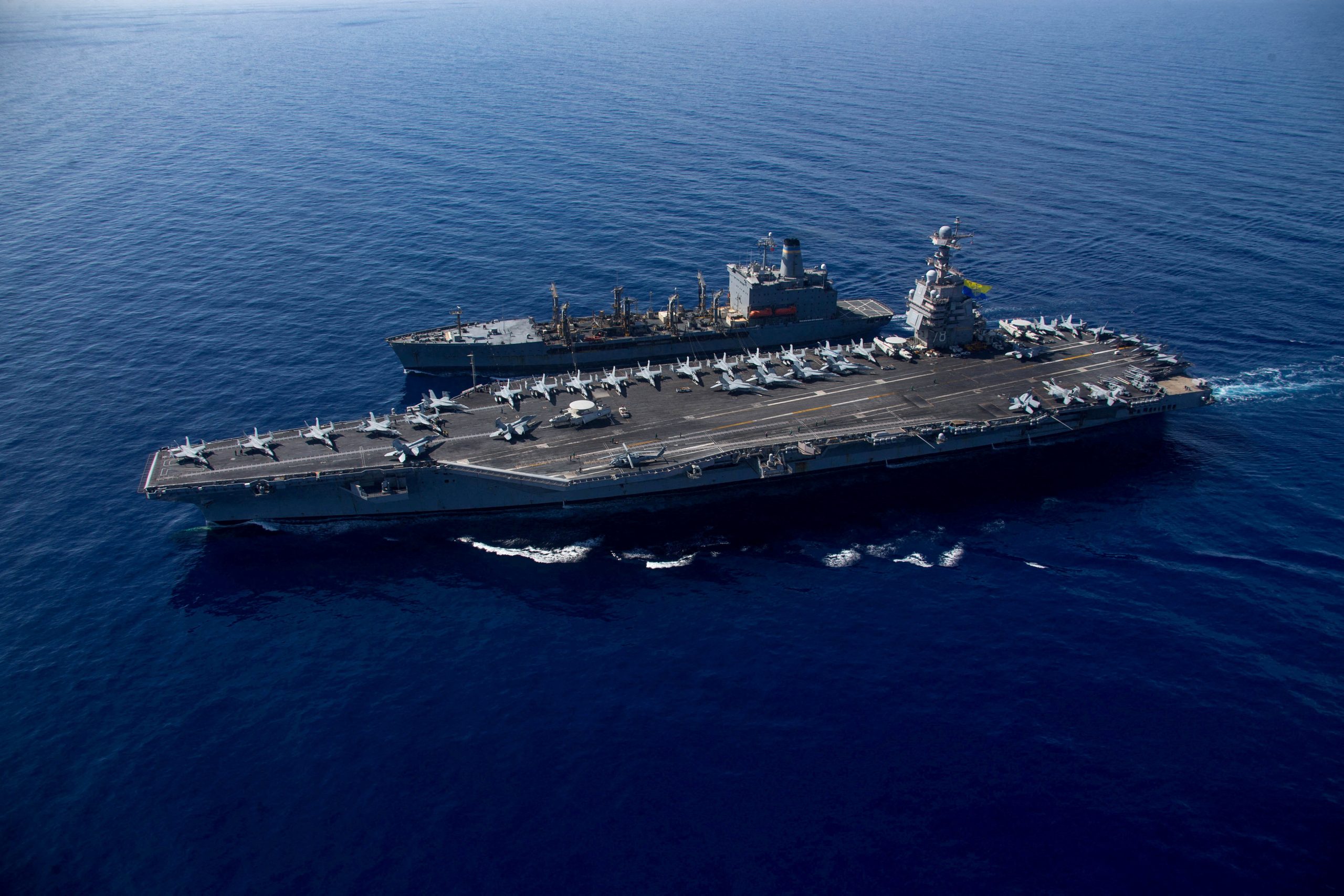
The second U.S. aircraft carrier, USS Gerald R. Ford, and its accompanying ships are crossing the Atlantic into the Mediterranean. Once there, they will join the USS Abraham Lincoln’s carrier strike group already stationed in the Persian Gulf. A nuclear submarine is also positioned in the Mediterranean, and multiple other U.S. ships, including guided missile destroyers and littoral combat ships, are in the region.
The deployment allows the U.S. to strike without relying on bases in Arab Gulf states, whose governments have refused to permit offensive operations from their territory due to fear of Iranian retaliation.
Iran has repeatedly threatened to block the Strait of Hormuz, a critical shipping lane responsible for about 20% of global oil exports, in the event of an attack. Iranian drills in the Strait have temporarily closed parts of the waterway for “security precautions.”
Strategic and Diplomatic Coordination
It remains unclear whether any attack would involve the U.S. alone or a joint operation with Israel. Secretary of State Marco Rubio is scheduled to visit Israel on Feb. 28 to update Prime Minister Benjamin Netanyahu, who is closely monitoring negotiations.
Previous U.S. military actions, such as June airstrikes against Iranian nuclear sites under Trump’s orders, lasted under 30 minutes. This time, analysts suggest a strike could be longer and aimed at more enduring damage to Iranian capabilities.