




















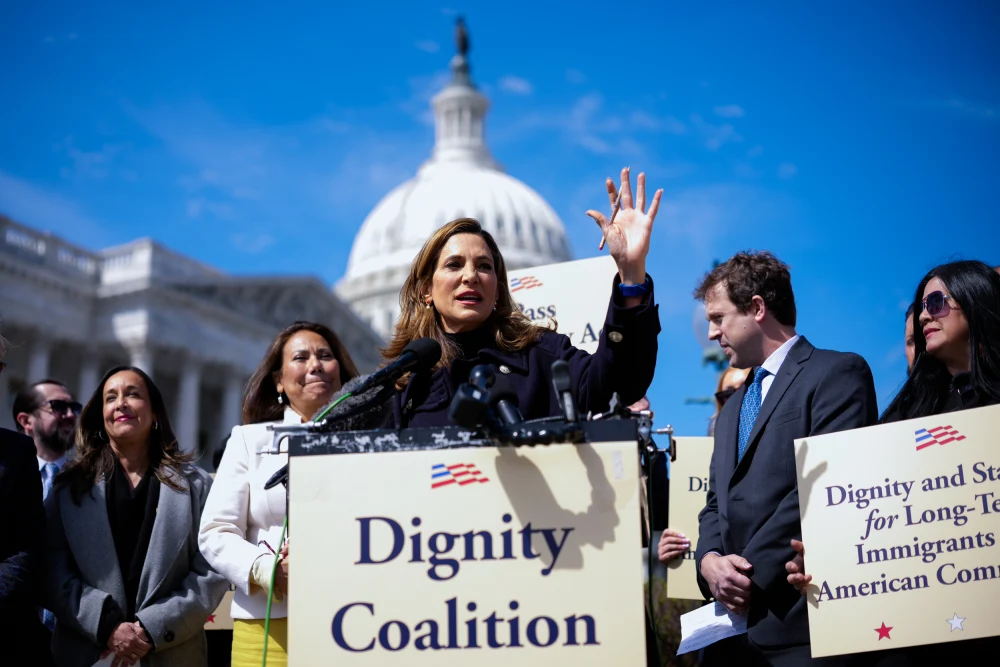
The U.S. House of Representatives moved forward Wednesday with legislation aimed at restoring Temporary Protected Status (TPS) for Haitian immigrants living in the United States, marking a rare bipartisan split from President Donald Trump’s immigration agenda.
The procedural vote passed with support from six Republican lawmakers joining Democrats, setting up a final vote expected later this week.
Bipartisan Break Brings Bill Forward
The measure seeks to reinstate TPS protections for eligible Haitian nationals for three years. It was advanced through a discharge petition led by Rep. Ayanna Pressley, D-Mass., allowing lawmakers to bypass House leadership and force a floor vote.
The House voted 219–209 to advance the measure, with a coalition of Democrats, one independent, and six Republicans supporting the effort.
Those Republicans included Reps. María Elvira Salazar and Carlos A. Gimenez of Florida, Brian Fitzpatrick of Pennsylvania, Don Bacon of Nebraska, Mike Lawler and Nicole Malliotakis of New York.
What the Bill Would Do
Temporary Protected Status allows foreign nationals from countries experiencing war, natural disasters, or severe instability to live and work legally in the United States for a designated period.
The legislation would extend those protections for Haitians facing ongoing instability in their home country.
Supporters argue the policy is essential due to Haiti’s ongoing humanitarian crisis, including violence, political unrest, and economic collapse.
Debate Over Immigration and National Policy
The vote highlights growing divisions within Congress over immigration enforcement and humanitarian protections.
The Trump administration previously moved to end TPS for approximately 350,000 Haitian immigrants, but the effort was blocked by a federal court ruling. The case is now expected to be reviewed further by the Supreme Court.
The White House did not immediately respond to the House vote.
Lawmakers Citing Humanitarian and Economic Concerns
Supporters of the bill argued that removing TPS protections would have severe consequences for both immigrants and U.S. industries that rely on their labor.
Rep. Laura Gillen, D-N.Y., said Haitian immigrants play essential roles in sectors such as health care, elder care, and hospital staffing. She warned that deportations could create economic disruption and worsen workforce shortages.
Republican supporters of the measure also emphasized similar concerns.
Rep. Don Bacon, R-Neb., said on social media that deporting individuals who are legally working and contributing to the economy would harm both businesses and health care systems facing staffing shortages.

Rep. Nicole Malliotakis, R-N.Y., said her district had heard from nursing homes that rely heavily on Haitian caregivers, warning that ending TPS would strain elder care services.
Political Tensions Within the Republican Party
While most Republicans opposed the bill, the cross-party vote underscored internal disagreements over immigration policy.
The small group of GOP lawmakers who supported the measure cited humanitarian concerns and economic stability in key labor sectors.
Their break from party leadership reflects ongoing tensions over how to balance immigration enforcement with workforce demands and humanitarian obligations.
Broader Immigration Debate Continues
The vote comes amid heightened political debate over immigration policy following recent high-profile crime incidents that have been politically linked to immigration status by President Trump and Republican leaders.
In one recent case cited by the administration, a suspect accused in a violent attack in Florida was identified as a Haitian national who had previously been granted immigration protections.
The White House has argued that past immigration policies contributed to security risks, while Democrats and TPS supporters say the program protects vulnerable populations fleeing unstable conditions.
What Happens Next
The bill is expected to face a final vote in the House, where its outcome remains uncertain given partisan divisions.
Even if it passes the House, it would still need to clear the Senate and receive presidential approval to become law.
For now, the vote represents a significant political test over the future of TPS and broader U.S. immigration policy.