






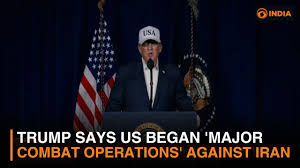


















Washington, D.C. — Senate Republicans have rejected a Democratic-led effort aimed at limiting President Donald Trump’s authority to conduct further military operations in Iran, underscoring deep partisan divisions over U.S. involvement in the escalating conflict.
The measure, which sought to require congressional authorization for continued hostilities, failed in a 47–52 vote that largely followed party lines.
Narrow Senate defeat highlights political divide
The resolution, introduced by Sen. Tammy Duckworth (D-Ill.), would have required the president to withdraw U.S. forces from military engagement in Iran unless Congress explicitly approved continued action through a formal declaration of war or authorization for use of military force.
Only one Republican, Sen. Rand Paul (R-Ky.), supported the measure, while Sen. John Fetterman (D-Pa.) was the lone Democrat to oppose it. One senator was absent from the vote.
The outcome marks the latest in a series of unsuccessful Democratic attempts to rein in presidential war-making authority as tensions in the Middle East continue to escalate.
Growing debate over presidential war powers
While President Trump has signaled a desire to conclude military operations quickly, lawmakers remain divided over the scope of executive authority during active conflict.
Under the War Powers Resolution of 1973, presidents are required to seek congressional approval for sustained military engagements beyond 60 days. That deadline is now approaching, prompting renewed debate within both parties.
Several Republicans indicated they may reassess their position if military operations continue beyond that threshold.
Sen. Thom Tillis (R-N.C.) said lawmakers would soon need to address unanswered constitutional questions, while Sen. John Curtis (R-Utah) stated he would oppose continued military action without congressional approval once the 60-day period expires.
Sen. Lisa Murkowski (R-Alaska) has also expressed concern and suggested exploring limited authorization frameworks for military engagement.
Political pressure builds over war and economy
Democratic leaders, including Senate Minority Leader Chuck Schumer (D-N.Y.), have pledged to repeatedly bring war powers resolutions to the Senate floor, arguing Congress must reassert its constitutional authority.
Public opinion is also shaping the debate. Recent polling cited by lawmakers indicates that a majority of Americans oppose U.S. military involvement in Iran, raising concerns among some senators about long-term political consequences.
Economic factors are adding further pressure. Rising global tensions have contributed to higher fuel prices, with lawmakers warning of potential impacts on inflation, transportation costs, and agriculture.
Divisions remain within Republican ranks
While most Republicans backed continued flexibility for the administration, a small but notable faction signaled unease with prolonged military engagement without congressional approval.
Sen. Josh Hawley (R-Mo.) emphasized the need for a clear exit strategy, linking the conflict to rising domestic energy prices and broader economic concerns.

Meanwhile, Sen. Ron Johnson (R-Wis.) took a more expansive view of executive authority, suggesting the president could maintain military operations as needed and expressing openness to limited special operations support aimed at regime change efforts.
What comes next
With the 60-day war powers window nearing its end, Congress is expected to revisit the issue in the coming weeks. Democratic lawmakers say they will continue forcing votes on limiting presidential authority, while Republicans appear split between constitutional concerns and support for executive flexibility during active conflict.
The outcome of future votes may determine whether Congress reasserts its role in authorizing military action—or continues to defer to the White House during ongoing hostilities.