
















The Middle East is reeling after a joint U.S.-Israeli operation killed Iran’s Supreme Leader, Ayatollah Ali Khamenei, triggering widespread retaliatory strikes and raising fears of a broader regional war.
More than 200 people have reportedly died in Iran following the initial bombardment, according to Iranian authorities. At least 10 people have been killed in Israel amid missile barrages launched in response. Additional casualties have been reported in the Gulf region.
Trump Urges Regime Change
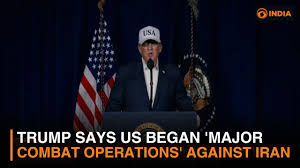
President Donald Trump publicly encouraged Iranians to “take over your government,” signaling support for regime change in Tehran. He also warned Iran against escalating retaliation, threatening unprecedented force if U.S. interests are targeted.
Iran’s Foreign Minister Abbas Araghchi dismissed the suggestion that the government could collapse, calling regime change “mission impossible” and warning neighboring states not to assist U.S. or Israeli operations.
Iran Retaliates Across the Region
Air raid sirens sounded repeatedly in Tel Aviv and other Israeli cities overnight as Iran launched waves of ballistic missiles and drones. In Beit Shemesh, west of Jerusalem, emergency officials reported eight fatalities after a direct strike on a residential building.
Iran also targeted U.S. military assets and allied infrastructure in Bahrain, Kuwait, Jordan, the United Arab Emirates and Qatar. Authorities in Dubai and Abu Dhabi confirmed injuries after debris from intercepted drones struck residential buildings. In Bahrain, damage was reported at a hotel in Manama.
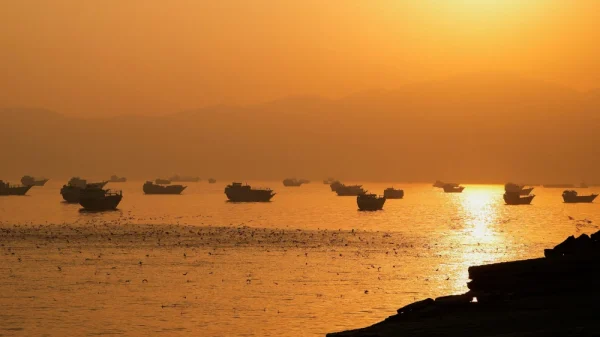
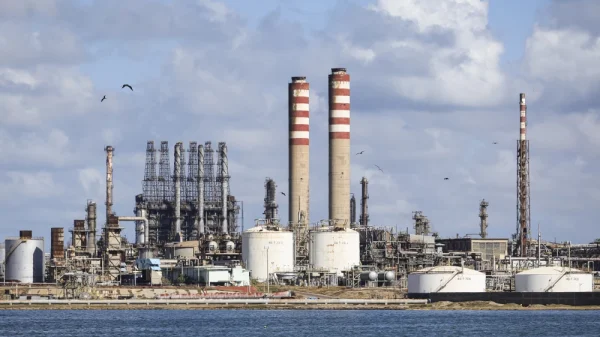
Shipping traffic in the Gulf has slowed dramatically, with dozens of oil and liquefied natural gas tankers anchoring outside the Strait of Hormuz amid fears of further escalation.
Tehran Mourns, Uncertainty Grows
In Tehran, tens of thousands gathered in Revolution Square to mourn Khamenei, who had led Iran since 1989. Senior Iranian official Ali Larijani said a “temporary leadership council” would be formed under the constitution to govern during the transition.
State media broadcast vows of retaliation, while some reports suggested pockets of celebration among younger Iranians opposed to the regime.
Footage circulating online showed a crowd in southern Iran toppling a monument to Ayatollah Ruhollah Khomeini, the founder of the Islamic Republic.
Global Reaction and Diplomatic Fallout
International leaders responded swiftly. Russian President Vladimir Putin condemned the strike and expressed condolences to Tehran, calling the killing a violation of international law.
China urged an immediate ceasefire and criticized what it described as an assault on sovereignty.
In Europe, foreign policy chief Kaja Kallas said Khamenei’s death marked a “defining moment” and called for de-escalation through diplomacy.
At the Vatican, Pope Leo XIV appealed for an end to the “spiral of violence,” urging leaders to pursue dialogue rather than military confrontation.
Political Tensions in Washington
The strike has ignited fierce debate in the United States. Sen. Chris Van Hollen accused Trump and Vice President JD Vance of misleading the public about the risk of war. Meanwhile, Sen. Lindsey Graham criticized European leaders for advocating restraint, calling them “pathetically weak.”

The administration has defended the operation, arguing that renewed Iranian nuclear activity and ballistic missile development posed an intolerable threat.
Broader Regional Instability
The conflict is compounding tensions beyond Iran and Israel. In Pakistan, at least nine people were killed during clashes outside the U.S. consulate in Karachi amid protests over Khamenei’s death. Meanwhile, Afghanistan reported renewed fighting with Pakistan along their shared border, heightening regional instability.
Air travel across much of the Middle East has been severely disrupted, with major airports in the United Arab Emirates and other Gulf states suspending operations. Flight-tracking data showed minimal civilian air traffic over Iran, Iraq, Israel and neighboring countries.
A Dangerous New Chapter
For decades, relations between the United States and Iran have been marked by hostility, from the 1979 hostage crisis to proxy conflicts across the region. The killing of Iran’s supreme leader represents a dramatic escalation — one that could reshape the balance of power in the Middle East.
With missiles still flying and diplomatic channels strained, the coming days will be critical in determining whether the crisis spirals into a broader war or gives way to negotiations.