

















Federal scrutiny of election infrastructure in Puerto Rico has ignited new political controversy, as Democrats warn that the Trump administration may be laying the groundwork for deeper federal involvement in how future elections are conducted.
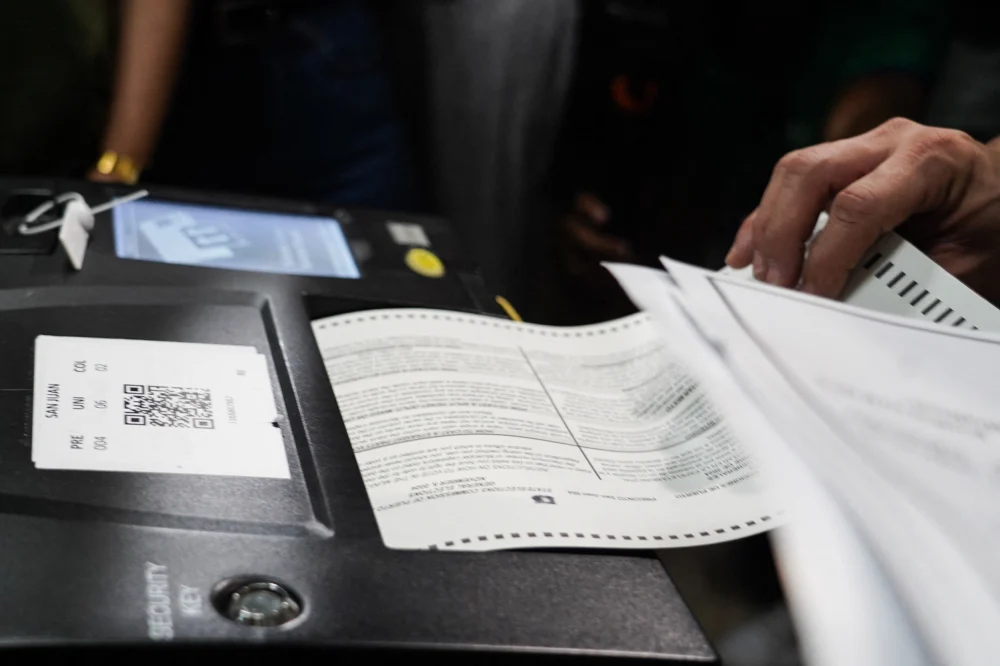
The Office of the Director of National Intelligence (ODNI) confirmed that it obtained and examined electronic voting machines in Puerto Rico last year to assess potential cybersecurity vulnerabilities. The review was conducted under the authority of the office led by Director of National Intelligence Tulsi Gabbard, according to an ODNI spokesperson.
Puerto Rican election officials voluntarily provided the equipment, the spokesperson said, citing concerns that the same or similar voting systems are used across the United States. The evaluation was intended to assess broader risks to U.S. election infrastructure.
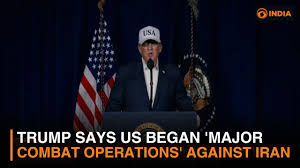
The disclosure comes amid heightened tensions over election oversight following repeated statements by President Donald Trump calling for the federal government to take a more direct role in administering elections. Trump has publicly floated the idea of “nationalizing” elections and has claimed — without evidence — that widespread fraud threatens future contests.
The ODNI’s actions in Puerto Rico were first reported by Reuters.
According to ODNI, the review was prompted by previously reported allegations of discrepancies and systemic issues involving Puerto Rico’s electronic voting systems. While the agency did not detail specific past incidents, it said its examination uncovered “extremely concerning” cybersecurity and operational practices that could pose risks if replicated elsewhere.
Among the issues cited were the use of cellular modems that connected to networks outside the continental United States. ODNI officials described such configurations as a potential vulnerability, though they did not indicate whether any tampering or interference had occurred.
Puerto Rico primarily uses Dominion ImageCast Precinct scanners, according to election security experts. Several of the vulnerabilities referenced by ODNI have also been discussed in past reports by the Cybersecurity and Infrastructure Security Agency (CISA) and independent researchers, including risks tied to unsecured hardware, exposed ports, weak safeguards, or unauthorized software.
Local officials in Puerto Rico, including the governor’s office and election administrators, did not immediately respond to requests for comment. Puerto Rico is a U.S. territory rather than a state; its residents are American citizens but do not vote in presidential general elections.
The move has drawn sharp criticism from Democratic lawmakers. Rep. Pablo José Hernández, Puerto Rico’s nonvoting delegate in Congress, dismissed the review as politically motivated and said there is no evidence of foreign interference in the territory’s elections.
Hernández argued that the administration has failed to clearly explain why intelligence officials were involved at all, particularly as the president continues to issue mixed messages about election integrity.
Skepticism has also come from election security experts. Mark Lindeman, policy and strategy director at the nonprofit Verified Voting, said the ODNI’s public description of its findings did not point to a meaningful new threat. He noted that given Puerto Rico’s geographic location, it would not be unusual for some devices to connect through cellular networks routed outside the mainland United States.
Lindeman said such configurations, on their own, do not necessarily represent a serious vulnerability and questioned whether the ODNI’s involvement was warranted.
The Puerto Rico review follows another high-profile episode involving Gabbard’s office. Last week, Gabbard said President Trump instructed her to attend an FBI search of an election facility in Fulton County, Georgia, where agents seized ballots from the 2020 election. Trump has continued to falsely claim that he lost the 2020 race due to fraud, despite repeated court rulings and investigations finding no evidence to support those claims.
By constitutional design, elections in the United States are administered by states and territories. While federal agencies have historically provided guidance on election security, intelligence agencies are typically cautious about taking visible roles in domestic election matters.

Democrats say recent actions suggest that boundary is eroding. Sen. Mark Warner of Virginia, the vice chair of the Senate Intelligence Committee, warned that the administration may be attempting to weaken longstanding safeguards ahead of the 2026 midterm elections.
Warner said he fears a coordinated effort to influence election administration, describing the president’s posture as driven by lingering resentment over his 2020 loss.
U.S. officials have consistently said that no foreign actors successfully hacked election infrastructure during the 2024 election cycle, though foreign governments did attempt influence campaigns online. In contrast, during the 2016 election, Russian operatives probed voter registration systems and breached at least one, though officials said no votes were altered.
As scrutiny intensifies, the ODNI has not clarified what specific foreign threat, if any, prompted its involvement in Puerto Rico or Georgia. The episode has nonetheless deepened concerns in Congress about the expanding role of federal intelligence agencies in election-related matters — and the political implications as the next national contests approach.