























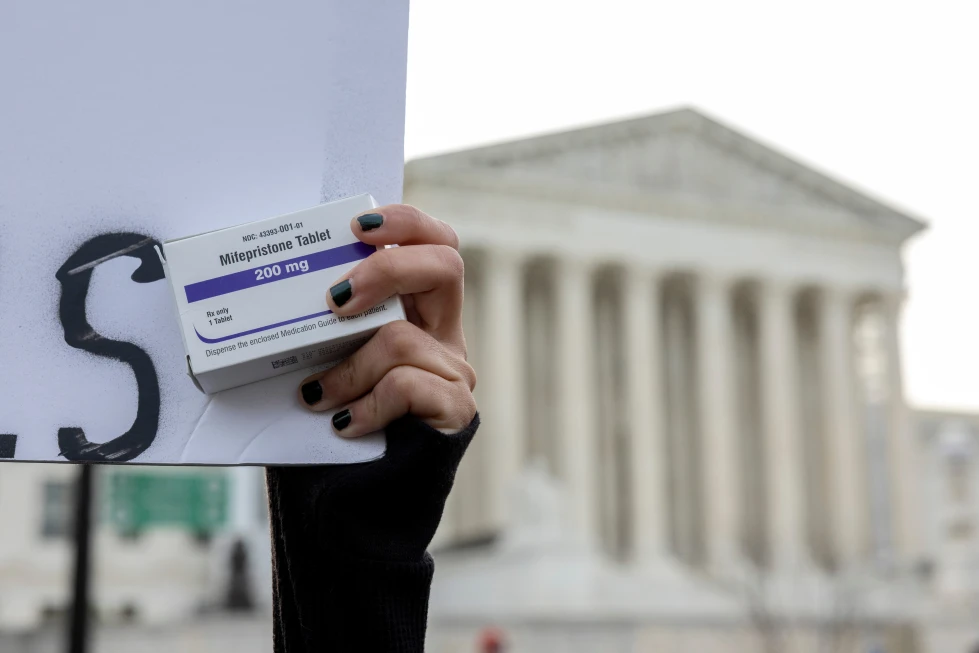
Medication-based abortions are rapidly becoming the most common method for ending pregnancies in parts of the United States, particularly in states with strict abortion bans. The shift is prompting lawmakers and advocacy groups to intensify efforts to regulate access to abortion pills.
Growing Reliance on Abortion Pills
A new survey by the Guttmacher Institute indicates that in 2025, more women in states with total abortion bans obtained abortion pills through telehealth services than by traveling to states where the procedure remains legal. This marks a significant turning point in how abortion care is accessed following the 2022 U.S. Supreme Court decision that overturned Roe v. Wade.
The pills, typically including mifepristone, are prescribed by providers based in states that have enacted legal protections for telehealth abortion services.
States Move to Restrict Access
In response, several states are advancing legislation aimed at limiting the distribution of abortion pills. South Dakota recently enacted a law criminalizing the advertising, sale, or distribution of such medications.
Similar proposals are progressing in Mississippi, while existing restrictions in Texas, Florida, and Oklahoma already prohibit mailing abortion pills to patients. Meanwhile, Louisiana has classified mifepristone as a controlled substance.
Legislation targeting telehealth prescriptions has also been introduced in Arizona, Indiana, and South Carolina, though outcomes remain uncertain.
Legal Challenges Intensify
Court battles over abortion pills are unfolding across multiple states. Lawsuits seek to challenge federal rules that allow telehealth prescriptions without in-person consultations. States including Texas and Louisiana are pursuing legal action against providers accused of distributing pills across state lines.
At the federal level, the Food and Drug Administration recently approved a generic version of mifepristone, a move that has drawn criticism from abortion opponents.
Decline in Interstate Travel for Abortions
The rise in telehealth access appears to be reducing the number of women traveling to states such as Colorado, Illinois, Kansas, and New Mexico for abortion services.
Analysts say this trend reflects how technology and evolving legal frameworks are reshaping reproductive healthcare access in the U.S.
New Laws and Ballot Measures
So far in 2026, Wyoming is the only state to enact a new abortion restriction, banning most abortions after roughly six weeks of pregnancy. However, the law faces potential legal challenges, following previous court rulings that blocked similar measures.
Meanwhile, abortion rights will remain a major political issue, with ballot measures scheduled in states like Missouri, Nevada, and Virginia later this year.
Debate Over Criminal Penalties
Despite increasing restrictions, there is little legislative momentum behind proposals to criminalize women seeking abortions. Advocacy groups and even some anti-abortion organizations have opposed such measures, emphasizing support over punishment.
However, legal experts warn that continued introduction of such proposals could gradually shift public and political boundaries.
A Changing Landscape
The growing use of abortion pills highlights a major تحول in reproductive healthcare in the United States. As access expands through telehealth, lawmakers and courts are expected to play a decisive role in shaping the future of abortion rights and restrictions.