
























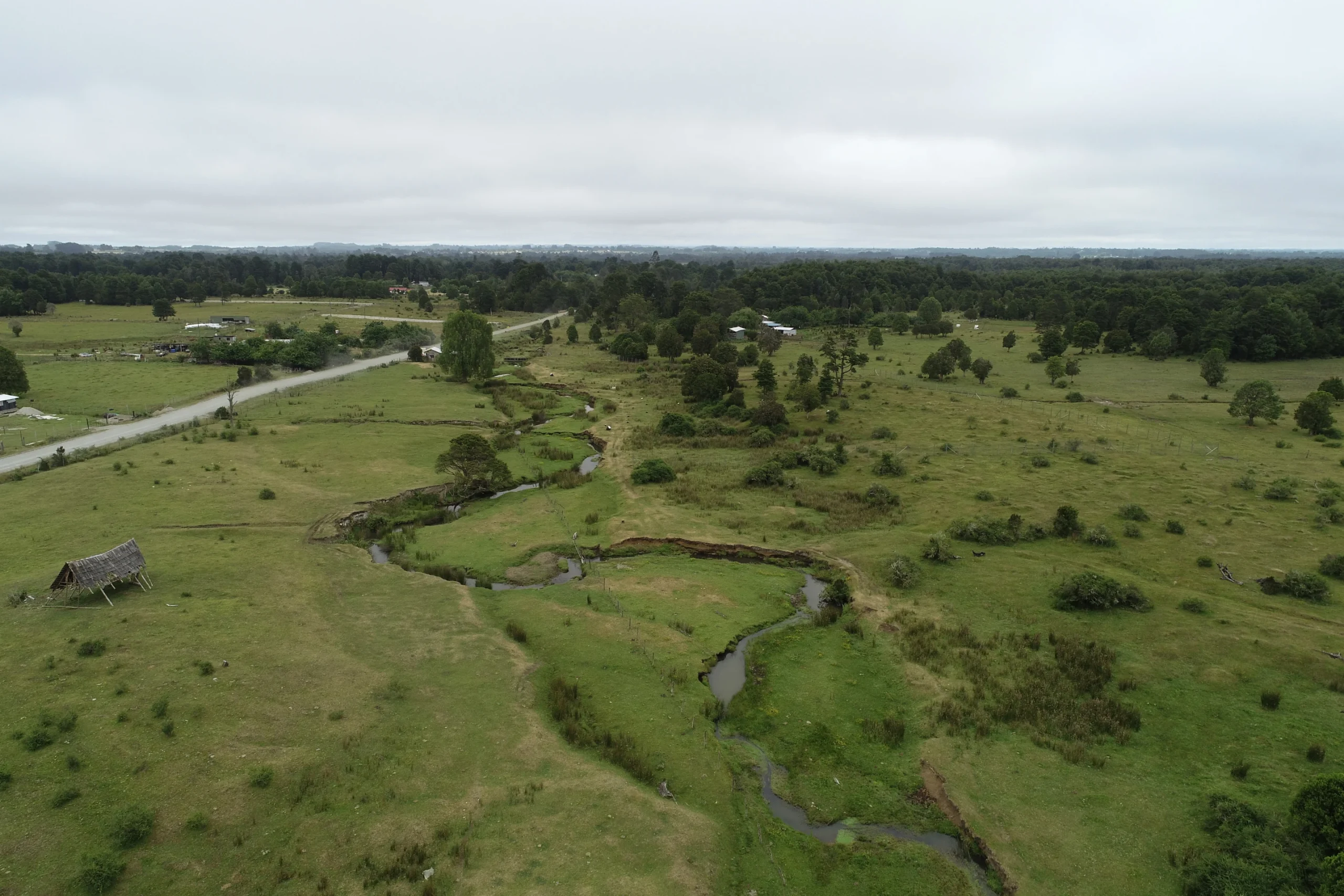
For decades, the archaeological site of Monte Verde in southern Chile has been regarded as pivotal evidence for the earliest human presence in the Americas. Excavations at the site have uncovered wooden tools, building foundations, fire pits, and footprints that were believed to date back roughly 14,500 years, challenging older theories that humans first arrived 13,000 years ago.
A new study, however, is raising questions about Monte Verde’s age, suggesting the site may be significantly younger than previously thought.
Rethinking the Timeline
Researchers analyzed sediments from nine locations along Chinchihuapi Creek near Monte Verde and examined geological changes over millennia. They identified a volcanic ash layer from an eruption around 11,000 years ago. According to study co-author Claudio Latorre of the Pontifical Catholic University of Chile, artifacts found above this layer must be younger.
“Based on our geological analysis, the Monte Verde site cannot be older than 8,200 years before present,” Latorre said, indicating a potential major revision of the site’s chronology.
The team also noted that erosion and shifting streams may have mixed older and newer layers, possibly leading previous researchers to misdate artifacts.
Dispute Among Experts
The study, published Thursday in Science, has drawn sharp criticism from archaeologists familiar with Monte Verde.
Michael Waters, of Texas A&M University, described the study as “a working hypothesis not fully supported by the data presented.” Tom Dillehay of Vanderbilt University, who led the original excavations, emphasized that the new research does not address the numerous artifacts directly dated to 14,500 years ago, including a mastodon tusk tool, a wooden lance, and a digging stick with burn marks.
Critics also argue that sediment samples from surrounding areas may not reflect the conditions at Monte Verde itself and that the volcanic ash layer identified by the new study may not have covered the entire site.
The authors of the new study defend their approach, noting they sampled within, upstream, and downstream of Monte Verde and questioning whether the previously dated artifacts are as ancient as reported.
Implications for Human Migration
Monte Verde has long played a crucial role in understanding early human migration to the Americas. Its original dating suggested humans arrived well before the Clovis culture, which had long been thought to represent the continent’s first inhabitants.
If Monte Verde is indeed younger, it could reopen debates over migration routes from Asia. Questions remain about whether early humans traveled through ice-free corridors in Canada, along coastal routes by boat, or via a combination of land and water paths.
“Science is self-corrective,” said study co-author Todd Surovell of the University of Wyoming. “Given enough time and evidence, research eventually moves closer to the truth.”
Future studies of other early sites in the Americas may provide additional clarity on the timing and routes of the continent’s first human settlers.