














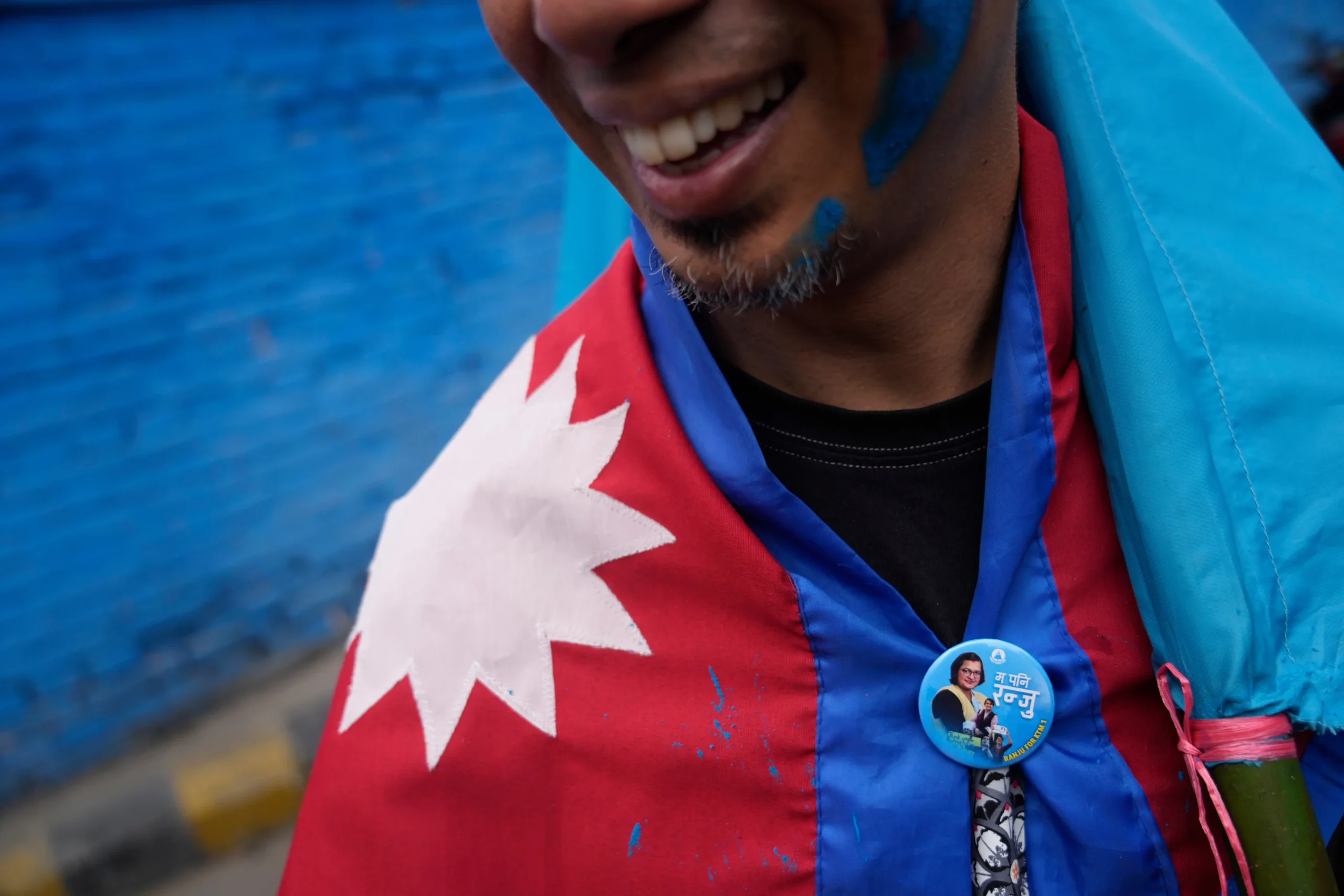
Early vote counts in Nepal’s parliamentary election indicate a major political shift, with a reformist party led by a former rapper emerging as the frontrunner. The election marks the country’s first national vote since the 2025 youth-led uprising that toppled the previous government.
New Political Movement Gains Strong Early Momentum
Preliminary results released Saturday by Nepal’s Election Commission show the Rastriya Swatantra Party (RSP) performing strongly across the country. The party has already secured 27 of the 165 directly contested parliamentary seats and is currently leading in around 90 additional constituencies as counting continues.
The party’s prime ministerial candidate, Balendra Shah, a former rapper who rose to national prominence after winning the 2022 Kathmandu mayoral election, has become a central figure in Nepal’s political transformation.
Shah, 35, gained widespread support during the 2025 youth-led protests that forced former Prime Minister Khadga Prasad Oli out of power.
Shah Leading in High-Profile Electoral Contest
In one of the most closely watched races, Shah is contesting a parliamentary seat directly against Oli in a southeastern district. Early vote counts show Shah holding a significant lead over the former prime minister.
His campaign has focused heavily on improving healthcare access and strengthening education systems, particularly for Nepal’s lower-income communities. Analysts say his message has resonated strongly with younger voters and citizens frustrated with traditional political leadership.
Traditional Parties Face Growing Challenge
So far, only six additional seats have been officially confirmed outside the RSP victories. Those seats have been distributed among the Nepali Congress Party and two communist parties.
Nepal’s House of Representatives consists of 275 members, with 165 seats filled through direct elections and the remaining 110 allocated through a proportional representation system based on each party’s share of the national vote.
Political observers say the election has effectively become a three-way contest, reflecting growing dissatisfaction with the country’s long-dominant parties — the Nepali Congress and the Communist Party of Nepal (Unified Marxist–Leninist).
Vote Counting Continues Across Remote Regions
Election officials say counting is still underway in many areas, particularly in Nepal’s mountainous northern regions. Ballot boxes from remote villages are being transported by helicopter to counting centers.
Final results are expected within the next two days, according to the election commission.
Election Shaped by Anti-Corruption Protests
The current election follows a turbulent period in Nepal’s politics. In 2025, nationwide protests erupted over corruption allegations and government mismanagement, triggered initially by a controversial ban on social media platforms.
The demonstrations quickly escalated into a mass movement demanding political reform and accountability. During the unrest, dozens of people were killed and hundreds injured after clashes between protesters and security forces.
The surge in support for the Rastriya Swatantra Party reflects the public’s demand for political change, with many voters hoping for a new generation of leadership.