

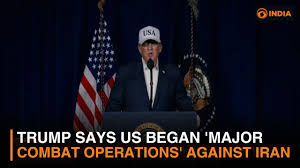












President Donald Trump said Friday that the United States is engaged in discussions with Cuba’s government and raised the possibility of what he described as a “friendly takeover” of the island nation.
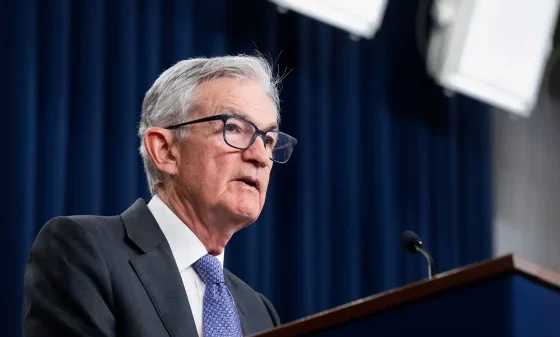
Speaking to reporters outside the White House before departing for Texas, Trump said Secretary of State Marco Rubio was holding talks with Cuban officials “at a very high level.”
“The Cuban government is talking with us,” Trump said. “They have no money. They have no anything right now. But they’re talking to us, and maybe we’ll have a friendly takeover of Cuba.”
The president did not elaborate on what such a scenario would entail, and the White House declined to provide further clarification.
Rising Tensions After Armed Boat Incident
Trump’s remarks came days after Cuban authorities reported that a Florida-registered speedboat carrying armed individuals approached the island’s north coast and exchanged gunfire with Cuban forces. According to Havana, four of the boat’s occupants were killed and six injured. One Cuban official was also wounded.
Cuba confirmed earlier this week that communication channels with Washington had been opened following the incident. Rubio has stated that U.S. agencies, including the Department of Homeland Security and the Coast Guard, are reviewing the circumstances surrounding the episode.
Longstanding U.S.-Cuba Strains
Relations between Washington and Cuba have remained strained for decades. The United States imposed a trade embargo in 1962, a year after the failed Bay of Pigs invasion, and restrictions have largely remained in place despite periodic diplomatic openings.
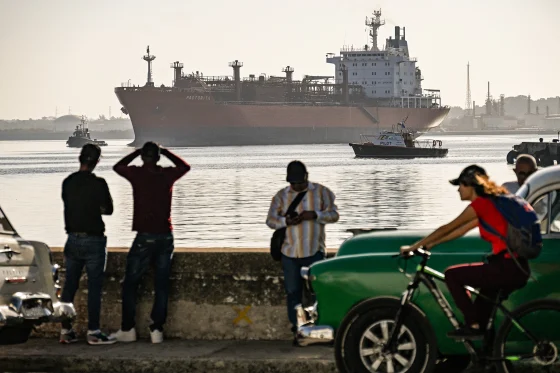
Earlier this year, Trump suggested that direct military intervention in Cuba might not be necessary, arguing the island’s struggling economy could collapse under existing pressures. Cuba has been grappling with severe fuel shortages and energy blackouts, exacerbated by reduced oil shipments from Venezuela following political upheaval there.
In January, U.S. forces removed Venezuelan President Nicolás Maduro from power, disrupting a key alliance that had helped sustain Cuba’s energy supplies.
Policy Pressure and International Reaction
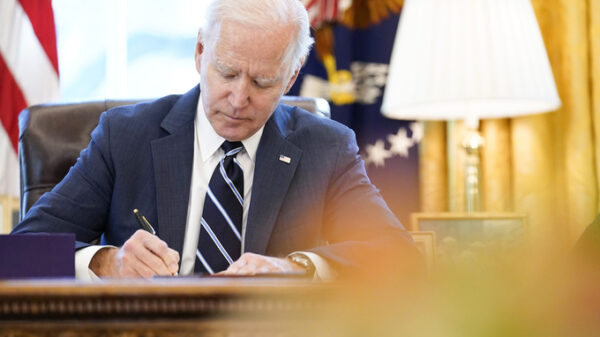
Trump recently signed an executive order threatening tariffs on countries that provide oil to Cuba, a move critics say could deepen the island’s humanitarian crisis. While U.S. officials have indicated that certain limited oil transactions may still be permitted, the broader embargo remains intact.
Cuba’s Deputy Foreign Minister Carlos Fernández de Cossío said on social media that U.S. fuel restrictions continue to have severe consequences for the Cuban population, describing them as a form of collective punishment.
Meanwhile, more than 40 American civil society organizations — including the Alliance of Baptists, ActionAid USA and the Presbyterian Church — sent a letter to Congress urging lawmakers to push the administration to reconsider its approach. The groups warned that tightening oil restrictions could trigger widespread hardship on the island.
Unclear Path Forward
Trump framed the current moment as a potential turning point in U.S.-Cuba relations, calling Cuba “a failed nation” and suggesting its leaders are seeking American assistance. He also hinted that any development could be significant for Cuban exiles living in the United States, though he provided no details.
Whether the discussions will lead to diplomatic breakthroughs, further economic pressure, or heightened tensions remains uncertain. For now, Trump’s comments have added fresh ambiguity to an already fragile chapter in U.S.-Cuba relations.