



















The Department of Homeland Security entered a partial shutdown early Saturday after Congress failed to pass a funding measure, leaving negotiations between Democratic lawmakers and the White House at a standstill over proposed changes to immigration enforcement.
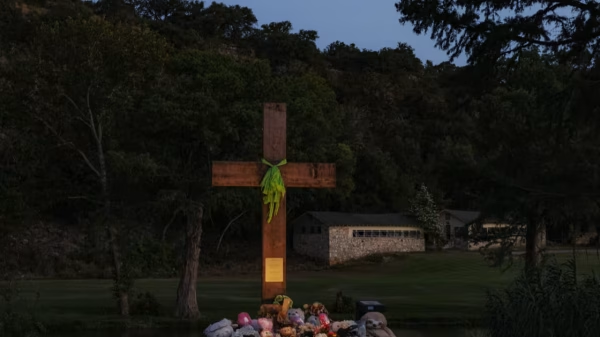
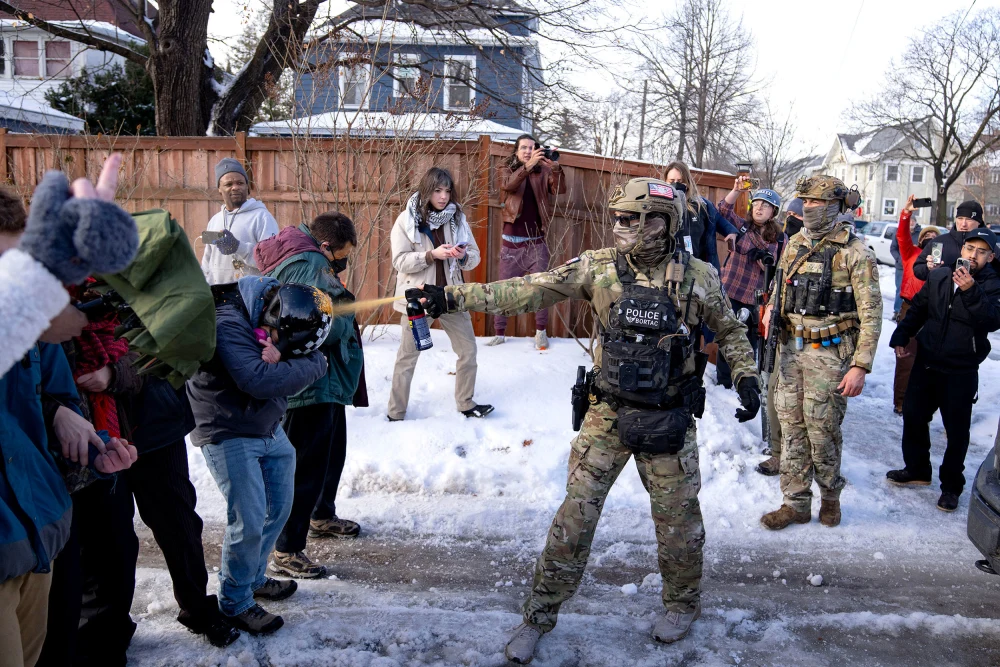
The funding lapse follows heightened tensions after two U.S. citizens were killed during federal immigration operations in Minneapolis last month, intensifying scrutiny of enforcement tactics under President Donald Trump.
What the Shutdown Means
DHS funding expired at 12:01 a.m. Saturday, affecting agencies such as the Federal Emergency Management Agency, the Transportation Security Administration and the U.S. Coast Guard. Most employees in those divisions are expected to continue working without immediate pay because their roles are deemed essential.
However, the agencies at the center of the political dispute — U.S. Immigration and Customs Enforcement (ICE) and U.S. Customs and Border Protection (CBP) — are largely insulated from the shutdown. Both agencies still have access to $75 billion in previously approved funding, ensuring continued operations and pay for personnel.
Lawmakers are not scheduled to return to Capitol Hill until Feb. 23, raising the possibility that the shutdown could last at least 10 days unless a deal is reached sooner.
Senate Vote Falls Short
Efforts to advance a full-year DHS funding bill stalled Thursday when Senate Republicans failed to secure the 60 votes required to overcome a filibuster. The measure fell 52-47, with only Sen. John Fetterman, D-Pa., breaking ranks to support it.
A subsequent attempt by Sen. Katie Britt, R-Ala., to pass a two-week stopgap measure was blocked by Sen. Chris Murphy, D-Conn., signaling Democrats’ refusal to back short-term funding without reforms.
Senate Majority Leader John Thune, R-S.D., said lawmakers remain on standby to return if negotiators strike a deal.
Democrats Demand Guardrails on ICE
Senate Minority Leader Chuck Schumer said Democrats are seeking “serious guardrails” on immigration enforcement, citing public concern over recent operations in multiple cities.
Democratic proposals reportedly include requiring federal agents to display identification, obtain judicial warrants before entering private property and refrain from wearing masks during enforcement actions.
“We want to fund DHS,” Murphy said, “but only a department that is obeying the law.”
The White House has declined to discuss specific details of the negotiations publicly. A senior administration official described some Democratic demands — particularly limits on warrantless arrests — as a sticking point, emphasizing that immigration enforcement was central to Trump’s election platform.
Republican Pushback
House Appropriations Chairman Tom Cole, R-Okla., accused Democrats of using the shutdown as leverage while noting that immigration enforcement efforts would continue uninterrupted.
“ICE is fully funded. Border Patrol is fully funded,” Cole said, adding that the lapse primarily affects other DHS divisions such as FEMA and TSA.
Republicans argue that the administration has already responded to concerns stemming from the Minneapolis incidents. Trump recently replaced Border Patrol Commander Gregory Bovino with border policy adviser Tom Homan in Minneapolis and announced expanded use of body cameras for federal agents. On Thursday, Homan confirmed that the administration is ending its immigration enforcement surge in Minnesota.

Public Opinion Shifts
A recent NBC News poll found declining public approval of Trump’s handling of border security and immigration. Forty percent of respondents said they approve of his performance on the issue, while 60% disapprove — a notable drop from mid-2025 figures.
Despite Republican control of both chambers of Congress and the White House, any long-term funding bill requires bipartisan support to clear the Senate’s 60-vote threshold.
Unlike last year’s 43-day government shutdown that affected all federal agencies, this funding lapse is limited to DHS. All other federal departments remain funded through September.
With negotiations ongoing behind closed doors, the path forward hinges on whether the White House and Senate Democrats can bridge deep differences over immigration enforcement reforms — a debate that now sits at the center of both public opinion and federal funding.