



















Washington — Efforts in Congress to avert a looming shutdown of the Department of Homeland Security (DHS) are faltering, as Democrats and Republicans remain deeply divided over immigration enforcement reforms and funding conditions. With the deadline to fund the department set for February 13, lawmakers have made little progress, heightening the risk of a partial government shutdown.
At the center of the standoff is a Democratic push to impose new limits and oversight on Immigration and Customs Enforcement (ICE) and U.S. Customs and Border Protection (CBP). Party leaders argue that reforms are necessary following recent incidents involving federal immigration agents, including the deaths of two U.S. citizens during an enforcement operation in Minneapolis.
House Minority Leader Hakeem Jeffries and Senate Minority Leader Chuck Schumer unveiled a list of ten conditions tied to DHS funding. Their demands include requiring agents to clearly identify themselves during operations, banning the use of masks, mandating judicial warrants for certain enforcement actions, and prohibiting immigration raids near sensitive locations such as schools, churches, and hospitals.
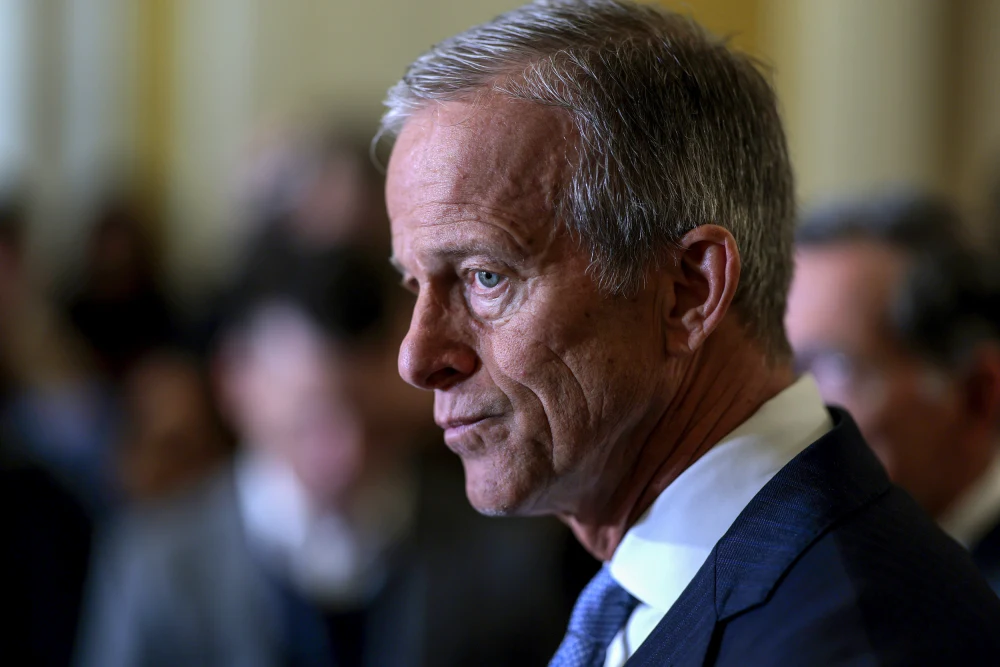
Republicans have rejected the proposal outright. Senate Majority Leader John Thune of South Dakota described the Democratic conditions as unrealistic and warned that some measures could put agents at risk by exposing them to harassment or targeting. Thune said the expanding list of demands suggests Democrats are not yet serious about reaching a compromise, adding that while minor elements might be negotiable, most are unacceptable to his caucus.
Earlier this week, Thune expressed skepticism that an agreement could be reached within the two-week window Democrats requested to negotiate reforms, calling the timeline unworkable.
If Congress fails to act before the deadline, DHS would enter a shutdown. Essential operations such as airport security, disaster response, and maritime safety would continue, but many federal employees would be furloughed or required to work without pay. ICE operations would continue as well, supported by funding allocated under President Donald Trump’s recently enacted budget package, which is not directly affected by a shutdown.
Republicans are also pressing their own priorities, including a proposal to block federal funds from so-called “sanctuary cities” that limit cooperation with immigration authorities. GOP lawmakers argue that withholding funding is necessary to ensure enforcement of federal immigration laws.
Democrats strongly oppose that approach, maintaining that local policies encouraging cooperation between residents and police improve public safety by allowing undocumented immigrants to report crimes without fear of deportation.
Senators involved in DHS appropriations acknowledge that negotiations are stalled. Connecticut Democrat Chris Murphy, who oversees DHS funding on the Senate Appropriations Committee, said lawmakers are struggling to identify a clear path forward. Alabama Republican Katie Britt, the panel’s chair, suggested the dispute may require direct intervention from the White House.
Several senators from both parties have echoed calls for President Trump to become directly involved, saying executive-level negotiations may be the only way to break the impasse as time runs short.
Meanwhile, House Speaker Mike Johnson has floated the idea of attaching the SAVE Act — a Republican-backed measure requiring proof of citizenship to vote — to a DHS funding bill. Democrats argue the proposal would disenfranchise eligible voters and note that voting by noncitizens is already illegal, making Senate passage unlikely.
As options narrow, some lawmakers are quietly discussing another short-term funding extension to delay the deadline until March. Democrats, however, have signaled resistance to additional stopgap measures, particularly in the House, where Republicans hold only a slim majority.
DHS has begun implementing limited administrative changes sought by Democrats, such as requiring body cameras for agents in Minneapolis. Still, Democratic lawmakers insist those reforms must be written into law to ensure they cannot be reversed, making them a prerequisite for supporting new funding.
With days remaining before the deadline, both sides remain entrenched, and the prospect of a DHS shutdown now appears increasingly likely unless negotiations accelerate or high-level talks yield a breakthrough.