
















WASHINGTON — Acquiring Greenland could cost the United States up to $700 billion, according to estimates developed by policy experts and former U.S. officials as part of internal discussions surrounding President Donald Trump’s renewed push to bring the Arctic territory under American control.
The estimate, shared by people familiar with the matter, reflects preliminary planning around Trump’s long-standing interest in Greenland as a strategic asset in the Arctic. Secretary of State Marco Rubio has reportedly been tasked with drafting a formal proposal to explore the possibility of a purchase, which the White House has described as a high national security priority.
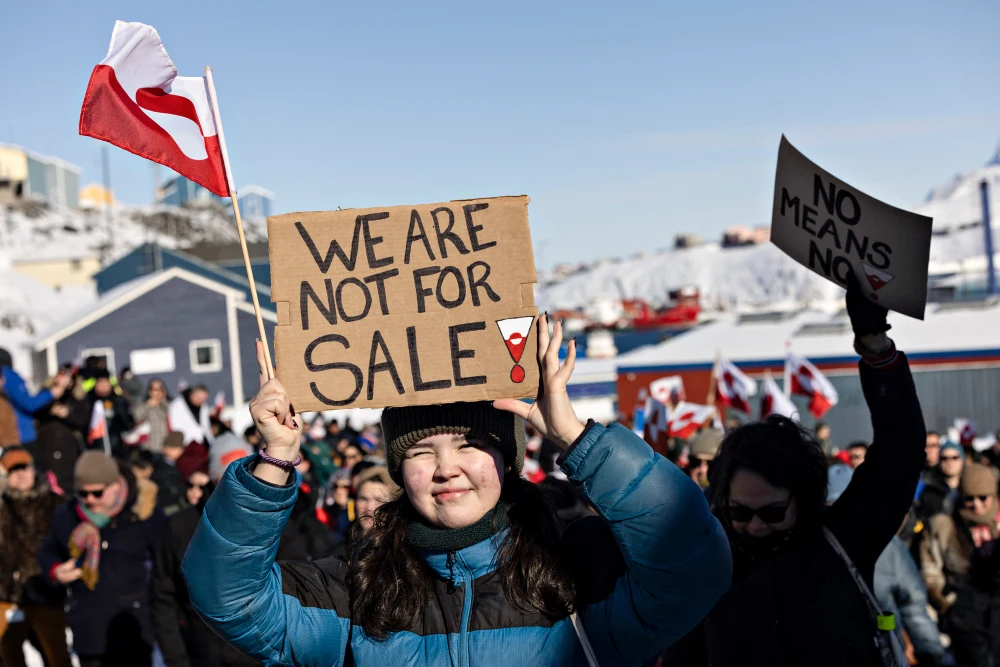
Greenland, a semi-autonomous territory within the Kingdom of Denmark, has firmly rejected the idea of being sold. Leaders in both Denmark and Greenland have repeatedly stated that the island is not for sale and have dismissed Trump’s claims that the U.S. would acquire it “one way or another.”
Still, Trump has continued to press the issue publicly. “I’d love to make a deal,” he told reporters this week, adding that U.S. control of Greenland would be easier through agreement — but again leaving open the possibility of other means.
Strategic ambitions, staggering cost
Greenland spans roughly 800,000 square miles and sits astride key Arctic shipping routes while hosting vast untapped mineral resources. U.S. officials and analysts say Trump views the territory as a strategic buffer against growing Russian and Chinese influence in the Arctic, as climate change opens new sea lanes and access to resources.
The projected $500 billion to $700 billion price range would make Greenland one of the most expensive territorial acquisitions in history, exceeding half of the Pentagon’s annual budget. The sheer scale of the figure has raised alarm among European allies and lawmakers in Washington, many of whom worry about the diplomatic and military consequences of such an effort.
Denmark and Greenland sent senior officials to Washington this week for meetings with U.S. leaders, seeking clarity on the administration’s intentions. Greenland’s foreign minister, Vivian Motzfeldt, reiterated her government’s stance upon arrival.
“Greenland does not want to be owned by, governed by, or part of the United States,” she said. “We choose the Greenland we know today — as part of the Kingdom of Denmark.”
Greenland’s minister for business and mineral resources, Naaja Nathanielsen, said the ongoing rhetoric has deeply unsettled the island’s 57,000 residents. “This is creating enormous pressure in everyday life,” she said, adding that many Greenlanders are struggling with anxiety over their future.
Alternatives to outright purchase
Some U.S. officials argue that buying Greenland is unnecessary, noting that Washington already has broad military access under existing agreements with Denmark. The U.S. operates the Pituffik Space Base, a key early-warning radar site for missile defense, and could expand its presence without changing sovereignty.
Another option under consideration is a compact of free association — an arrangement the U.S. maintains with several Pacific island nations — which would provide financial assistance in exchange for expanded U.S. security rights. Such a framework could advance U.S. strategic goals at a fraction of the estimated purchase cost.
Despite these alternatives, Trump has signaled a preference for ownership rather than partnership, comparing the issue to buying property instead of leasing it. He has also expressed concern that a future independent Greenland could fall under the influence of rival powers.
Political resistance at home and abroad
Polling suggests Greenlanders overwhelmingly oppose joining the United States, with surveys showing roughly 85% against the idea. Resistance is also growing on Capitol Hill. This week, bipartisan legislation was introduced in the U.S. Senate that would block the Defense Department from using funds to assert control over the territory of a NATO ally without international approval.
European leaders have warned that any attempt to seize Greenland by force would fracture NATO and undermine long-standing alliances. Denmark’s prime minister, Mette Frederiksen, has said the U.S. is already welcome to expand its military footprint through cooperation — but warned that coercion would destabilize the alliance.
Analysts say Trump’s aggressive language may be aimed at pressuring Denmark and Greenland into deeper security cooperation rather than a literal purchase. Still, the renewed focus has created unease across Europe and raised fundamental questions about sovereignty, alliance politics and the future of the Arctic.

As one joint statement from European allies put it this week: “Greenland belongs to its people.”