













President Donald Trump’s surprise capture of Venezuelan leader Nicolás Maduro has underscored U.S. ambitions to assert dominance in the Western Hemisphere and counter China’s growing presence in Latin America. Trump framed the operation as a national security priority, warning that adversaries like China would not be allowed a foothold in America’s “backyard.”
Yet analysts say the raid is unlikely to diminish China’s influence in the region, which has been cultivated over more than two decades. China has invested heavily in Latin America, funding infrastructure, energy projects, and trade initiatives while cultivating diplomatic ties with multiple countries.
Although the Trump administration has pressured Venezuela to limit its economic interactions with Beijing, Chinese officials maintain that the U.S. has overstepped international law. A spokesperson for China’s foreign ministry called the strike “bullying behavior,” emphasizing that Beijing’s rights and interests in Venezuela must be protected. Venezuela’s interim leader, Delcy Rodríguez, also expressed gratitude for China’s support in defending Venezuelan sovereignty.
Despite the strategic rhetoric, China’s dependence on Venezuelan oil is limited. While Venezuela supplies a majority of the country’s crude exports to China, these represent only a small fraction of China’s overall energy imports. Moreover, China has no security commitments in Venezuela, meaning its backing is primarily diplomatic rather than military.
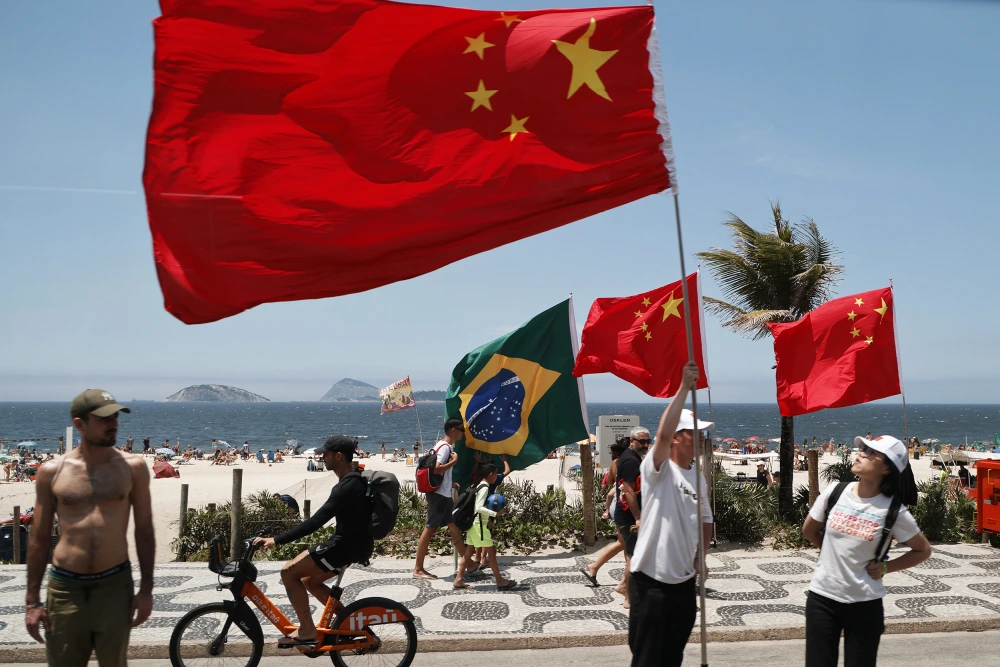
China’s influence across Latin America extends beyond Venezuela. The country overtook the U.S. as South America’s top trading partner in 2010, investing in ports, roads, energy, and technology projects, including Peru’s massive Chancay deep-water port. These economic initiatives have bolstered China’s political leverage, enabling several nations to shift diplomatic recognition from Taiwan to Beijing.
Trump’s administration has sought to curb Chinese influence in the region through diplomatic pressure and incentives. Panama recently withdrew from China’s Belt and Road Initiative, while some port assets are being sold to U.S. investors. Honduras and Mexico have also introduced policies that signal openness to U.S. priorities over Beijing.
Nonetheless, experts note that Latin American nations are pursuing a balanced approach. Andrés Bórquez, an Asian studies scholar at the Universidad de Chile, said countries are engaging in “mixed strategies” to maintain ties with both powers. Consumer adoption of Chinese technology—from smartphones to electric vehicles—illustrates that China’s presence in everyday life remains robust, regardless of U.S. military or political moves.
Carol Wise, a professor of international politics at the University of Southern California, emphasized that even with U.S. interventions, China’s economic footprint is unlikely to be erased. “Everyday life in terms of Chinese presence is not going to be affected,” she said.
While Trump asserts U.S. dominance in Latin America, analysts agree that China’s longstanding investments and strategic partnerships make it a resilient actor in the region, limiting the effectiveness of unilateral U.S. actions.