























Recent deadly attacks in Syria and Australia have reminded the world that, despite being weakened, the Islamic State (ISIS) remains a dangerous force capable of inspiring lethal violence globally.
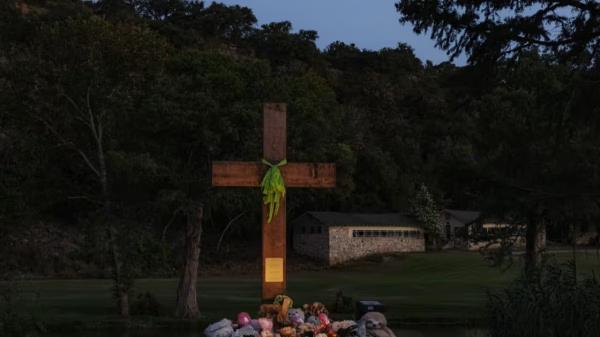
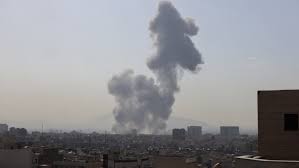
In Syria, three Americans—including two U.S. soldiers and an interpreter—were killed near Palmyra by a member of the Syrian security forces. While ISIS did not officially claim responsibility, both the U.S. and Syrian governments attributed the attack to the terrorist group. In response, the U.S. military conducted targeted strikes on ISIS infrastructure and weapons sites in Syria.
“They never went away,” said Aaron Zelin, an ISIS expert and fellow at the Washington Institute for Near East Policy. “The nature of the threat has changed, and the way they organize themselves has evolved, but the ideology driving the Islamic State has not diminished.”
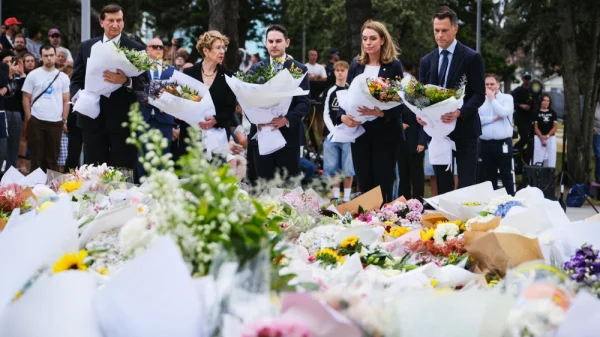
Just days later in Sydney, Australia, two men opened fire on a Hanukkah gathering at Bondi Beach, killing at least 15 people. Police fatally shot one suspect, while the other survived and now faces charges. ISIS-affiliated social media accounts praised the attack, though the group did not officially claim responsibility. Investigators reported that the suspects had ISIS flags and literature, and they may have traveled to the Philippines, potentially for militant training.
While these incidents are geographically diverse, experts note that they are exceptions in a broader trend: globally, ISIS activity has been declining. Renad Mansour, a research fellow at London’s Chatham House, observed, “The trajectory is downward. Attacks still occur, but centralized coordination by ISIS leadership is rare.”
According to the Washington Institute’s Islamic State Select Worldwide Activity Map, ISIS has claimed 1,100 attacks in 2025, down from a peak of 3,460 in 2019. Arrests linked to ISIS also decreased, with 383 reported worldwide so far in 2025, compared to 531 in 2024, most in active war zones like Iraq and Syria.
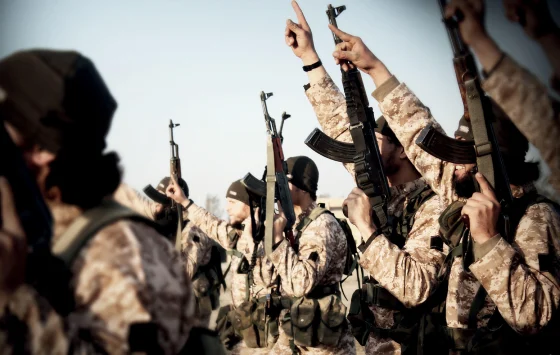
A key element of ISIS’s persistence is its “do-it-yourself” operational model. Lone actors or small cells can carry out attacks inspired by ISIS ideology with minimal direct guidance from the group. “This model has been professionalized and deployed globally, inspiring individuals to act in ISIS’s name,” said Rebecca Weiner, Deputy Commissioner for Intelligence and Counterterrorism at the New York Police Department.
ISIS first rose to prominence during the Syrian civil war, establishing a self-proclaimed caliphate across parts of Syria and Iraq. Although that territory was dismantled in 2019, the caliphate remains central to ISIS’s narrative, even as the group shifted focus from state-building to global terrorism.
The organization has also expanded in parts of Africa’s Sahel region, including Mali, Burkina Faso, and Niger. However, experts caution that these operations have limited ideological resonance compared to the group’s origins in the Middle East.
Recent events in Syria, including the fall of Bashar al-Assad’s regime last year and ongoing instability, could provide ISIS new opportunities. Analysts also note that the conflict in Gaza has fueled propaganda used by ISIS to recruit sympathizers and inspire attacks against Western targets.
“With the holiday season approaching, ISIS-inspired actors may attempt high-profile attacks to gain attention,” said Colin P. Clarke, executive director of the Soufan Center. “While the group is weakened, its ability to exploit global conflicts and lone actors means it cannot be ignored.”
The recent attacks in Palmyra and Sydney underline a sobering reality: ISIS remains a diminished but persistent threat, capable of inspiring deadly violence far beyond its original territory.