











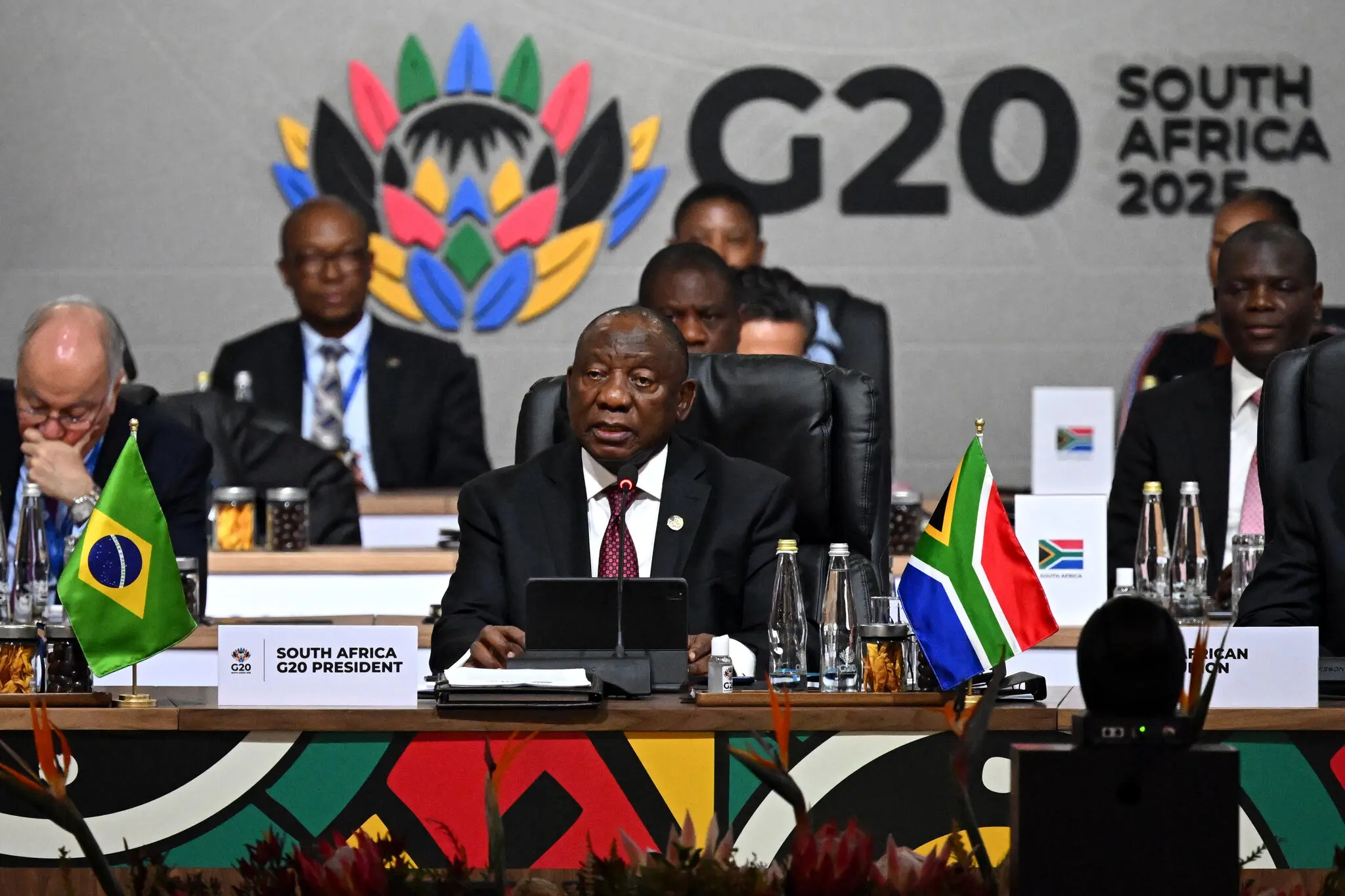
Johannesburg — World leaders at the G20 summit in Johannesburg moved assertively to demonstrate that global cooperation can advance even in the absence of the United States, which boycotted the gathering amid tensions with South Africa.
South African President Cyril Ramaphosa set the tone early, laughing off a question about reports that Washington attempted to reverse its boycott just days before the summit. He confirmed receiving a late message from the U.S. indicating “a change of mind,” a remark that drew criticism from President Trump’s spokesperson but did little to shift the summit’s confident trajectory.
In recent years, such tensions with Washington might have caused diplomatic discomfort. Instead, countries seized the moment to reaffirm alliances, negotiate deals, and publicly project unity. “The world can move on with or without the U.S.,” South African Foreign Minister Ronald Lamola said at a pre-summit forum, emphasizing that global cooperation would not stall in America’s absence.
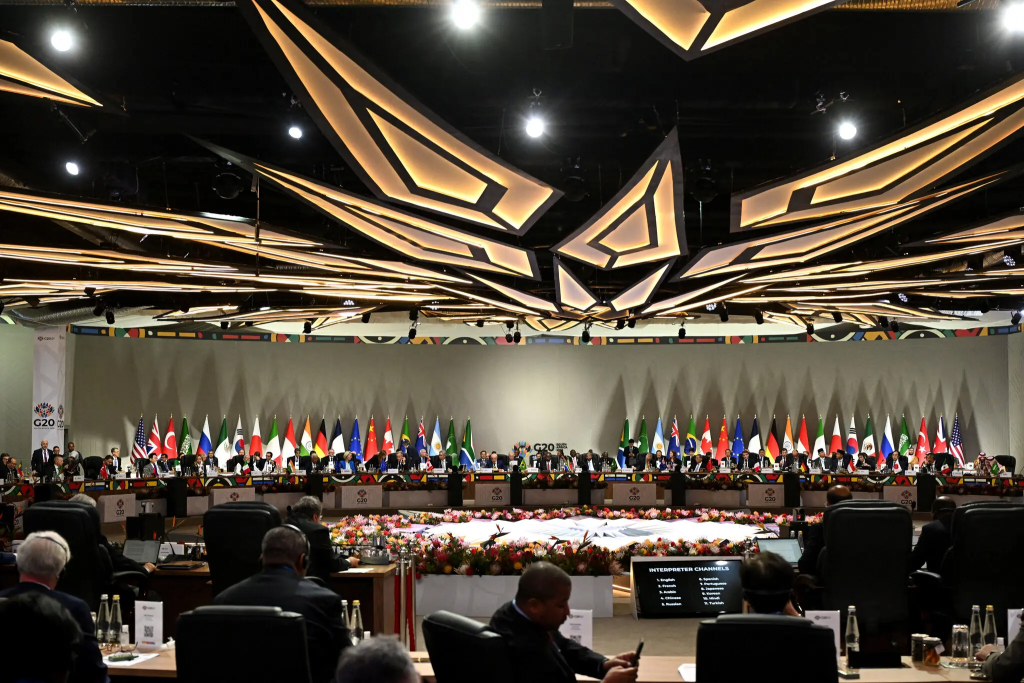
A Summit Reoriented Toward African Priorities
South Africa declined a U.S. request for President Ramaphosa to ceremonially hand over next year’s G20 presidency to a lower-ranking American diplomat, inviting U.S. officials to handle the transition at the foreign ministry instead — a symbolic assertion of protocol and sovereignty.
Ramaphosa also broke tradition by adopting the summit’s final declaration at the start of the two-day meeting, not the end. Although Argentina raised objections — widely seen as aligned with U.S. positions — the document was approved unanimously among attending members. It included commitments on climate action, just energy transitions, and gender equality, terms the Trump administration had resisted during pre-summit negotiations.
“This G20 shows that even amid geopolitical pressure from powerful nations, countries can unite and deliver results,” said Nabil Ahmed, senior director at Oxfam America.
Global Leaders Reassert Multilateralism
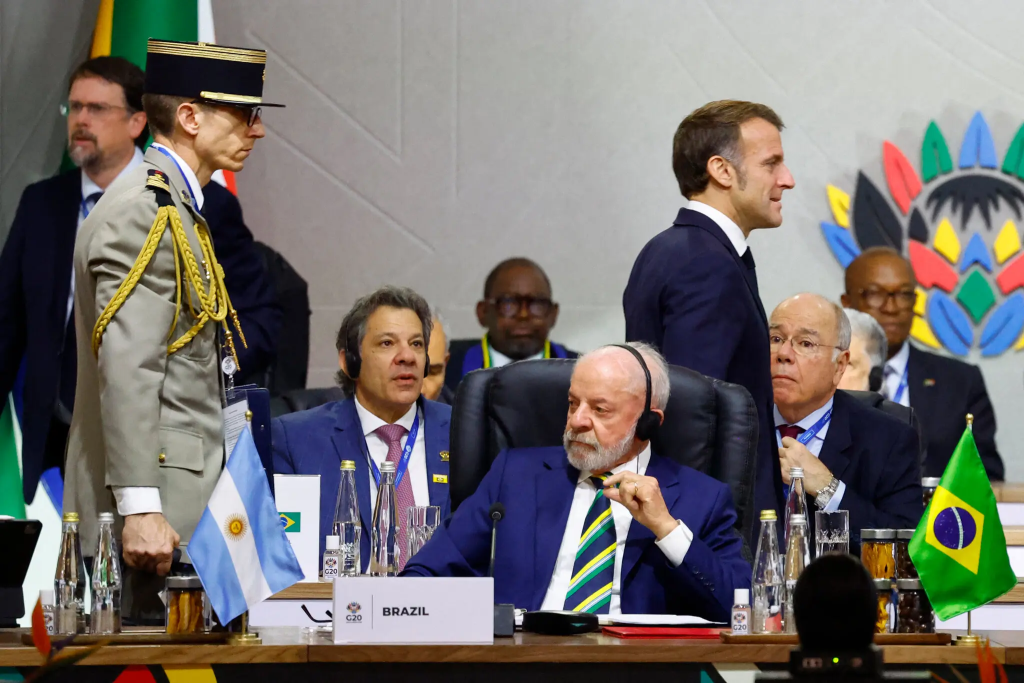
Brazil’s President Luiz Inácio Lula da Silva echoed this sentiment, saying multilateralism would ultimately win out despite Washington’s increasingly unilateral stance. “Together we are stronger and more capable,” he told reporters after the summit.
Still, leaders acknowledged that the U.S. remains a dominant force in global affairs. Many countries continue to face steep U.S. tariffs, and American influence at institutions like the International Monetary Fund remains decisive. The summit’s declarations, while symbolically powerful, are nonbinding.
Geopolitical tensions also remained palpable. Allies of Ukraine scrambled to convene urgent talks after the U.S. promoted a controversial peace framework for the war with Russia. French President Emmanuel Macron noted that negotiators struggled to reach consensus “on subjects we thought were settled.”
Unexpected Cooperation Amid Shift in Global Power
Yet, the U.S. absence opened space for diplomatic breakthroughs. Relations between the European Union and South Africa, previously strained over Pretoria’s ties with Moscow, showed renewed warmth. European Commission President Ursula von der Leyen joined Ramaphosa to announce a minerals partnership and new investments in Africa’s renewable energy sector.
“We are a partner that plays by the rules,” von der Leyen said. “We listen to our partners.”
As the summit concluded, world leaders projected confidence that the G20 could remain effective even as the U.S. charts its own course — a sign of shifting global dynamics in which emerging powers and longstanding partners are increasingly willing to advance shared goals without American leadership.