




















FILE – A boat heads out from the Flamingo boat ramp May 4, 2020, in Everglades National Park in Florida. Home-district projects for members of Congress are back, sprinkled across the government-wide $1.5 trillion bill President Joe Biden signed recently, including $350 million to help restore Florida’s vast but imperiled Everglades. (AP Photo/Lynne Sladky, File)
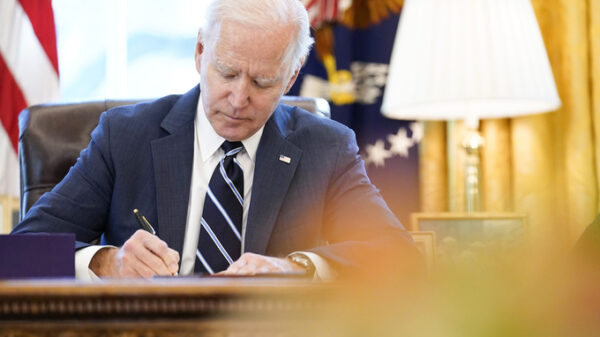
WASHINGTON (AP) — Home-district projects for members of Congress are back, sprinkled across the government-wide $1.5 trillion bill President Joe Biden signed recently. The official tally shows amounts modest by past standards yet spread widely around the country — and that understate what lawmakers are claiming credit for.
The bipartisan legislation, financing federal agencies this year, contains 4,975 such projects worth $9.7 billion, according to an Associated Press examination of items attributed to specific lawmakers in legislative documents. The listed projects, long called earmarks, ranged from $4,000 for evidence detection equipment for Huntington, West Virginia, to $350 million to help restore Florida’s vast but imperiled Everglades.
The projects’ reemergence after an 11-year hiatus, with transparency requirements and other curbs, marks a revival of expenditures that let lawmakers tout achievements to voters and help party leaders build support for legislation.
They’re vilified by some, especially conservatives, as emblems of influence peddling and waste. But they’ve been openly embraced by lawmakers from both parties, who cite Congress’ constitutional power of the purse and say they know their local needs.
“I’m very proud of them,” said Sen. Richard Shelby, top Republican on the Senate Appropriations Committee, of the eye-popping $648 million he amassed for his state, the AP analysis showed. That included $126 million for two campuses of the University of Alabama, his alma mater, and hundreds of millions to improve the city of Mobile’s seaport and airport.
The price tag of Shelby’s projects was the highest in Congress, according to Taxpayers for Common Sense, a nonpartisan group that favors fiscal restraint and produced largely similar figures in its own preliminary study. Sen. Lindsey Graham, R-S.C., was next at $361 million.
Shelby, who’s retiring, took credit in press releases for winning “billions” for Alabama, well beyond the amount in the public lists. Just one example he cited is $1.3 billion for flight training at Fort Rucker, an Army base in the state.
Many lawmakers are asserting that the money they won for constituents exceeded what the measure explicitly attributes to them. That’s because Congress narrowly defines what’s listed as home-district projects.
Bolstering broad, national programs that lawmakers know benefit their states isn’t included, so lawmakers can tout such amounts as achievements without having them formally listed as earmarks.
Copyright 2021 Associated Press. All rights reserved.
Source: https://apnews.com/article/biden-congress-west-virginia-38e6c73bed3c47ee19889235b6dbeb25