
















Tensions between Donald Trump’s administration and Tehran have escalated further, with Iran signaling it is prepared for a potential U.S. ground assault following the arrival of thousands of American troops in the Middle East.
Tehran Accuses Washington of Mixed Signals
Iranian officials have accused the United States of pursuing a dual strategy—publicly promoting diplomacy while allegedly preparing for military escalation.
Mohammad-Bagher Ghalibaf, Iran’s parliament speaker, claimed Washington is sending contradictory messages.
According to Iranian state media, Ghalibaf said the U.S. is “openly” discussing negotiations while “secretly” planning a ground offensive. He warned that Iranian forces are ready to confront any such move, delivering a strong message of resistance.
U.S. Military Presence Expands
The remarks come as the United States reinforces its military footprint in the region. The amphibious assault ship USS Tripoli has arrived in the Middle East carrying part of a deployment of approximately 3,500 troops, according to U.S. Central Command.
Additional military assets, including aircraft and tactical systems, have also been positioned to support ongoing operations.
Reports of Potential Ground Operations
Recent reports suggest the Pentagon may be considering limited ground operations in Iran that fall short of a full-scale invasion. While these plans have not been independently confirmed, they have intensified speculation about Washington’s next move.
When asked about the possibility of deploying ground troops, Trump declined to provide specifics, stating only that the U.S. has “many alternatives” available.
Diplomacy جهود Continue Amid Rising Hostility
Despite the military buildup, diplomatic efforts remain ongoing. Marco Rubio confirmed that a U.S.-backed 15-point proposal aimed at ending the conflict has been presented to Iran.
While Washington has indicated there are signs of limited engagement from Tehran, Iranian officials have publicly rejected the notion that negotiations are underway. Ghalibaf criticized the proposal, accusing the U.S. of trying to achieve through diplomacy what it could not accomplish militarily.
Strait of Hormuz Remains a Key Flashpoint
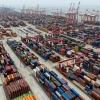
The Strait of Hormuz continues to play a central role in the الأزمة. The vital shipping route, which typically handles around 20% of global oil shipments, has been largely disrupted since the conflict began.
Trump recently suggested that Iran may allow limited oil shipments through the waterway, describing it as a potential goodwill gesture, though the situation remains uncertain.
Conflicting Signals on War Strategy
The White House has emphasized that military planning does not necessarily indicate imminent action. Officials say preparing options is standard procedure, even as Trump has previously stated he is not currently planning to deploy ground troops.
At the same time, the president has expressed optimism about ongoing talks, describing them as progressing positively—despite Iran’s firm public stance against negotiation.
Rising Stakes in a Volatile Region
With U.S. troop deployments increasing and rhetoric intensifying on both sides, the احتمال of further escalation remains high. The situation continues to evolve rapidly, with both military and diplomatic paths still in play.

The coming days are likely to prove critical in determining whether tensions move toward de-escalation—or a broader conflict.