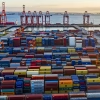















China has expanded restrictions on the export of chemicals that can be used in the production of illegal drugs, introducing new permit requirements for shipments to the United States, Mexico and Canada just ahead of a planned meeting between Chinese President Xi Jinping and U.S. President Donald Trump.
China’s Commerce Ministry and other government agencies announced Tuesday that two additional chemicals would be subject to export licensing requirements for the three North American countries. The latest additions bring the number of controlled substances under the country’s special export measures to 18.
The move comes as Washington and Beijing continue discussions over the international supply of chemical ingredients used to manufacture synthetic drugs, including fentanyl.
U.S. Presses China Over Fentanyl Precursors
U.S. officials have repeatedly identified China as a major global source of precursor chemicals used in the illicit manufacture of fentanyl, methamphetamine and other synthetic drugs.
Washington has urged Beijing to strengthen oversight of chemical manufacturers and exporters and prevent legitimate industrial chemicals from being diverted into illegal drug production.
Fentanyl, a highly potent synthetic opioid, has been linked to tens of thousands of overdose deaths in the United States each year.
China Previously Added 16 Chemicals to Controls
The latest measures build on restrictions introduced by Beijing in recent years.
In November 2025, China placed 13 additional drug-related chemicals under export controls covering shipments to the United States, Mexico and Canada. The list included substances that can be used in the production of fentanyl.
China expanded the controls again in May 2026 by adding three more fentanyl-related precursor chemicals.
With Tuesday’s announcement, the total number of chemicals subject to the special controls has increased to 18.
Measures Follow Trump-Xi Negotiations
The timing of the announcement is significant because Xi and Trump are expected to meet this week, with trade and other bilateral issues likely to feature in their discussions.
The two governments have previously discussed the flow of fentanyl precursor chemicals as part of broader negotiations over tariffs and trade.
Beijing has maintained that it has taken substantial measures to combat the illegal fentanyl trade. In March 2025, the Chinese government published a report detailing its efforts to regulate fentanyl-related substances and prevent their misuse.
Chinese officials have also criticized U.S. tariffs linked to the fentanyl issue, arguing that Beijing’s cooperation should not be met with additional trade penalties.
Fentanyl Remains a Major U.S. Concern
The availability of precursor chemicals remains a key part of the international effort to disrupt illegal synthetic-drug production.

Authorities in the United States have focused on preventing chemicals manufactured legally for industrial purposes from reaching criminal networks involved in drug production.
China’s expanded licensing requirements could give Beijing greater oversight of exports to North America, although the effectiveness of the measures will depend on enforcement and international cooperation.
The latest restrictions arrive as Washington and Beijing prepare for another high-level meeting, placing drug-precursor controls alongside trade and other contentious issues in the broader U.S.-China relationship.