























A Sri Lankan High Court has convicted 15 men for their alleged roles in the 2019 Easter Sunday bombings and imposed prison terms ranging from 200 to 260 years, sentences that effectively mean the defendants will spend the remainder of their lives in custody.
The three-judge panel delivered its verdict Tuesday after a trial that lasted nearly five years. The court also ordered the confiscation of the convicted defendants’ property and declared related transfers invalid under Sri Lanka’s Prevention of Terrorism Act.
The proceedings took place under heavy security, with hundreds of police officers deployed around the courthouse.
Easter Attacks Killed 267 People
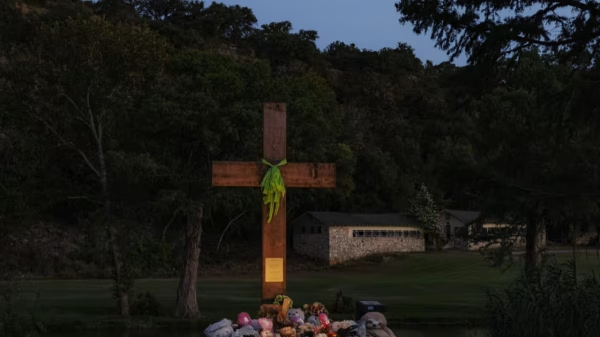
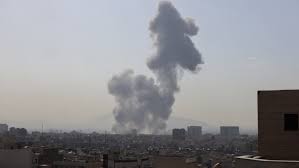
The coordinated attacks took place on April 21, 2019, during Easter celebrations. Suicide bombers struck three churches and three hotels, while another explosion occurred at a motel after an attacker abandoned plans to target another hotel.
The attacks killed 267 people, including 42 foreign nationals, and injured another 574. They became one of the deadliest episodes in Sri Lanka’s modern history.
Authorities attributed the attacks to Sri Lankan extremist groups inspired by the Islamic State militant organization.
15 Defendants Receive Lengthy Sentences
The court imposed different sentences based on the defendants’ involvement in the conspiracy and assistance connected to the attacks.
Five men received 200-year prison terms, another five were sentenced to 220 years, four received 240 years, and one defendant was sentenced to 260 years. The sentences include hard labor.
One of those sentenced was Mohamed Ibrahim Mohamed Naufer, an Islamic cleric whom prosecutors accused of using religious teachings to radicalize other members of the group. He declined to make a plea for a lighter sentence, saying he did not want to appeal to secular authorities for leniency on religious grounds.
Naufer received a 220-year sentence.
Another defendant, Mohamed Ibrahim Saadiq Abdulla, was sentenced to 240 years. During proceedings, he maintained that only God knew the full truth about what he had or had not done.
Nine Suspects Acquitted
The prosecution had brought a large number of charges against the defendants. However, the court acquitted nine of the accused after determining that the allegations against them had not been sufficiently established.
Authorities originally filed 23,270 charges against 25 suspects in 2021. One suspect died while awaiting trial.
The charges included murder, conspiracy to carry out terrorism and offenses involving firearms and explosives.
Those believed to have directly carried out the suicide bombings are no longer alive.

Evidence Pointed to Islamic State Inspiration
Prosecutors presented evidence indicating that the attacks were motivated by Islamic State ideology.
A video recorded shortly before the bombings reportedly showed several attackers with their faces covered, carrying weapons and declaring allegiance to then-Islamic State leader Abu Bakr al-Baghdadi.
Prosecutors said the group wanted to establish an Islamic state in Sri Lanka and had prepared for a coordinated campaign of violence.
Authorities also alleged that one of the defendants, Mohamed Ibrahim Saadiq Abdulla, traveled through Turkey into Syria and fought alongside Islamic State militants.
Questions Remain Over Possible Wider Conspiracy
Despite the convictions, questions surrounding the broader circumstances of the Easter attacks remain unresolved.
Sri Lanka’s Catholic Church has argued that the people identified as perpetrators may not represent the full network behind the bombings and has alleged the existence of a wider conspiracy. The church has not publicly provided evidence establishing those claims.
A parliamentary investigation previously concluded that security and intelligence officials had received warnings about a possible attack but failed to respond adequately.
In July, a former police chief and a former senior defense ministry official were sentenced to death over their failure to act on foreign intelligence warnings. Sri Lanka has not carried out an execution since 1976, meaning such sentences have generally resulted in imprisonment instead.
Former Intelligence Official Also Faces Allegations
The investigation has also raised questions about possible links between the attackers and members of Sri Lanka’s security establishment.
In February, authorities arrested Suresh Salley, a former intelligence chief and retired army major general. The government has alleged that he knew about the planned attacks and was involved in a conspiracy. Salley remains in custody and has denied involvement, according to authorities.
The Easter bombings deeply affected Sri Lanka and reopened memories of the country’s decades-long civil war, which ended in 2009 after a 26-year conflict involving the separatist Liberation Tigers of Tamil Eelam.
The latest convictions mark a significant development in the lengthy legal proceedings over one of the country’s most devastating terrorist attacks, although questions about intelligence failures and the possibility of a broader conspiracy remain part of the continuing debate.