




















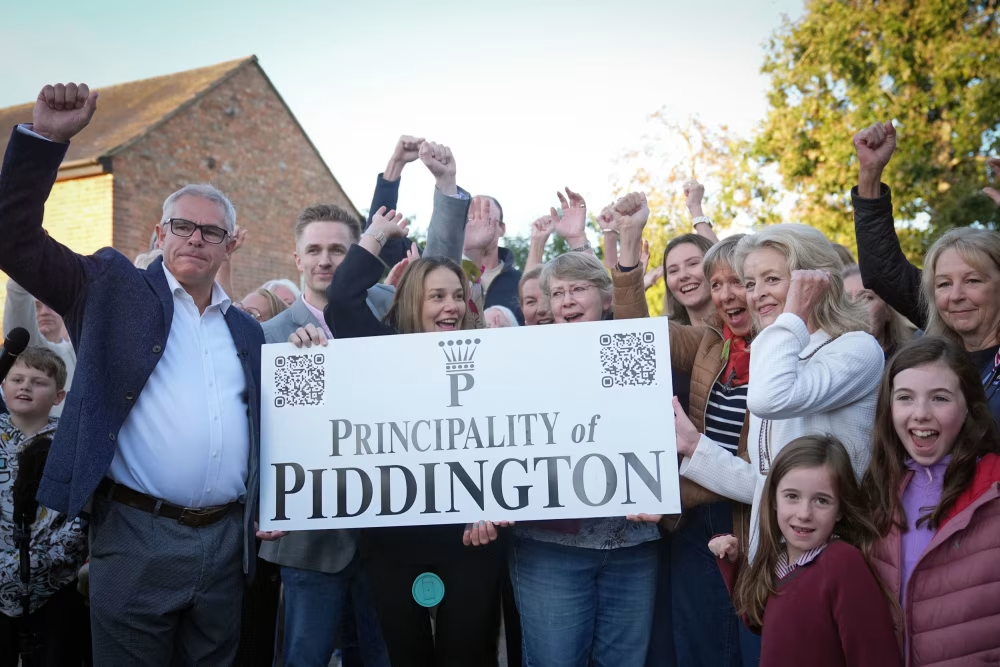
Piddington residents overwhelmingly back symbolic independence vote as opposition grows to plans for an asylum accommodation site near the village.
Residents of the small English village of Piddington have voted overwhelmingly in favor of a symbolic declaration of independence from the United Kingdom, using the non-binding referendum to protest government plans to accommodate asylum seekers at a nearby former military site.
The referendum, held in the Oxfordshire village, passed by 285 votes to 26. The result has no legal or constitutional effect, but organizers say it was intended to send a strong message about local opposition to the proposed accommodation project.
Piddington, home to roughly 350 people, is located about half a mile from the former Ministry of Defence Bicester base, where the government plans to accommodate as many as 1,200 male asylum seekers.
Parish chairman Tim McNally said the village would symbolically refer to itself as the “Principality of Piddington” following the vote.
Residents Raise Concerns Over Proposed Asylum Site
The government has argued that the former military facility can provide accommodation that is largely self-contained, with the aim of limiting pressure on surrounding communities.
Some Piddington residents, however, have expressed concerns about potential effects on public safety, crime and property values. The village is situated in a relatively affluent part of Oxfordshire, roughly 50 miles northwest of London.
Supporters of the referendum have described it as an expression of local democracy and community opposition. The unusual campaign has also drawn comparisons with the 1949 British comedy film Passport to Pimlico, in which a London neighborhood declares itself independent.
The symbolism has attracted criticism as well. Some observers and campaigners have argued that rhetoric surrounding the protest risks portraying asylum seekers as a threat rather than people seeking protection.
Wider UK Debate Over Immigration
The Piddington vote comes amid continuing political and public debate in Britain over immigration, asylum accommodation and crossings of the English Channel.
Anti-immigration demonstrations have taken place in several parts of the country in recent years, including protests outside hotels being used to house asylum seekers. Tensions have also been fueled by misinformation surrounding incidents involving migrants and asylum seekers.
The issue became particularly contentious following riots two years ago after the killing of three young girls at a dance class near Liverpool. False claims circulated online that the attacker was a Muslim asylum seeker, although the attacker was born in the United Kingdom.
More recently, protests have included demonstrations near ports and other locations connected to the arrival or accommodation of migrants.
Government Promises Faster Asylum Processing
The Labour government has said it wants to reduce the amount of time asylum seekers spend in state-provided accommodation by speeding up the processing of claims.
It has also pledged to move people away from hotels and other temporary housing arrangements, arguing that a more organized accommodation system is needed while asylum applications are processed.

More than 41,000 people crossed the English Channel in small boats during 2025. The number recorded so far this year is more than 40% lower than during the corresponding period last year.
The government has nevertheless faced pressure from communities concerned about the placement of asylum accommodation in their areas.
Prime Minister Andy Burnham said he understood the strength of feeling in Piddington and would consider concerns raised by residents. He also said the government needed an approach that distributed responsibility for accommodating new arrivals across different parts of the country.
Refugee Groups Warn Against Using Migrants as Scapegoats
Refugee organizations have raised separate concerns about the suitability of military facilities for people seeking asylum.
Jon Featonby, chief policy analyst at the Refugee Council, said remote military accommodation could worsen the sense of insecurity experienced by people who had already fled war and violence.
The organization has also warned that placing asylum seekers in isolated locations can create difficulties for local integration and community relations.
The Piddington referendum therefore represents a symbolic local protest rather than a change in the village’s legal status. Despite its lack of constitutional authority, the vote highlights the wider national debate over how Britain accommodates asylum seekers and how local communities respond to government immigration policies.