















New York is bracing for major travel chaos after workers at the Long Island Rail Road (LIRR) launched a strike that has shut down one of the busiest commuter rail systems in the United States, leaving hundreds of thousands of passengers scrambling for alternatives.
The walkout began after contract negotiations between labor unions and the Metropolitan Transportation Authority (MTA) collapsed over wages and working conditions, marking the first LIRR strike in roughly three decades.
One of America’s busiest rail networks brought to a halt
The strike has completely suspended service on the Long Island Rail Road, which normally transports hundreds of thousands of commuters daily between Long Island and New York City.
The disruption has left major gaps in the region’s transportation network, particularly for workers who rely on daily rail service to reach Manhattan.
Officials have warned that restoring normal travel capacity is not possible in the short term due to the scale of the shutdown.
Emergency transport measures rolled out
New York Governor Kathy Hochul said the state and transit authorities are deploying emergency measures, including shuttle buses and expanded subway services, to reduce pressure on the system.
Shuttle routes have been organized from multiple locations across Nassau and Suffolk counties to connect commuters with subway lines in Queens. Authorities have also urged residents who can work remotely to avoid travel during peak hours.
Despite these measures, officials acknowledged that no alternative system can fully replace the capacity of the LIRR.
Union dispute over wages and contract terms
The strike was triggered after negotiations broke down between the MTA and a coalition of unions representing approximately 3,500 rail workers.
Union leaders argue that workers have faced rising living costs without adequate wage increases, while maintaining essential transportation services across the region.
The unions have stated that the gap between both sides narrowed significantly during negotiations, but talks collapsed shortly before the strike began. They maintain that the industrial action could have been avoided if a fair agreement had been reached.
MTA response and political pressure
The Metropolitan Transportation Authority (MTA) has criticized union leadership for walking away from negotiations, insisting that it remains open to continued discussions.
MTA CEO Janno Lieber said the agency was willing to return to the bargaining table and accused union representatives of initiating the shutdown by striking.
State officials, however, have warned that meeting union demands could lead to significant fare increases and potential tax hikes, raising concerns about long-term affordability for commuters.
Commuters face uncertainty and delays
The shutdown has forced thousands of commuters to reconsider travel plans ahead of the workweek. Many have been advised to work from home where possible as transit officials attempt to manage congestion across alternative transport systems.

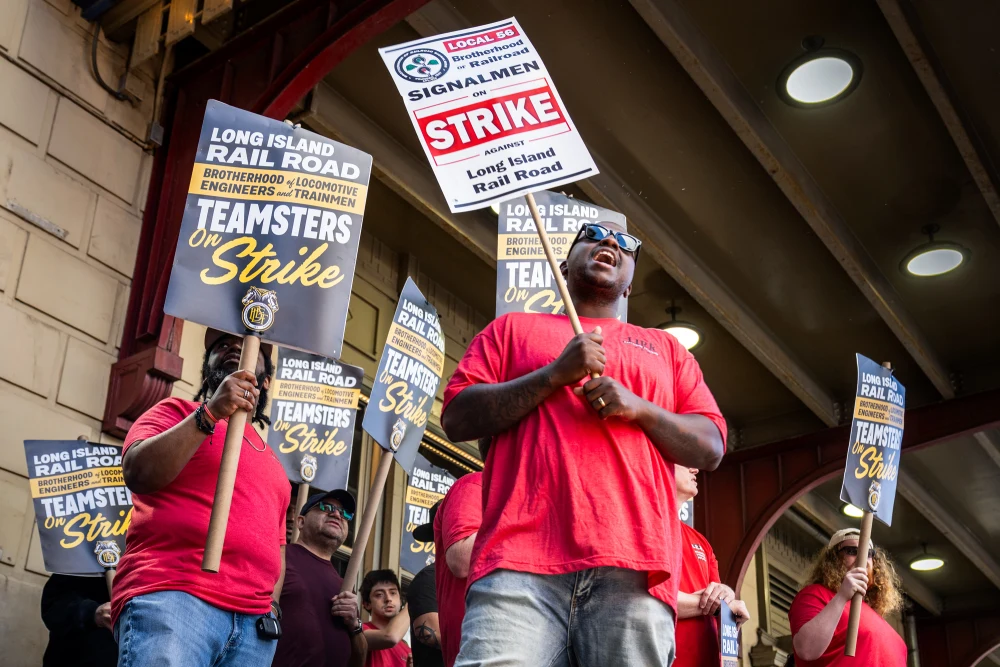
At picket lines near major transit hubs, striking workers have defended their action, citing years of stagnant wages and rising living expenses in the New York region.
Union representatives say the strike reflects long-standing concerns about compensation and workforce sustainability within one of the nation’s most heavily used commuter rail systems.
Broader impact on New York’s transport system
The LIRR strike is expected to place additional strain on the city’s subway network, bus services, and road infrastructure as commuters seek alternative routes into Manhattan.
Officials warn that congestion, delays, and overcrowding are likely throughout the week if the strike continues.
The disruption highlights the vulnerability of large metropolitan transit systems that rely heavily on a single commuter rail network to connect suburban populations with urban job centers.
Outlook remains uncertain as negotiations continue
Despite ongoing tensions, both sides have signaled a willingness to return to negotiations. However, no immediate resolution has been reached, leaving commuters facing continued uncertainty.
Authorities say restoring normal service will depend on whether a compromise can be reached in ongoing talks between labor unions and transit leadership.