




















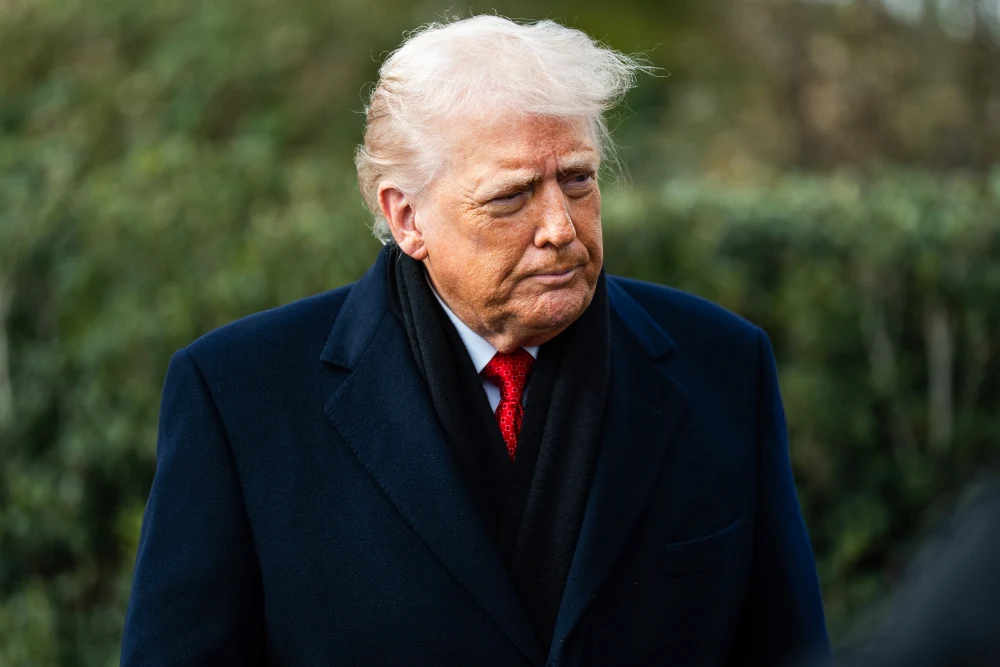
President Donald Trump’s recent $10 billion lawsuit against the federal government he leads has sparked intense debate, legal scrutiny, and political pushback. The suit, filed last month by Trump, his two eldest sons, and the Trump Organization against the IRS and Treasury Department, alleges wrongful leaking of confidential tax information. However, experts warn that numerous legal and political challenges could prevent any significant payout from materializing.
Trump claims the funds, if awarded, would be donated entirely to charities “approved by government or whatever,” a gesture he emphasized in a recent interview with NBC News. Yet, legal scholars, lawmakers, and ethics specialists describe the lawsuit as a “clear conflict of interest” since Trump is simultaneously the plaintiff and head of the administration responsible for defending the government.
The suit stems from a breach dating back to 2019-2020 when Charles Littlejohn, a former IRS contractor, pleaded guilty to stealing Trump’s tax records and leaking them to media outlets. Despite the acknowledged wrongdoing, critics question why Trump seeks such a large sum—more than 80% of the IRS’s annual budget—so long after the incident.
“This raises the question of what actual harm continues to justify such a massive taxpayer payout,” said Lisa Gilbert, co-president of Public Citizen, a government watchdog. Meanwhile, Trump’s legal team asserts the IRS was complicit in a politically motivated leak that damaged the president and his family.
Opponents, including Democratic lawmakers, are actively working to block any settlement that would fund Trump’s claim. Senator Adam Schiff (D-Calif.) has explored legislative and oversight tools to prevent public funds from rewarding what he calls an “audacious scam.” Some Republicans have also expressed unease about the lawsuit’s optics and implications. Senator Thom Tillis (R-N.C.) described the case as “weird” since it pits the president against his own agencies.
Further complicating the matter is the role of the Department of Justice and Attorney General Pam Bondi, a Trump appointee whose office faces a conflict between defending the government and appeasing the president. The Treasury Department and IRS have remained silent on the lawsuit.
A critical potential obstacle is Judge Kathleen M. Williams, an Obama-nominated federal district judge presiding over the case. Legal experts note that under constitutional principles, courts resolve disputes between opposing parties—something difficult to establish here given Trump’s dual role as plaintiff and chief executive. Judge Williams could dismiss the case outright, or appoint an independent counsel to review conflict of interest concerns.
If the lawsuit proceeds, any proposed settlement would still require judicial approval. The judge might reject a payout she deems unjustified, potentially forcing Trump to negotiate privately or drop the case. Such a settlement, if made, could face future legal challenges or whistleblower lawsuits alleging false claims, known as qui tam actions, which allow private parties to sue on behalf of the government.
This suit is only one in a series of legal battles Trump has engaged in since resuming the presidency last year, including a separate complaint related to the FBI’s Mar-a-Lago search for classified documents.
Reflecting on the lawsuit’s unusual nature, Trump acknowledged in his NBC interview the unprecedented position he is in: “I have to negotiate with myself.” While insisting any damages he wins would go to charity, Trump’s public statements have at times vacillated between sincerity and humor, joking about awarding himself $1 billion.
As the case unfolds, it underscores the complex intersection of law, ethics, and politics when a sitting president takes legal action against his own administration. With congressional resistance mounting and judicial scrutiny intensifying, the path to any $10 billion payout remains fraught with obstacles.