



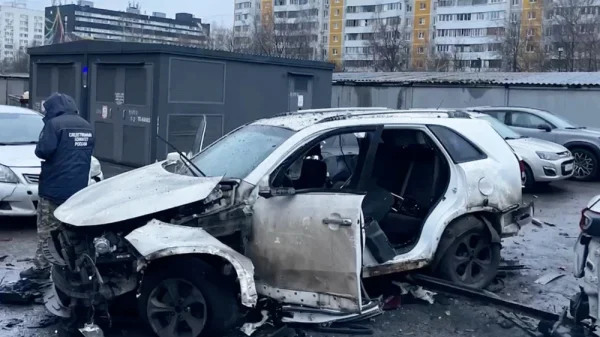














Thermal underwear, candlelit dinners, and Arctic temperatures have become part of daily life for residents of Kyiv after a massive Russian attack on Jan. 9 devastated the city’s power infrastructure. Two weeks later, the Ukrainian capital is still struggling with widespread electricity and heating blackouts amid a bitter cold snap, with nighttime temperatures dipping below minus 4 degrees Fahrenheit.
“This long stretch without power takes away your sense of agency — even simple tasks like cooking, cleaning, or showering become emotionally draining,” said Nataliia Rychka, a humanitarian worker living in Kyiv.
Although Kyiv and other Ukrainian cities are familiar with rolling blackouts during winter, this attack has caused unprecedented disruptions. Repairs have been slow, leaving residents unsure when power will return. Sporadic electricity often comes back at night, forcing residents into rushed routines of cooking, laundry, and basic chores before the lights go out again.
Rychka, who lives on the 13th floor of an apartment building in the Pecherskiy district, said she had to rely on a friend’s home to take a shower last week. “It’s uncomfortable, but not critically cold inside my apartment,” she said.
Mayor Vitali Klitschko warned Friday that nearly 1,940 residential buildings in Kyiv remain without heating due to continued Russian attacks, even as repair crews work around the clock. He urged residents to stockpile essential supplies and leave the city if possible. His office estimates that roughly 600,000 people have already evacuated Kyiv, which had a population of about 3.6 million at the end of 2025.
For Maryna, an IT manager whose husband serves in the military, the blackout has made everyday life a challenge. She and her 4-year-old son have gone without heating since the attack, relying on thermal clothing and blankets to stay warm. “Martin doesn’t know any other way,” she said of her son, born three months before the full-scale invasion in 2022.
Kateryna Matiukhina, visiting Kyiv from Lviv with her daughter, described going up to 31 hours without power. She and her family prioritize cooking and household chores over personal comfort, using flashlights and twinkle lights to maintain a sense of normalcy.
Some residents suspect Russia timed the attacks to inflict maximum suffering during the coldest months. “They did it in the most painful way,” said Liubov Oliinyk, 62, whose 89-year-old father is particularly affected by the outages.
The international community has condemned the attacks. United Nations High Commissioner for Human Rights Volker Türk called targeting energy infrastructure “a clear breach of the rules of warfare,” noting the severe impact on civilians. Russia denies intentionally targeting civilians, despite repeated strikes causing deaths and destruction in Ukrainian towns.
Meanwhile, Ukraine has launched retaliatory strikes on Russian border regions, reportedly leaving 600,000 residents in Belgorod without heat, water, or electricity. Ukrainian President Volodymyr Zelenskyy condemned Russia’s strikes as undermining diplomatic efforts, and diplomatic talks, including a trilateral meeting with U.S. officials, are planned to address the ongoing conflict.
Despite international diplomacy, many Kyiv residents feel the freezing temperatures and power outages make peace talks feel distant. “I think their goal is to destroy us, so negotiations won’t lead anywhere,” Maryna said. “But the freezing temperatures will eventually thaw — we can’t make concessions because we are cold.”