
























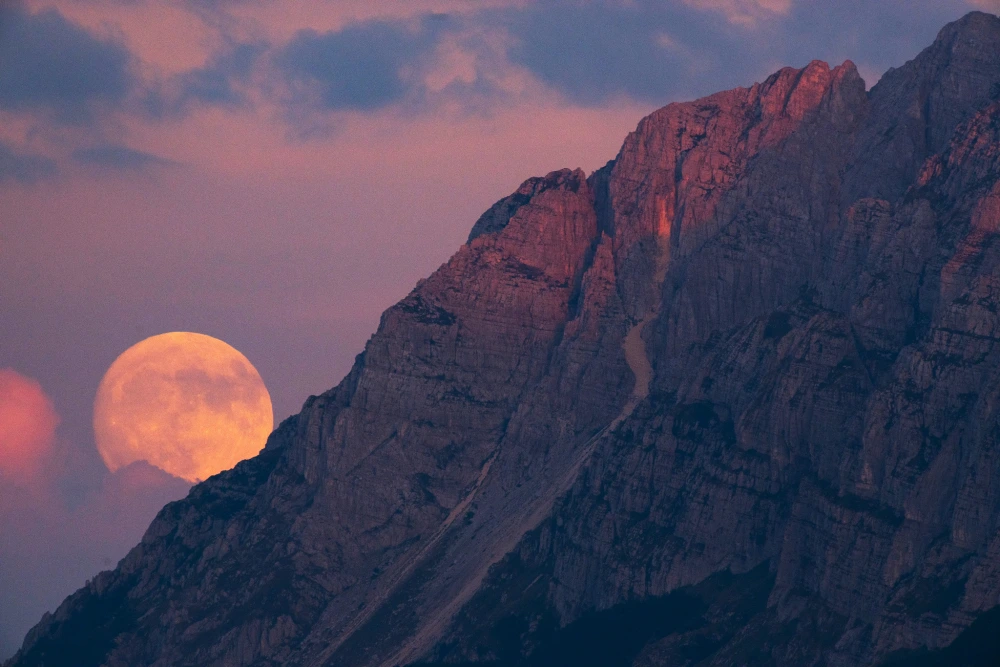
New York — Stargazers will be treated to a rare celestial overlap in early January as the year’s first major meteor shower coincides with a brilliant supermoon. While both events are visible to the naked eye, astronomers say the intense moonlight may limit how many meteors can be seen.
The Quadrantid meteor shower reaches its peak from Friday night into early Saturday morning, according to the American Meteor Society. Under ideal, dark-sky conditions, observers can typically spot up to 25 meteors per hour. This year, however, the glow of a full supermoon is expected to reduce visibility to fewer than 10 meteors per hour in many locations.
“The full moon is the biggest obstacle to enjoying a meteor shower,” said Mike Shanahan, director of the planetarium at Liberty Science Center in New Jersey. “Its brightness washes out the fainter streaks of light.”
What’s Happening in the Sky
Meteor showers occur when Earth passes through streams of debris left behind by comets or asteroids. As these tiny fragments enter the atmosphere at high speed, they burn up, creating the bright streaks commonly known as shooting stars. While a few meteors are visible on most nights, annual showers like the Quadrantids offer more reliable viewing opportunities.
The Quadrantids originate from debris associated with asteroid 2003 EH1 and appear to radiate from a now-defunct constellation once called Quadrans Muralis. The shower is best seen from the Northern Hemisphere.
At the same time, January’s full moon qualifies as a supermoon, meaning it appears larger and brighter than average because it occurs when the moon is relatively close to Earth in its elliptical orbit. According to NASA, a supermoon can look up to 14% larger and about 30% brighter than the dimmest full moons of the year, though the difference can be subtle to the naked eye.
Best Viewing Tips
Astronomy experts recommend heading away from city lights to improve viewing conditions. Jacque Benitez of the Morrison Planetarium at the California Academy of Sciences suggests watching earlier in the evening before the moonlight becomes overwhelming, or trying again just before dawn on Sunday.
Allowing eyes time to adjust to the darkness and avoiding phone screens can also help. Meteors will appear as quick, white streaks crossing different parts of the sky rather than coming from a single point.
Both the supermoon and the meteor shower can be enjoyed without telescopes or binoculars, provided skies are clear.
What’s Next for Skywatchers
Saturday night’s supermoon marks the end of a four-month sequence that began in October. According to astronomers, there will be no more supermoons until late 2026.
As for meteors, the next major display will be the Lyrid meteor shower, expected to peak in April.