

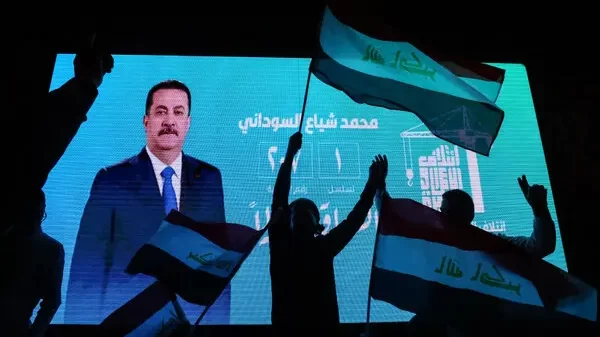













Baghdad, Iraq — Iraq’s Prime Minister Mohammed al-Sudani appears to have led the parliamentary elections, according to preliminary results released on Wednesday, but forming a government may prove challenging. His coalition, Reconstruction and Development, won the largest share of votes but lacks a clear majority, setting the stage for months of complex political negotiations.
Al-Sudani has positioned himself as a leader who can balance Iranian influence and U.S. interests, appealing to Washington as a reliable partner. Despite this, analysts warn his vote share may not be sufficient to secure a stable government, particularly as rivals within Iraq’s Shiite majority attempt to curb his growing influence.
The preliminary results show al-Sudani’s bloc leading in eight of 18 provinces, including the capital, Baghdad. He pledged to immediately enter negotiations to form a competent government, but Iraq’s political landscape remains fragmented, and parliamentary coalitions often take months, or even nearly a year, to assemble.
Since the 2003 U.S.-led invasion, Iraq’s politics have been dominated by Shiite parties, many with ties to Iranian-backed militias. These groups hold key ministries, giving them significant influence over state contracts and policy. U.S. officials have emphasized that the next government should disarm Iranian-aligned militias, adding pressure on al-Sudani and his coalition.
Al-Sudani has sought to cast himself as a business-focused leader, highlighting recent deals with American oil companies and pledging to encourage Iraqi billionaires to invest in the United States. While Iranian officials have expressed no objection to his potential second term, his main obstacles lie within Iraq’s domestic political factions, many wary of his consolidation of power.
Political analysts warn that rivals may attempt to undermine al-Sudani’s coalition, similar to tactics used against former Prime Minister Muqtada al-Sadr in 2021, which plunged Iraq into parliamentary chaos.
“The next government needs to complement the wishes of the people,” said political analyst Sarmad al-Bayati. “Al-Sudani was the clear choice, but navigating Iraq’s complex political alliances will be a major test.”
Official election results are expected in the coming days, but the process of forming a government will likely involve intense negotiation and coalition-building, highlighting the ongoing fragility of Iraq’s young democracy.